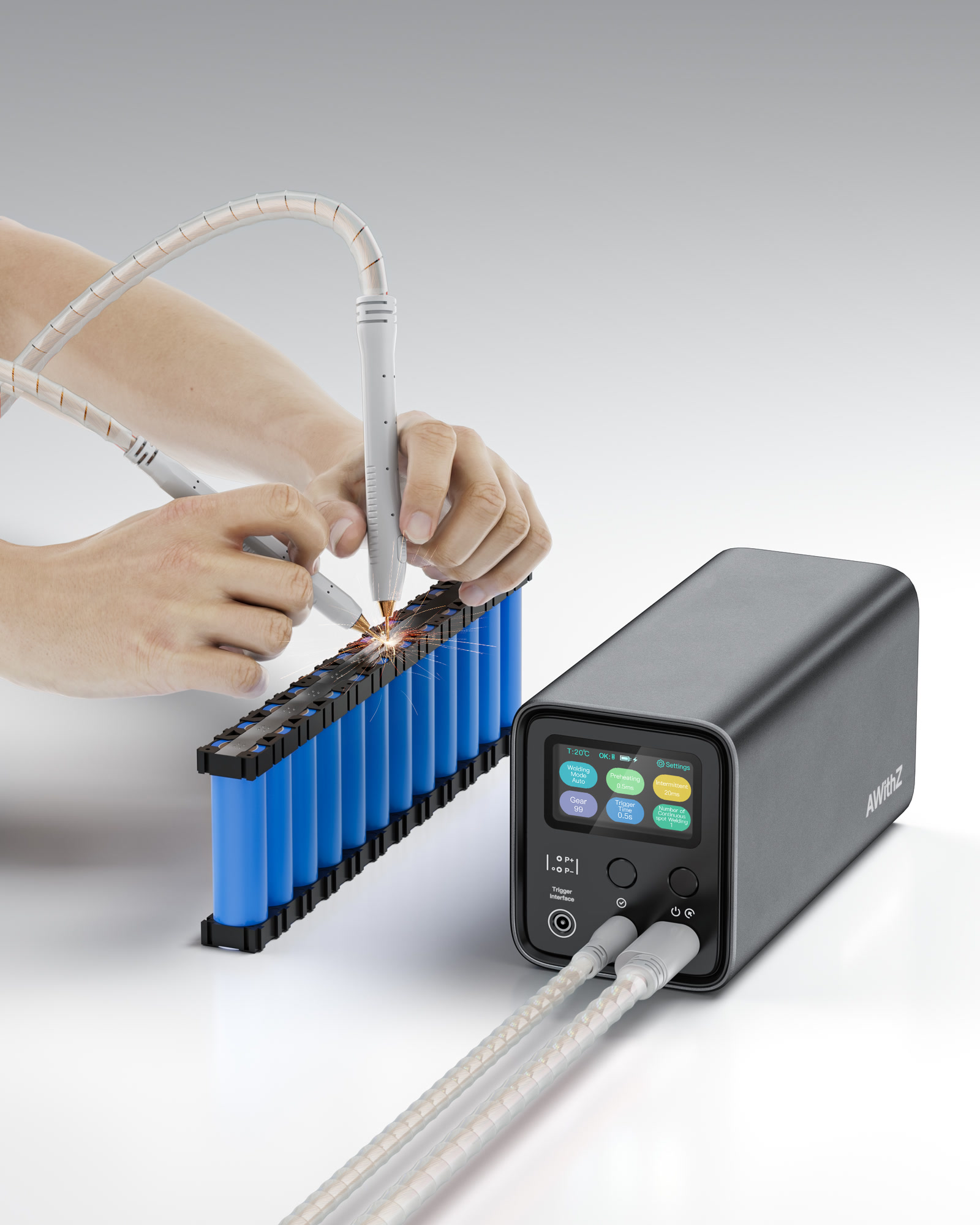
78 × 18650 cells welded. Arms are sore, heart is full
The customer's old case is only 130×370, so I measured three times before I dared to cut anything. 13S6P, 0.2 nickel-plated strip, UF20B at gear 38 — watching the welds light up one by one is seriously addictive.
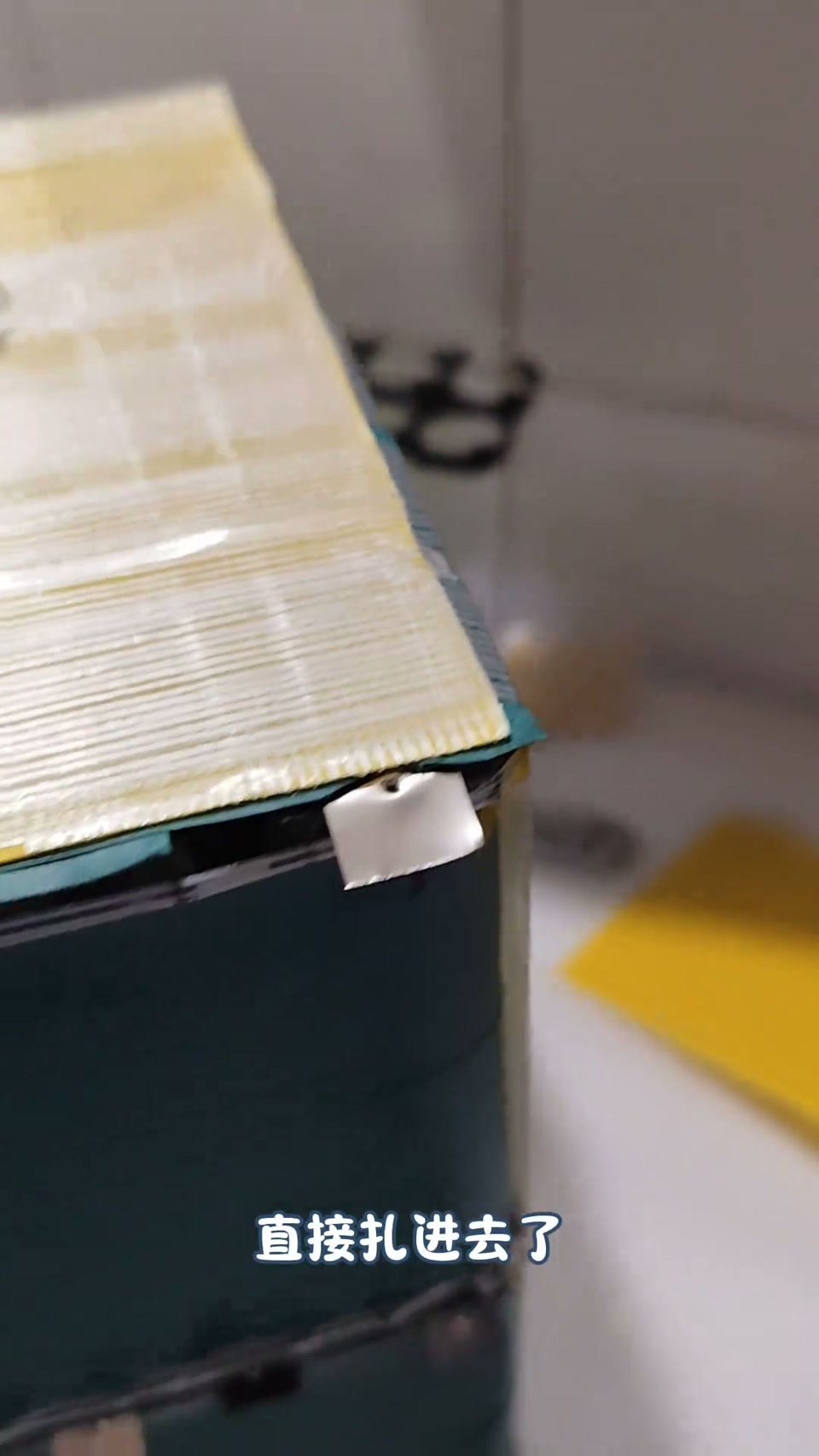
Halfway through, the welding pens touched and blew a hole right through one cell. Swapped it out and started over — newbies, remember this: position first, then press. Don't rush.
BMS goes in tomorrow, it goes back to the customer the day after. Will report back.
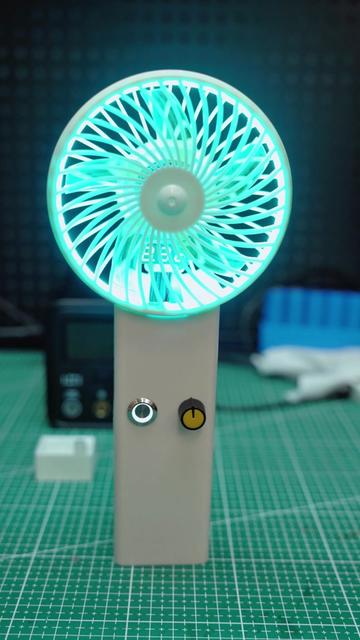
Brushless motor turned monster fan, part 2 done. Installed + tested in one go, the sound takes off on the spot🔥
The spot welder locks the battery in solid — full throttle, spinning like mad, not budging an inch!
This isn't a fan, it's a 'turbojet engine' strapped to your body…
Take it out in summer — it works better than bringing an AC💨
#MonsterFan #BrushlessMotor #AWithZSpotWelder #UF20BSpotWelder #TechShenanigans
DIY monster fan | Hardcore conversion of a drone brushless motor into a monster fan🔥 Step-by-step tutorial, a spot welder builds super-strong airflow💨, enough wind to take off — the summer cooling wonder!
#AWithZSpotWelder #UF20BSpotWelder #MonsterFan #DroneMotorMod #diy
Avoid the pitfalls in 1 minute! Beginners building a pack — 3 steps solve the core problems: set the series count ➜ set the parallel count ➜ lock in the BMS. With the AWithZ H2-2026 handheld, even a newbie can weld a finished-grade pack and get safely to the end🚗 #AWithZSpotWelder #BatteryMaking #DIY #BeginnerGuide #PitfallGuide
Industry first, major launch! The all-new supercapacitor handheld HF7 spot welder is here! Not every handheld deserves to be called professional. Li-ion pack assembly, tool re-celling, model power mods — all done one-handed. Welds solid, lasts long, tunes precisely, no compromise. Stop settling — get it right in one step. Get in on the launch, keep watching👇
#AWithZSpotWelder #HF7 #HandheldSpotWelder #CapacitorSpotWelder
AWithZ UF20B spot welder | Solid welds on 32140, copper stays put. Still struggling with copper welds that won't hold? The AWithZ UF20B supercapacitor spot welder — output steady as a rock, not fussy about materials. Smart voltage regulation, no more cold welds, consistent weld spots. Punches through 0.15mm copper with ease; tear the copper strip and the weld stays. Hand-built Li-ion packs, done in one go. #32140Cells #AWithZSpotWelder #UF20B #Battery
UK1 cordless portable spot welder, 9000W raging output! 1380A instant penetration. Click the knob, press the pen tip lightly, and the weld forms in an instant⚡
✅0.3mm nickel-plated / 0.15mm pure nickel / 0.1mm copper, all handled with ease
✅Dual grade-A power cells for steady runtime and long life
✅Smart spot-welding pen — even beginners weld like seasoned pros
DIY battery packs, repairs and mods, small-batch production — one unit does it all🛠️
#AWithZSpotWelder #CordlessSpotWelding #HardwareTools #DIYWonderTool
Diangongbang’s 13-second sales pitch (same script as w113): a handheld rechargeable spot welder that welds nickel strip onto batteries / stainless steel very solidly, welding power and time adjustable, charges from a phone charger; comment: an H1 owner says the H2 upgrades the screen and features, more professional
No need to ask for help or use a soldering iron for battery welding; a handheld rechargeable spot welder that welds nickel strip onto batteries and stainless steel, very solid; welding power and welding time both adjustable; charges from a phone charger, really convenient to use. Screen shows 4ms, T 21℃. Comment: thumbs up for the AWithZ handheld welder, bought the H1 before, this H2 upgrades the screen and features, looks more premium and professional.
Lefeng’s UF20B (No. 6 pen) gear test at 10/15/20/25 (preheat untouched): on 0.15 nickel-plated steel strip, gear 10 peels off leaving two holes, 15 takes effort, 20 tears the strip, 25 is completely OK and hurts the hand to peel — tearing achieved, no point going higher; answering a fan’s ‘0.15 copper + 0.2 nickel-plated won’t weld’ — first ask whether there is a nickel base layer, doesn’t recommend copper straight on with this unit (copper is hard), stacked-copper and non-upgraded-pen comparisons to follow; the test only speaks for the unit in his shop window
Opens: no addiction to fishing, but addicted to spot welding — a few days without welding and the hands itch. Today testing gears 10/15/20/25; the machine is an AWithZ UF20B with the upgraded No. 6 welding pen; last time was gears 1–5, this time from 10 up in steps of 5, preheat and the rest untouched, only the gear changes, two welds per gear. Gear 10: the 0.15 nickel-plated steel strip peels off, leaving two holes, two holes in the nickel strip too; gear 15: takes some effort, felt it in the hand muscles; gear 20: can already tear the nickel-plated steel strip; gear 25: completely OK, hand hurts from peeling, switch hands; the strip-tearing result is achieved, no need to go higher. A fan says 0.15 copper on 0.2 nickel-plated steel strip won’t weld — I asked whether there was a nickel base layer; with this unit I don’t recommend copper straight on, because copper is fairly hard; a stacked-copper test will be added to the series; the test only speaks for the AWithZ UF20B in my shop window, ones bought elsewhere perform differently, don’t flame me; this is the upgraded No. 6 pen, without the upgrade the result differs too, a non-upgraded-pen test to follow. 37 comments: quit food delivery and go work at a battery factory; why not get a better welder, it’s painful to watch (I also have an AWithZ P60F, it’s enough); can it weld EVE C40 (with a nickel adapter it can); will it work on Gotion copper-terminal 20A (probably not); is the low/high gear difference current or time; what current at the tip on gear 10; 6045 without stacked copper, straight 0.15 nickel-plated OK?; the No. 6 cable’s current doesn’t match a two-capacitor home-built unit.
Lefeng’s UF20B (No. 6 pen) gears 1–5 series test: preheat 0 / interval 0 / 1ms, 0.1–0.12 nickel-plated steel strip on a Jiashikai negative — gear 1 doesn’t stick at all, 2 sticks a little, 3 a bit tighter but still peels off, 4 a bit hard but still peels, 5 feels like it might stick a little; comments: use gears 10–12 for 21700; a welder costs a few hundred, just buy a new battery (creator: if you want cell performance, there’s no saving money)
Welder series: AWithZ UF20B with the upgraded No. 6 welding pen, trying gears 1–5; preheat 0, interval 0, (trigger) 1 millisecond; two rolls of nickel-plated steel strip, no idea which is 0.1 and which is 0.12, never mind; welding the 0.1 or 0.12 nickel-plated steel strip onto a Jiashikai negative. Gear 1 result: won’t hold; up a gear, gear 2: gear 1 didn’t stick at all, gear 2 sticks a little; gear 3: sticks a bit tighter again but still peels off; gear 4: a bit hard to peel but still comes off; today up to gear 5: this is the upgraded No. 6 pen, 0.1–0.12 thickness on a Jiashikai negative, gear 5 feels like it might stick a little; that’s the show. 11 comments: wanted to hand-build to save money, good grief, a welder costs a few hundred, just buy a new one (creator: if you want cell performance there’s really no saving money); gears 10–12 for 21700; try a 0.3; either go 4 capacitors or 133 mains-frequency; go do deliveries instead of this (no deliveries to do); is 36V at the port normal on a 48V pack when switched off.
Stainless steel spatula 'broke a bone' — just toss it? The AWithZ handheld H1 spot welder gives it a 'seamless bone-setting'! Got a small item that needs rescuing? Tell me in the comments and I'll weld it next time!
#RepairTips #StainlessSteelWelding #KitchenBlackTech #CraftMaster #AWithZSpotWelder
Lefeng rambles: no interest in anything except the spot welder (charges fast, 20 gears, welds whatever); replies to a follower whose “same model” can’t weld 0.2 nickel + 0.15 copper — that one was bought on Xianyu; his own storefront unit, tested himself: 0.15 nickel-plated base + 0.1 copper + 0.15 nickel-plated, or 0.1 base + 0.15 copper + 0.1, both fine; a single bridge of 0.15 nickel + 0.15 copper with a slightly thinner top layer also works; needs the No. 6 welding pen upgrade; don’t ask me about units bought elsewhere
Opens musing that he wants nothing; the only thing he still enjoys is coming back to mess with this pile of stuff — the spot welder charges fast, full in no time, 20 gears. A follower earlier asked why the same spot welder couldn’t weld 0.2 nickel strip plus 0.15 copper; turned out it wasn’t bought from the storefront but on Xianyu; told him to swap either the 0.2 nickel strip or the 0.15 copper. The one in my storefront I verified myself: 0.15 nickel-plated steel strip as the base, 0.1 copper strip stacked in the middle, another 0.15 nickel-plated steel strip on top, no problem; a follower used 0.1 nickel-plated as the base, 0.15 copper stacked, 0.1 nickel-plated on top, also no problem; I myself, on a single bridge, 0.15 nickel strip base + 0.15 copper sheet, with the top layer slightly thinner, also no problem. I’m not asking you to buy from my storefront, but the data I tested is only for the storefront unit; if you buy it and it doesn’t deliver, come and yell at me (you do have to upgrade to the No. 6 welding pen); don’t ask me about the settings of units bought elsewhere, I don’t know. I just like doing a couple of welds when I’m idle, I like welding, not sure whether that’s a weird fetish. Comments: this welder is good, 0.15 copper stacked on 0.15 nickel-plated on a 21700 no problem, haven’t tried Jiashikai; careful, your little wife will grab you by the ear.
Lefeng puts braided sleeving on his welding-pen leads (the P60F blew up on him twice before, pen charred, hand burnt): tries the P60F at gear 30 on 0.15 nickel strip, tears two holes, no different from the UF20B at gear 30; the sleeving is 12mm triple-weave dense PET flame-retardant braid — the big one won’t fit, the small one is just right, feed it in from the front; UF20B at gear 30 on 0.15 is solid, gear 40 is harsher and tears; a 0.15 base can take 0.1–0.15 copper on top; comment: same UF20B at gear 60 on 32140 is weak (creator: pen upgraded? nickel base first?)
Hand burnt, who knows how many strands blown — today’s main job is swapping the welding-pen sleeving for the braided sleeving the comments recommended. This AWithZ P60F blew up on him twice before, the pen even charred black. Question: is the P60F’s gear 30 the same as the UF20B’s gear 30? In theory gear 30 can weld Jiashikai cells. Try 0.15 nickel strip on the P60F at gear 30: two spots, tear two holes, fine, no different from the UF20B at gear 30; the strip stays on and curls off. The leads all charred black because he carelessly touched other nickel strip while welding; look at that wound, how many strands blown; when your hands are clumsy, never short it. Sleeving: the big one won’t go on (can’t even get a finger in), the slightly smaller one works, feed it from the front, there’s some room inside, so touching something else won’t blow it up any more; the pen that blew up before had who knows how many copper strands blown through, terrifying; after the swap no fear of touching nickel strip — perfect. Then the UF20B’s pair of pens gets the same treatment, a perfect mod. The UF20B at gear 30 on 0.15 nickel strip also tears two holes, very solid; up to gear 40 is harsher, a real tearing effect; a 0.15 nickel base can take 0.1 to 0.15 copper on top. Job done. Comments (87): polyamide / cotton-blend sleeving is softer than nylon (now you tell me); same UF20B at gear 60 on 32140 LiFePO4 is weak (pen upgraded? nickel base first? the parameters were given in a previous video); how thick a nickel-plated strip for a 72V30A e-bike with a 1200W motor (two layers of 0.15 should do, depends on your welder); sleeving spec (triple-weave dense PET braid, flame-retardant nylon 3–60mm anti-vibration snake-skin sleeving, 12mm black / silver, 2m); hand-built capacitor welders are still the real deal; press down firmly and the welds look good with no splatter.
Lefeng ‘blowing it up, bro’ round three: the P60F pen is longer than the UF20B’s and not fully enclosed (has a gap), so while welding the main negative it touched a positive / another strip — bang, two shorts, blackened pen, cable ripped off; nickel strip edges cut his hand; the 50A copper lugs for main +/− were too thick, so switched to screw terminals with heat-shrink; the positive red lead must never be swapped; remedy: high-temperature glue + cutting paper + fireproof board over the pen gap, main +/− sealed with 704 silicone, fiber tape, then solder the sense harness; comments: sleeve the pen in nylon braid / polyimide film, same pen blew through a 50 mm² welding cable
Straight short, ‘blew it up, bro’, cotton swab from the bag to wipe his hand — just got cut by the nickel strip again, the welding pen touched the strip and blew twice; the corner of the strip went in and it ‘burst like tomato juice’, this build really wrecks your hands. The 50A copper lug connected and a dab of solder on it; meant to spot-weld it onto the copper plate but found the lug too thick, so back to the old way, screw it, heat-shrink over it, onto the copper plate, then spot-weld to the main positive and negative; when soldering the leads the positive must go to the red positive, get it wrong and it blows up again. Nearly blew it up again just now: welding the main negative, this pen isn’t fully wrapped, it has a gap, the gap touched a positive, bang, the cable was ripped straight off, terrifying, the cable feels unsafely designed — not fully enclosed, and yes enclosing it hurts cooling, but I keep touching other things, clip another strip and it blows; same recipe as before: high-temperature glue, then cutting paper, then a layer of fireproof board on top, this corner is the blackened spot; the short blew right at the pen; this time the main +/− get sealed with 704 silicone first, then a few turns of fiber tape and the sense harness can be soldered. Comments (116): sleeve the pen in nylon braided mesh (noted); my pen is identical and it blew straight through the 50 mm² welding cable, only a few strands left (that bad?); wrap it in polyimide film; no BMS? not on LiFePO4?; solder the main +/− straight onto the copper plate (I prefer screws); safety first (scared stiff); running deliveries in Changsha.
Xiangzi Workshop (dealer), 57 seconds: tested the UF20B on livestream welding 0.15 stacked on 0.15 copper strip directly, very strong; all-aluminum shell looks great, big color screen, the pen has a trigger switch (press down, then click), auto / manual selectable, nice welds; go see his buddy’s shop window; a comment warns you need the 15 mm² pen cable, 8 mm² won’t weld copper
Tested the UF20B’s welding ability on livestream: went straight to 0.15 stacked on 0.15 copper strip, very strong (on camera he welds a 0.15 nickel + copper stack onto a cell and shows the welds). This all-aluminum shell looks great overall, with a big color screen; the welding pen has a trigger switch, press it down and click the switch for an easy weld; auto / manual selectable; the welds all look very nice; if you need one, go to his buddy (Xiao Wang) for details, worth recommending. Comments: are the pen cables you send the same ones (I sent two kinds); why is my cable different and running so hot; you must use the 15 mm² pen cable, 8 mm² won’t weld copper.
Primary-schooler Shuyang builds a 20,000mAh fully transparent cyberpunk power bank for a neighbor (3905 likes): materials are a board / shell / battery tabs / 6 × 18650; AWithZ spot welder for the tabs, welds the negatives, welds the leads, flattens the cells, solders the red and black leads to the board, fits the shell and screws, peels the film; 22.5W PD fast charge lights up; comments correct him — no fish paper on the positives is unsafe, keep the positive weld inward or a missed weld can blow the tab, and strap the cells
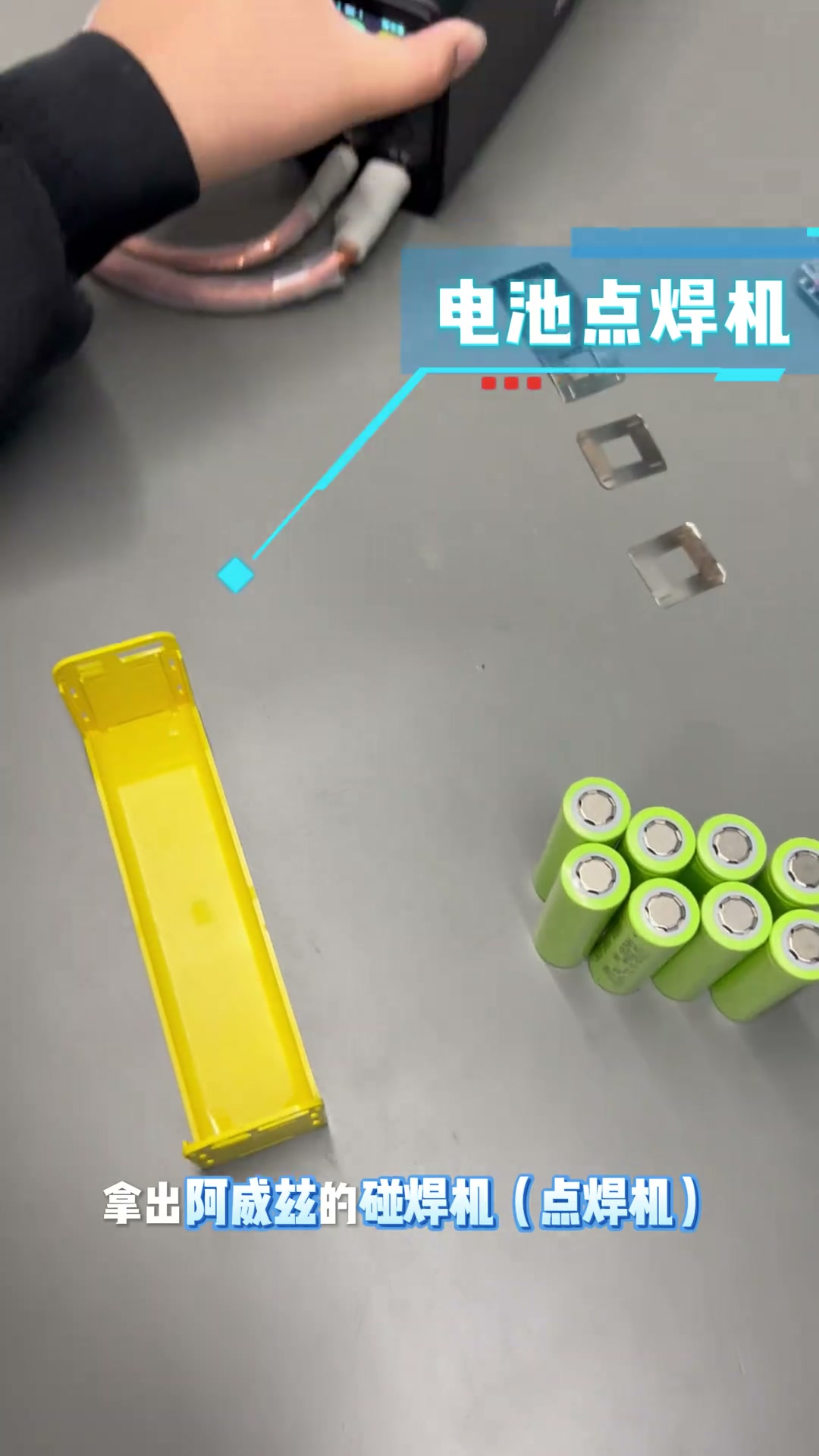
‘Shuyang’s got a job’ — a neighbor asked him to build a power bank and the materials are in: power-bank board, shell (transparent yellow), battery tabs (nickel strip), cells (6 × 18650, bought earlier). Out comes the AWithZ ‘touch welder’ (spot welder) and he starts welding the tabs; welds the negatives; welds the leads; flattens the cells out (two groups of 3P?); solders the red and black leads to the board; fits the shell and screws; shell on, see whether it charges: it lights up, and it’s fast charge; peel the film, slip the sleeve on, peel the outer film, fit the lid, screws in, done; detail shots, the transparency looks great, cyberpunk style; charge test again, fast charging, the board he bought is 22.5W PD; ‘Dad, the power bank’s yours now.’ Comments (823): fish-paper rings on the positives, fish paper under the folds, strap the cells, keep the positive weld inward — a missed weld can blow the tab (9); no fish paper on the positives is unsafe (3, creator: the cells have 2 layers of insulation of their own); makes me want a spot welder (3); same UF20B, press the pen down a bit harder before triggering, fewer sparks and nicer welds; better to buy a CUKTECH, 50-odd yuan for 20,000mAh at 55W (it’s for hands-on practice); this kind of board leaks and starves the cells after two months unused; 22.5W is slow charging.
Hand-built monster fan on 6 × 32140 cells: original 3D-printed structure joined with heat-set inserts, 3660KV brushless motor + aluminium blades bursting to 1200W; insulating rings on the cells, AWithZ U3 on manual weld, about 100A by Ohm’s law and a single nickel layer only passes 33A, so three layers stacked in a row; over 1000g of thrust
A monster fan hand-built on 6 × 32140 cells. The 3D-printed model is his own design, prints well, and the whole structure is joined with heat-set inserts. The motor is a 3660KV brushless paired with aluminium blades; the small motor can burst to 1200W. Insulating rings go on the cells, then spot welding with the AWithZ U3 welder set to manual; the motor is rated 1200W, which by Ohm’s law is about 100A, and this nickel strip passes at most 33A, so three layers of nickel are stacked one after another to make sure the cells can deliver their full discharge rate; the welds come out perfectly smooth. Cells in, fan housing and grip screwed together, done; thrust tested at over 1000 grams. Comments: asking for the files (×2), no mould needed?, how much did it cost, ‘1200W? my e-bike is only 1200W’.
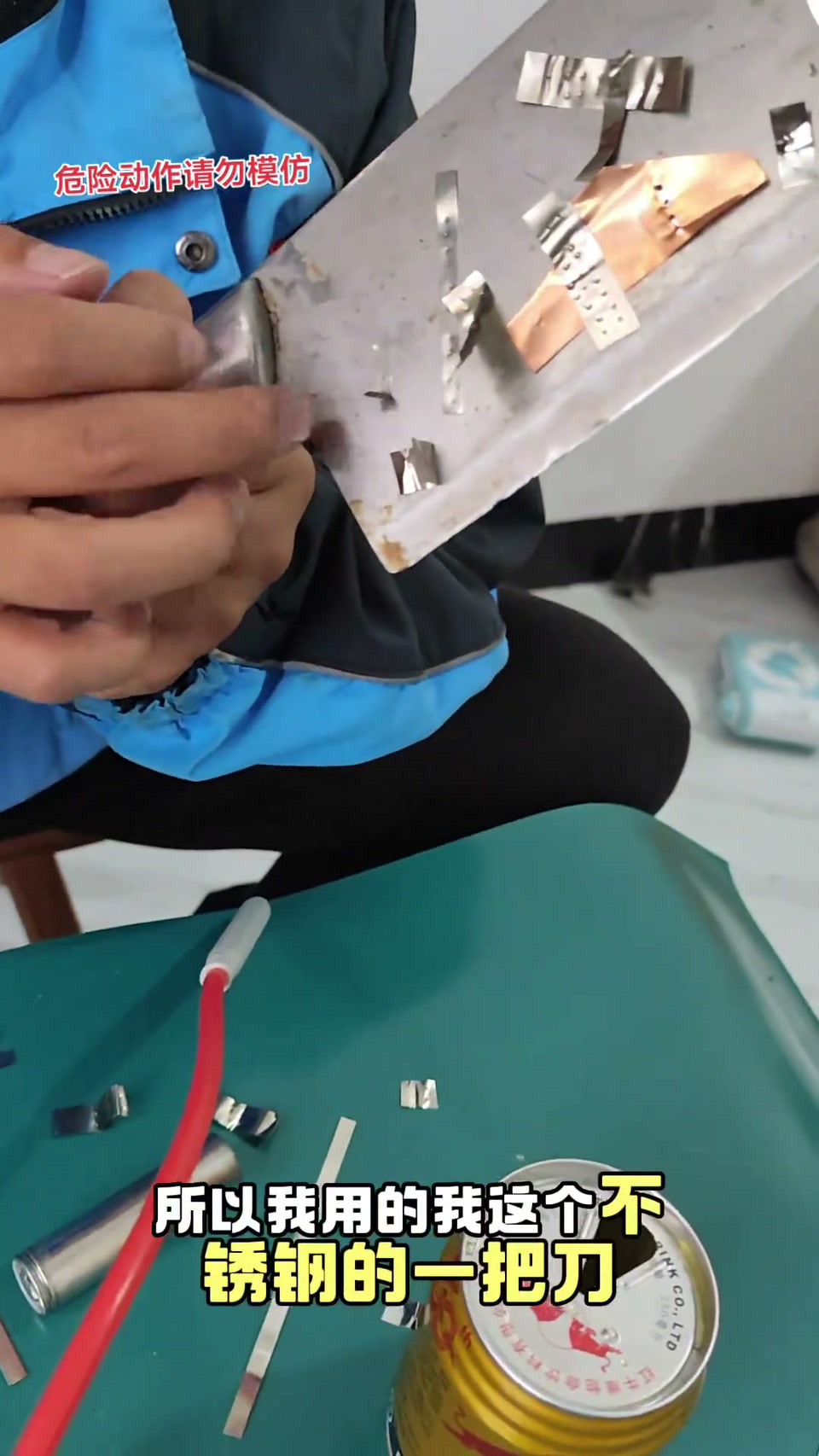
Lefeng admits he hasn’t figured the U3 out: the Jiashikai negative is steel, so he tests on a stainless-steel knife — 0.1 nickel strip only needs gear 1.5–1.8 (anything around 1.x is fine), 0.15 nickel strip at gear 2.5 blackens and throws sparks, not good, still not dialed in; cells are on the way and he’ll keep experimenting; comments: ordered from the storefront and it won’t power on, microwave-transformer welder also failed, once you get into it you’ll want a capacitor unit
The comments say I can’t even figure out the AWithZ spot welder; honestly, I haven’t, I’ve tried lots of settings. Because the Jiashikai negative is steel, I test on a stainless-steel knife: for 0.1 nickel strip on this cell the gear only needs to be 1-point-something, 1.5 is enough, and there won’t be a problem; how many gears 0.15 nickel strip needs I don’t know, bumped to 2.5 to try: too high a gear blackens it, it’s already throwing sparks, the result isn’t great, probably still not dialed in; the cells are bought and on the way, I’ll keep experimenting with this AWithZ spot welder. Title: 9.9 gears, 0.1 only needs gear 1.5–1.8; “I haven’t figured it out and you’re still buying it after me, unbelievable”. 207 comments: ordered from your storefront, arrived today and won’t power on (check whether it has charge; if it doesn’t work, return it right away); my microwave-transformer welder failed too (you’re going down the road I went down; the money for a hand-build buys one of these); a Zhongwei Zhixing 30s can’t weld 0.1 nickel-plated stacked on 0.1 copper to a Jiashikai negative (0.1 copper needs a ¥400–500 class machine); fine for beginners to play with but later you’ll definitely want a capacitor unit (yep); get a UF20B; how about the Xiaoqiang.
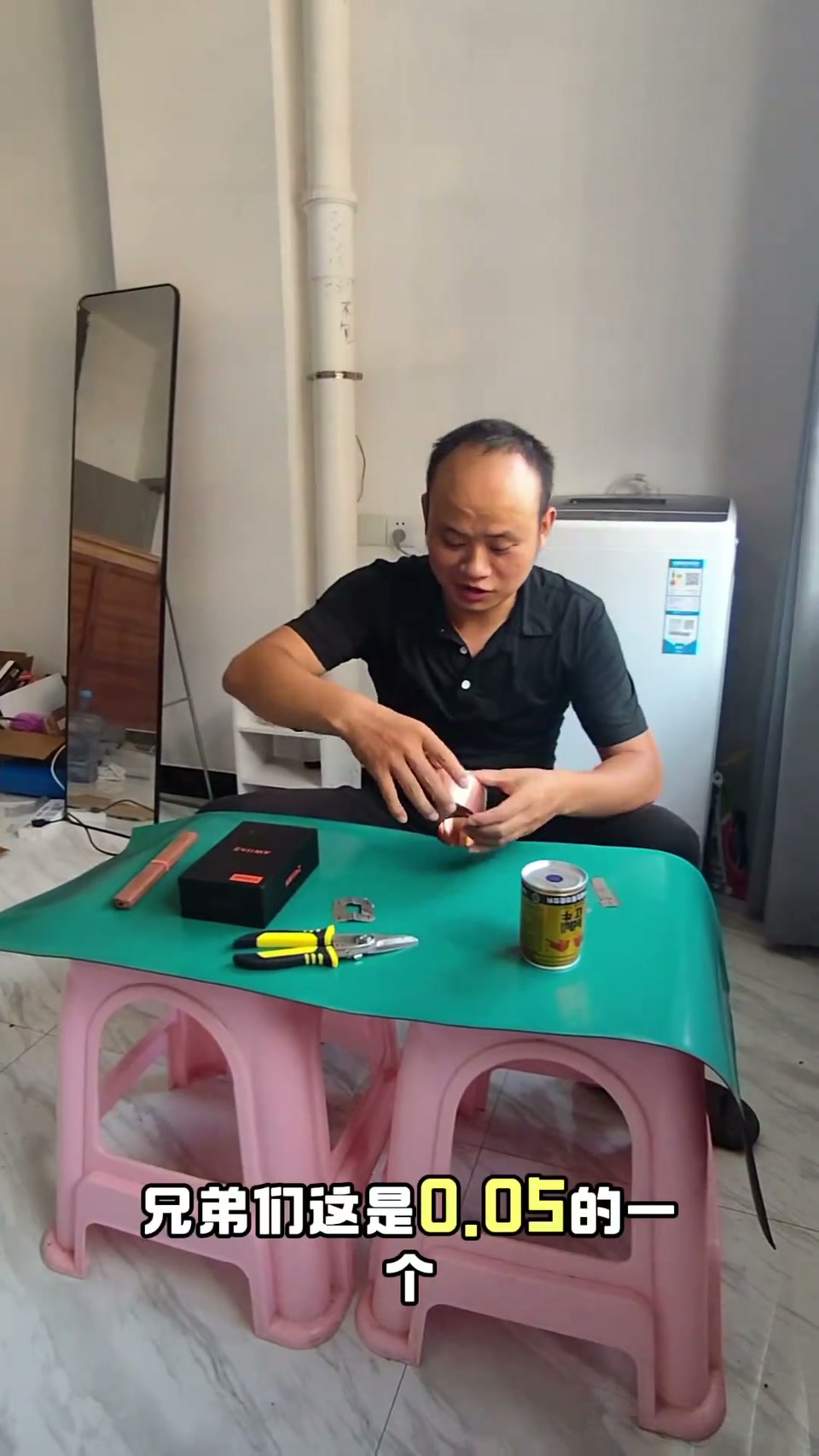
Lefeng gives up on hand-building a welder and buys the Douyin no. 1 seller, the AWithZ U3 Pro edition (11000mAh): unboxing (thick welding pen, nickel strip, USB output, manual key), auto mode fires the moment it touches and blows through 0.1 strip, ‘a bit fierce’, switches to manual; two welds on 0.05 copper can’t be pulled apart, it tears and still leaves the welds; 99 gears (9 coarse, with fine steps), interval left untouched; doubles as a power bank, ‘spend your power-bank money on this, it’s very good’; 550 comments backing capacitor welders / Xiaoqiang / transformer welders
The old welder couldn’t stack copper and hand-building was a detour, so he got the Douyin no. 1 seller, the AWithZ U3 Pro (picked up at the Cainiao station, 11000mAh). Unboxing: main unit box, the welding pen looks pretty thick, nickel strip too (check the thickness), the small holes on the cable are for the switch; long-press to power on, the screen shows interval / preheat (milliseconds) and mode auto; the top port is USB output for charging a phone, there is a separate charging port; the M key is the manual weld key (trigger in manual mode). First try in auto mode, set it down and it fired without pressing the switch, ‘gave me a fright, a bit fierce’, went straight through the 0.1 (steel strip), probably the gear wasn’t set right; switched to manual, where it only welds when you press the switch; that last weld was very solid, steel strip 0.05. Gears: 9 coarse gears each with fine steps, 99 gears in all; interval not adjusted. Two light welds of 0.05 copper on a 26650: can’t pull it apart, it already tears, and pulled off it still leaves two welds behind that won’t come off, welded very securely, much better than the old welder, handy and compact and doubles as a power bank; no cells on hand so the test ends there; spending your power-bank money on this is a good deal. 550 comments: the Xiaoqiang capacitor welder stacks 0.15 copper and is more reliable (creator: buy buy buy); why buy another battery welder, still on the detour, capacitor is the way to go (getting ready for a 45A battery next time); don’t mess with NMC, it explodes; for value it’s still Xiaoqiang; AWithZ really is good, well built; microwave-transformer welder was no good so also got an AWithZ 539; going to buy a Glitter 811H; a dual-900W transformer welder is far stronger, battery welders max out at 0.4 and the internal battery fades; with that money buy a Xiaoqiang.
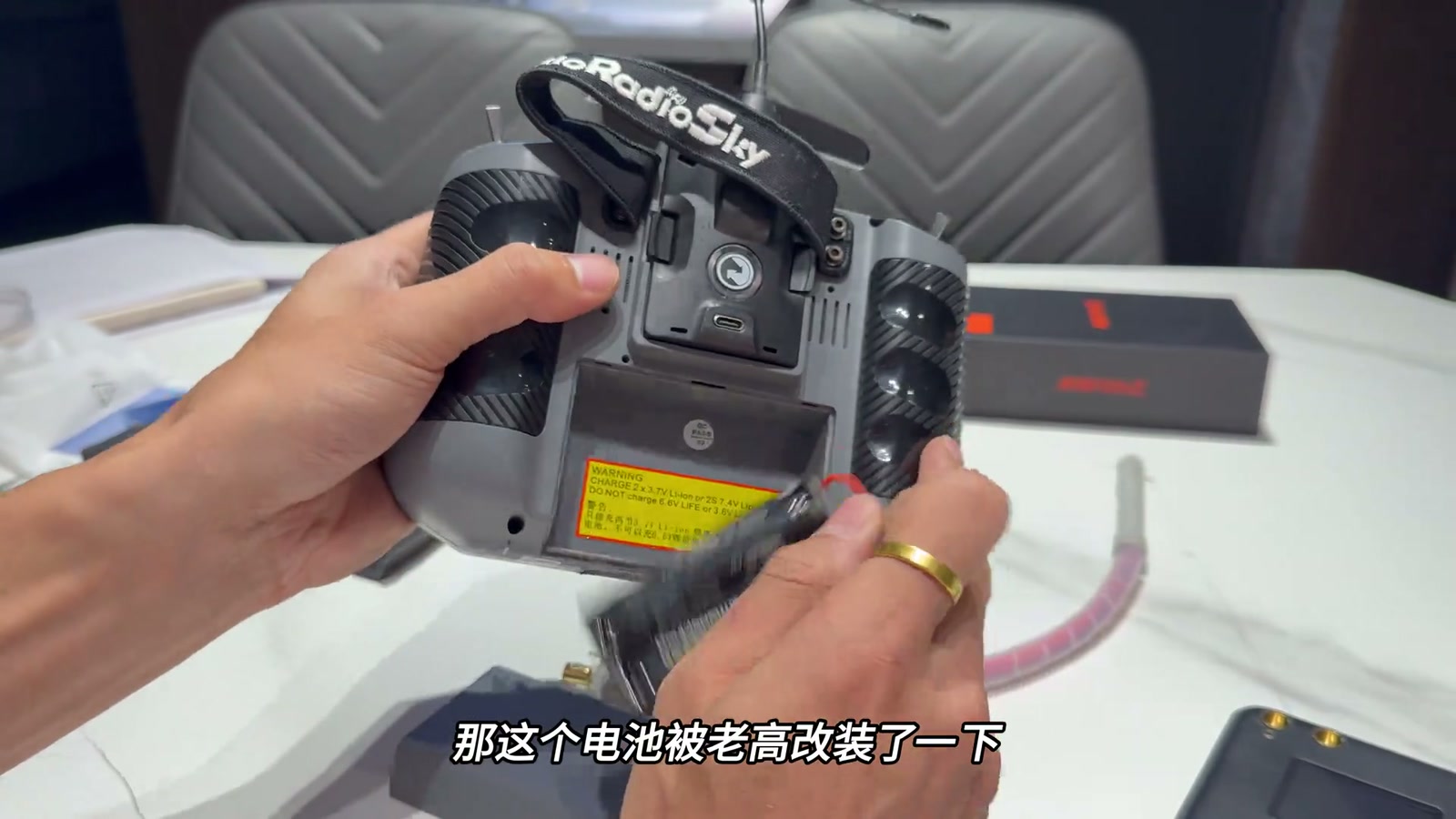
Lao Gao (RC / FPV) unboxes the AWithZ U3 (11000mAh, a hundred-odd yuan) and walks through a 2S 18650: a soldering iron on an 18650 runs too hot and hurts the cell, so spot-weld to ‘convert’ the terminals to nickel strip and then tin; manual mode, preheat 2ms / interval 2ms, gear 5, 4 spots per cell; 8.06V in series; the positive’s aluminium oxide layer won’t take solder so only nickel strip works; XT30 + balance leads, EVA foam + heat-shrink, balance port 4.048/4.039V, fast-charge with an RC charger
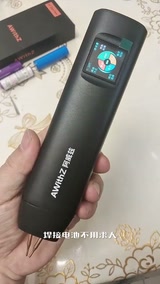
Unboxing the AWithZ U3 spot welder, a common tool for RC car folks: looks like a power bank, two gold-plated sockets for the welding pens, USB output doubles as a power bank, Type-C charging, 11000mAh 3.7V, ‘pioneer of small portable spot welders’; the manual matters (welding method, settings tutorial, weldable nickel / copper thicknesses); the accessory bag has two welding pens, a USB cable and a small pack of nickel strip. Use: DIY 18650/21700 series / parallel. Example, Lao Gao’s radio (Hello Radio V14) 18650 battery: before the welder he used a cell box + XT30 soldered to main + / −, charging through the balance plug was too slow, so parallel-connect an XT30 + XT60-to-XT30 to a charger for fast charge; with a spot welder no cell box is needed. Series / parallel joins on the 18650’s end metal with solder are very hard, and the heat easily damages the cell internals, so get a small spot welder, a hundred-odd yuan, two quick pops. Method: fix the cell, cut strip to length, round off sharp corners (to avoid piercing the heat-shrink); long-press to power on, push the pen pins in firmly; manual mode (press the switch on the pen, pop, welded; auto fires when the two pens touch); preheat 2 milliseconds, interval 2 milliseconds; gear turned down from 65 to 5 is enough; multi-pulse once; one pen presses while the other welds, two spots at gear 5 are already solid, four spots per 18650 (two presses) is very secure; tack the other cell’s positive, + and − joined. One 18650 is 3.7V, multimeter on DC reads 8.06V total, proving the series join. Main + and − on the front also get nickel strip: solder won’t take, the positive is an aluminium plate with a dense oxide layer that won’t tin, the negative can be soldered; once the aluminium is ‘converted’ to nickel it tins easily (comment: just file it and it’ll solder → ‘if it blows up from filing, go find him’). Balance leads to the middle strip between the two cells and to both ends; 2S done; fish paper works for insulation, Lao Gao wraps both ends in EVA foam then shrinks the film; bus reads 8-point-something volts, balance port 4.048/4.039V, normal. FPV pilots like fast charging, so the XT30 goes to an RC plane / car charger. A spot welder is a must for 18650 DIY, don’t go dumbly soldering 18650s with a big iron, too hot and risky. Comments: can you talk slower (no, 1.5× speed); soldering the voltage feedback on would be handier; where does the middle of the three 2S balance wires go; so easy, the iron always shorted before; bought a welder, time to hand-build an EV.
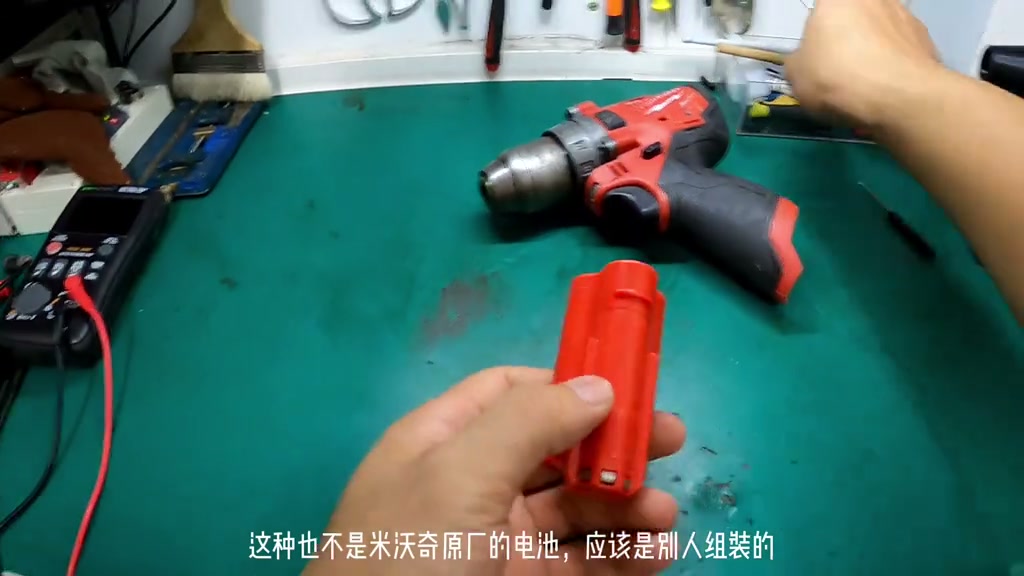
A viewer’s Milwaukee 12V battery is weak: non-OEM build, pack voltage 12V is normal but the three cells read 55/56/57mΩ; swapped for domestic 2500mAh (IR 12.4x), fish paper on the positives, AWithZ handheld welds 0.1 nickel strip with no effort, 0.15 needs max gear (0.2 won’t hold), pack 10.7V IR 46.9, noticeably better speed once fitted
A viewer sent in a Milwaukee 12V battery that went weak after a few uses, slow speed and wrong sound in the tool; opened up, it’s not Milwaukee OEM but a cheap pack someone else built. Multimeter reads a bit over 12V total, normal; swap for domestic 2500mAh cells (the ones he uses himself); the Zoyi multimeter reads the new cells at 12.42/12.48/12.46mΩ, the old cells that came out at 55/56/57mΩ — IR that high is never going to work well in a power tool. Fish paper on the new cells’ positives for insulation. The AWithZ handheld spot welder is handier for the welding; 0.1 nickel strip, no effort at all; he had thought of building a big welder but doesn’t use one much so gave up, a small one is enough for occasional use; 0.1 welded on, you can’t pull it off by hand. The main negative reuses the 0.15 strip taken off earlier, and it needs max gear to hold; this machine welds at most 0.15, 0.2 won’t hold. Pack reads 10.7V, IR 46.9mΩ. Reassembled and charged a while, then tested: better sound, high speed fine too, not fully charged so not at its best yet but much better than before. Comments: just pick three JP30s and drop them in (that works); is a drill’s weakness related to the battery; multimeter recommendation / are you using it as an IR meter.
Wuliao Chaixiu tests an AWithZ H1 sent by the factory: compact, 11 gears, long-press the side button to power on, short-press the top button for gear / long-press to switch auto/manual; 0.1 nickel strip at gear 1 pulls off by hand, at gear 5 with three taps it takes pliers to tear apart; 0.2 nickel strip comes off with a light tug at gear 5 and with a bit of force at gear 11 → no good; 0.15 on a cell at gear 11 needs pliers — ceiling is 0.15; compared with a DIY welding board at ¥40–50 + a DIY battery, ¥200-plus for the set and three have already died; suited to hobby DIY, don’t expect a ¥100-odd unit to handle heavy use
Another manufacturer sent a product to test: the AWithZ small handheld spot welder H1; AWithZ is a company that specializes in spot welders; compact, suits DIY, not expensive, worth buying if you weld only occasionally. Long-press the side button to power on; short-press the top button to change gear, 11 gears in all; long-press to switch between auto and manual. The 0.1 nickel strip that came in the box: at gear 1, one manual tap feels smooth, but a tug pulls it off by hand (the strip tears a little); at gear 5 with three more taps it can’t be pulled off by hand, and pliers tear it apart. 0.2 thick nickel strip: comes off with a light tug at gear 5, and at the top gear 11 comes off with a bit of force — 0.2 isn’t really doable. 0.15 nickel strip welded onto a cell at gear 11 can’t be pulled off by hand, pliers needed, quite solid; 0.1/0.15/0.2 all tried, the thickest it can weld is 0.15. The ¥40–50 welding board he bought before needs a high-discharge battery; the battery he built himself (doubles as a power bank / car jump starter) cost ¥100-odd, so ¥200-plus for the set, and it breaks easily — this is the third one; had he known AWithZ made these he wouldn’t have bought that; the H1 suits hobby DIY, but if you weld a lot and hard, don’t expect ¥100-odd to meet your needs. Comments: the free one is great, the one you buy isn’t (7); low needs, a few small packs now and then, just right; the battery type has too little current, you still need a capacitor (creator: this one only sells for ¥100-odd); officially rated for 0.25 (there’s fine print); only two MOSFETs on the board, no good; 0.15 won’t weld at all, only 0.1; this thing is no good, I bought one (creator: mine was free).
Precise spot welding in the palm of your hand! H2 handheld colour-screen spot welder — welding with more freedom! #AWithZSpotWelder #WeldingEquipment #diy #UnorthodoxHacks
Home-built soldering station, version 2: 6 Li-ion cells + BMS + 3D-printed shell; fish paper on the positive ends, cells laid out to the BMS wiring, welded with the AWithZ supercapacitor spot welder at gear 10 using the manual-button pen, balance leads and power leads soldered on; twin switches (battery / main board), external-power charging port, sleep connector, assembled and test-soldered
Lots of people in the comments showed their own home-built soldering irons, so the creator upgrades his earlier DIY soldering station: materials are 6 Li-ion cells, 1 BMS, and a self-designed 3D-printed shell (came out well). Battery welding: fish paper on the positive ends for insulation, cells positioned to match the BMS wiring; welded with the AWithZ supercapacitor spot welder at gear 10, the pen with the manual button is convenient; weld the cells, the BMS balance leads and the power leads in turn, then insulate the battery. Main unit assembly: on the rear panel the left switch controls the battery and the right switch the main board, external power and charging port on top, sleep connector below; fit the main board with four screws, secure the battery and wire it as required, mind the polarity; fit the rear panel and it’s done, the outside fits together seamlessly; plug in the handle and the sleep socket, switch on the battery and the main board, and solder a board to test. Comments: one viewer reports an AWithZ that ‘starved’ twice after sitting for half a year — the first time it revived after a day and night on charge, the second time it didn’t after 36 hours and went back to the factory; don’t buy the big-capacitor type if you rarely use it (creator: didn’t know that could happen); T12 mod enthusiasts; some find the accessories over-complicated, simplicity is best.
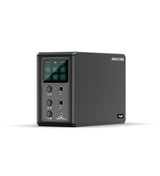
Wanwu Wulian unboxes the UF20B supercapacitor spot welder: aluminum-alloy case, 1750A/10.5kW, rated for 0.15 copper / 0.4 nickel; accessories are sandpaper, nickel strip, welding pens (with manual switch), power cord; two front buttons, foot-pedal port, dual pen ports; manual gear 10 welds 0.12 + 0.24 nickel strip so tight it needs pliers to tear apart; gear 52 welds a 0.38 utility-knife blade to 0.24 nickel strip solidly; 99 gears; comments: ¥570 is too much, sticking with a relay / ¥600 hand-builds a 4-capacitor rig
Opening: a 0.38 thick blade and 0.24 thick nickel strip spot-welded together, at only half power. Introducing the AWithZ supercapacitor spot welder: main unit + accessory box (a sheet of sandpaper, a pack of nickel strip, a pair of welding pens, a power cord); refined aluminum-alloy case, model UF20B, max output current 1750A, max power 10.5kW, rated to weld 0.15 thick copper strip and 0.4 thick nickel strip; two buttons on the front, one foot-pedal port, two welding-pen ports; the welding pen has a manual switch, so you line up first and then fire, more convenient. Power on with a long press: you can set weld mode, preheat time, interval time, gear, trigger time, pulse count (screen shows 20ms, T 31°C). Plug in the pens, manual, gear 10, welding on a Li-ion cell: 0.12 and 0.24 nickel strip, bright welds with no blackening, can’t be pulled off by hand, pliers needed, both strips shred before they come off. Then a 0.38 utility-knife blade + 0.24 nickel strip, gear set to 52, judging by the sparks the power is serious, and even this thick it welds solidly, only comes off once the pliers tear it apart; a professional spot welder indeed, 99 adjustable gears cover most needs. Comments: ¥570 is too much, sticking with a relay (3); for ¥600 you can hand-build a 4-capacitor rig, though the compact looks are nice; five hundred-something; do a teardown; DIY is better; under two hundred would be fine.
Ran into a problem? Have an idea for improvement? Tell us. We read every piece of feedback carefully. Valid feedback earns points, redeemable for accessories / coupons.
Thanks for your feedback!
We'll review it within 1–5 business days. If you left an email, valid feedback earns points redeemable for accessories / coupons. If we need to follow up, we'll contact you at the email you left.
WeldWorld is an open platform for user sharing; content does not represent official advice.
Improper battery handling can cause fire, explosion, chemical burns and serious injury. Read the full AWithZ Safety & Usage Guidelines before any lithium battery assembly, spot welding or testing, and before using the community.
Community content is personal experience, not verified by AWithZ; where it conflicts with official documents, the official documents prevail.
Never apply someone else's settings directly; always start at a low level and test on scrap.
Before copying any procedure, go through the self-check list in Part 3 of the guidelines.
 LV3
LV3

 Ep. 37 | Batteries? I can’t repair them, but I can build themProjectsBlindFix
 LV5
LV5






 LV5
LV5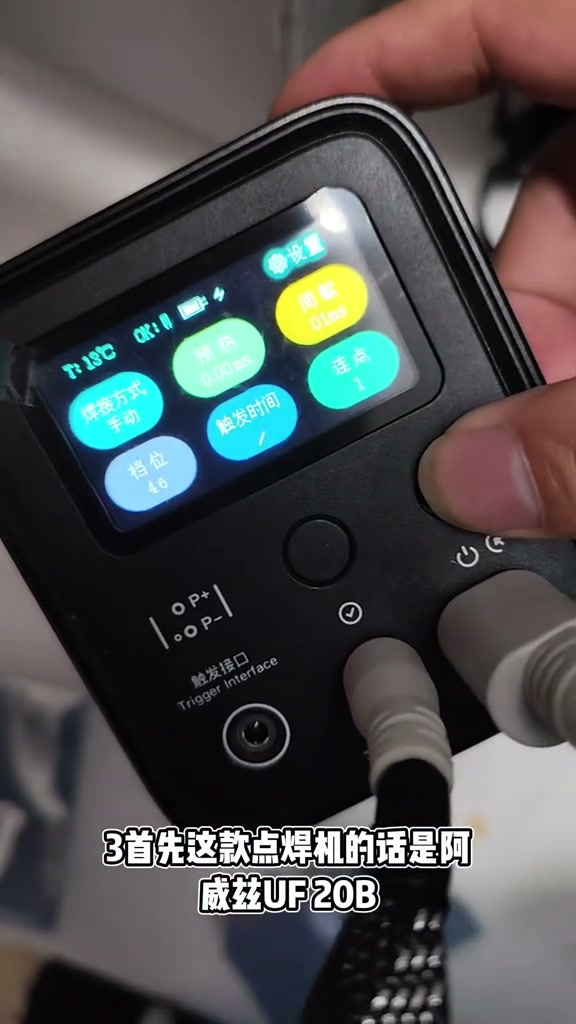







 LV1
LV1
 LV1
LV1

 LV1
LV1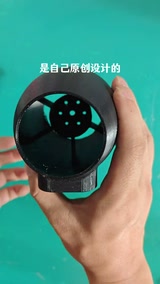



 LV1
LV1

 LV2
LV2



 LV2
LV2