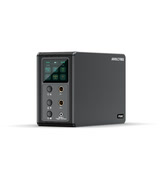
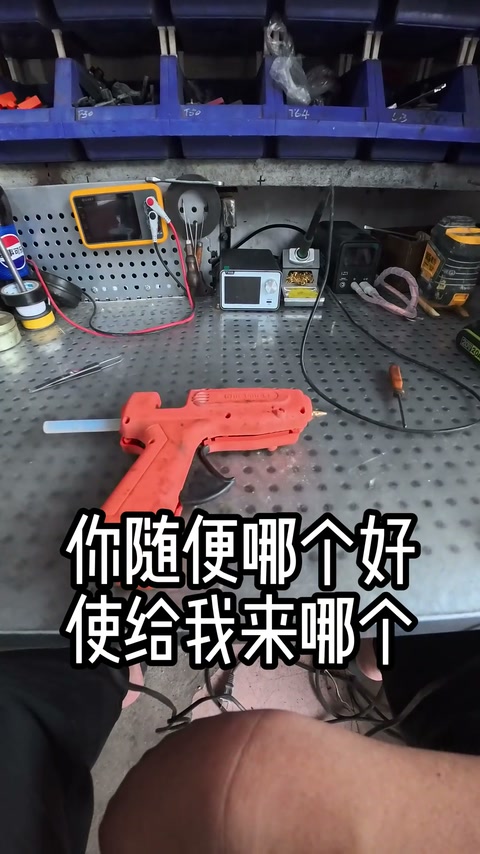
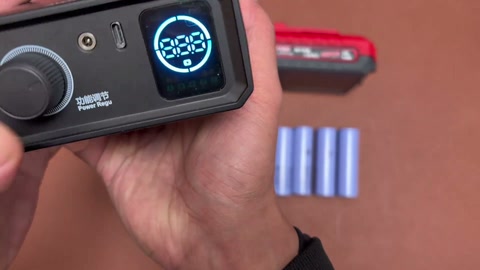
AWithZ P30C spot welder — now I can build my own 21700 power packs




Creator’s own settings as stated in the video (timestamps link to the moment). Not official values — test on scrap first.
Bill of materials
Welder, accessories, consumables and parts used in this build; quantities and specs are editable Download BOMDescription
12-minute unboxing and test of the AWithZ P30C capacitor spot welder: 3 × 1000F supercapacitors, 9V15A XT60 charging, usable after 5 minutes, 25 mm² pen cable, 999 gears; at gear 600 it welds 0.2×10 copper strip stacked on 0.15 nickel-plated steel strip to 21700s, external meter peaks 2070–2107A, strip tears apart without a weld letting go; gear 500 at 2052A also welds but 550–600 is recommended
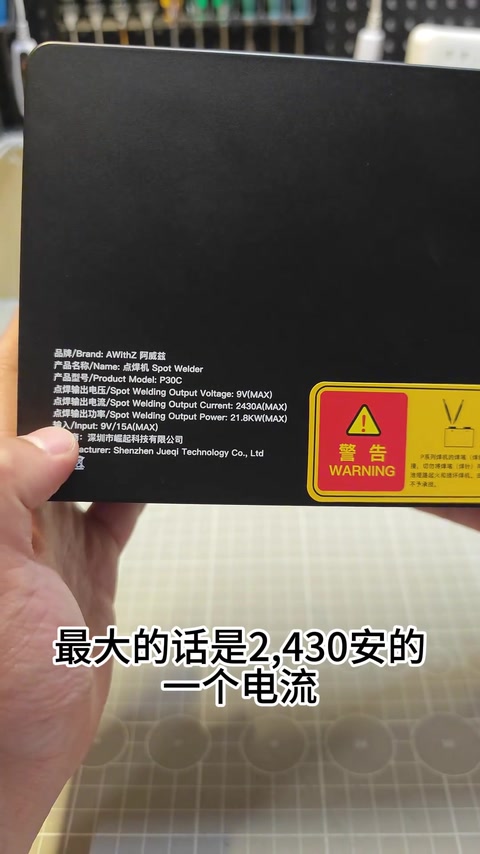
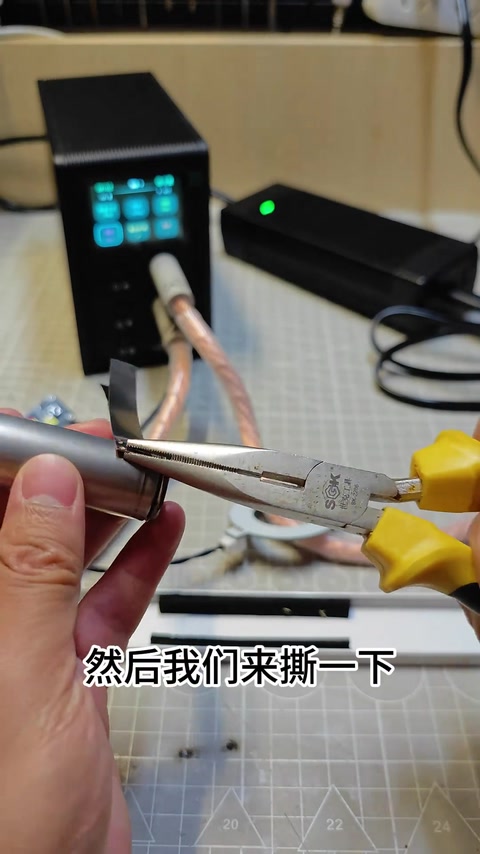
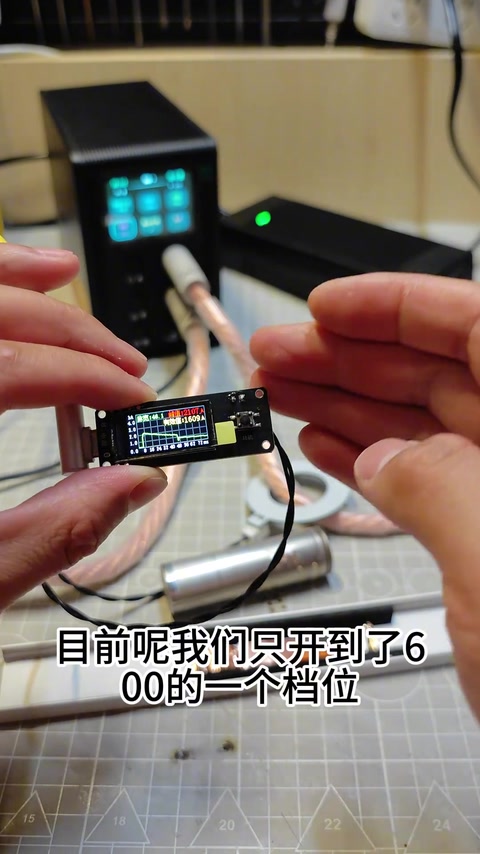
An RC-model creator unboxes the more professional P30-series capacitor spot welder he chose for building 21700 power packs. Packaging: an intro card (32 patents worldwide), two accessory boxes and the main unit. Accessories: a 9V15A charger (charges the capacitors), a foot switch, an 18650 plastic welding jig, two spare pairs of welding pins, a very thick, soft pure-copper pen cable (later checked: 25 mm²), nickel strip (0.1 or 0.15), a file for dressing the tips, and the manual (battery icons, system settings, thermal protection — no charging above 60℃ or below -10℃, 2.4-inch color screen, about 180×131×80mm, auto power-off after 8 minutes idle, three ‘welding experience’ notes). The body is a boxy plastic shell but feels heavy; P30C model mark at bottom right; on the front a 2.4-inch color screen, power and control keys, two welding-pen ports and a trigger port; XT60 input at the rear. Nameplate: welding output voltage 9V (MAX), output current 2430A (MAX), max output power 21.8kW, input 9V/15A. Red warning: the two tips of a P-series pen may only touch the same terminal plate of a cell — never touch the two plates separately, or it shorts and catches fire. Main screen on power-up: welding mode (manual / auto), preheat time, interval time, welding gear, trigger time, repeat count; OK means ready to weld, a slash means low battery; internal temperature shows 27℃; system settings: language, repeat interval, welding sound, screen brightness, screen rotation, auto power-off, factory reset; plus three ‘welding experience’ notes (results depend on pen pressure, material thickness and stacking order) — helpful for beginners. Inside are three 1000F supercapacitors; from completely flat, 5 minutes of charging is enough to weld. The pins are imported alumina copper. Test: straight to 0.2×10mm copper strip stacked on 0.15 nickel-plated steel strip (the nickel layer adds resistance so the copper can be welded to the cell), starting at gear 600 (max 999) with an external welding-current meter connected; he recommends keeping the charger plugged in while welding to top up at any time. Gear 600: four welds, peak 2070A, RMS 1574A; pulling tears the strip apart, fully welded. Down to gear 500: 2052A, both welds hold too (one torn through, one shows copper flow), but to be safe 550–600; back to 600 for 3 more shots, 6 welds, all tear apart with no weld letting go, current 2107A — the rated max is 2400-odd amps and gear 600 is already enough. Conclusion: 0.1/0.15/0.2 and even 0.3 nickel-plated steel strip, and 0.2 copper stacked on 0.1/0.15 nickel, are no problem at all — fully up to building 21700 power packs; long-term performance to be seen once he builds packs with it. Comments: ‘only 2000A at this price’, doubts that 2000A can weld 0.2 copper on 0.15, someone’s ¥336 home-built welder does the same but with tearing, and someone says 0.15+0.15 tears at gear 270 after switching to a one-piece pen.
Outcome
| Goal | Unbox and review the P30C capacitor spot welder; verify it can weld the 0.2 copper + 0.15 nickel used for 21700 power packs |
| Build | P30C + 0.2×10 copper strip stacked on 0.15 nickel-plated steel strip → 21700 |
| Result | Gear 600 at 2070–2107A fully welded, strip tears without letting go; gear 500 at 2052A also works · verified on camera: 482–522s, 548–576s, 589–616s pull tests + external current meter readings |
Steps12 steps · click a frame to jump
 1. Unboxing: intro card, two accessory boxes, main unit
The P30 series is more professional, chosen for welding 21700 power cells; open the box: AWithZ intro card (32 patents worldwide), first and second accessory boxes, main unit underneath.
00:12 – 00:53 2. Accessories: 9V15A charger, foot pedal, welding jig, spare pins, thick copper cable, nickel strip, file
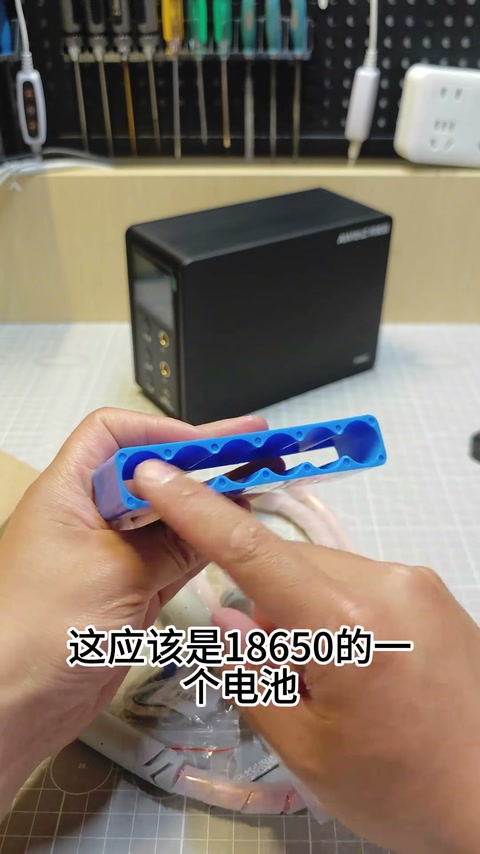
The charger outputs 9V15A to charge the capacitors; foot switch for triggering; 18650 plastic welding jig; pins already fitted on the pen plus two spare pairs; the cable is especially soft pure copper and very thick (later checked, 25 mm²); good grip; nickel strip 0.1 or 0.15; a file to dress the tips.
00:53 – 02:12 3. Manual highlights
Battery icon levels, charging icon, settings entry; thermal protection: no charging when internal temperature is above 60℃ or below -10℃; 2.4-inch color screen; about 180×131×80mm; auto power-off after 8 minutes idle; weld results depend on pressure / technique / ambient temperature — practice recommended.
02:12 – 02:40 4. Looks: boxy plastic shell, 2.4-inch color screen, two pen ports, trigger port, XT60 input
P30C model mark + logo at bottom right; boxy plastic shell but heavy; 2.4-inch color screen, power and control keys on the front; two welding-pen ports; trigger port fires the weld; XT60 input at the rear for the charger.
02:40 – 03:20 5. Nameplate and red warning
Output voltage 9V, max current 2430A, max power 21.8kW, input 9V15A; warning: the two tips of a P-series pen may only touch the same terminal plate of a cell — never touch the two plates separately, or it shorts, catches fire and damages the welder, and the seller takes no responsibility; read it carefully.
03:20 – 04:20 6. Main screen on power-up, system settings, welding experience
Main screen: welding mode manual / auto, preheat time, interval time, welding gear, trigger time, repeat count; OK means ready, a slash means low battery; about half charged; internal temperature 27℃; settings: language, repeat interval, welding sound, screen brightness, screen rotation, auto power-off, factory reset; three ‘welding experience’ notes (pressure / thickness / stacking order), helpful for beginners; long-press OK to go back.
04:20 – 06:06 7. Charging, capacitors and pen specs
Plug in the charger and it shows charging; three 1000F supercapacitors inside; 9V15A input, from completely flat it can weld after 5 minutes; pen cable 25 mm² copper; pins are imported alumina copper; foot switch fitted to the trigger port.
06:06 – 06:59 8. Test plan: 0.2×10 copper strip stacked on 0.15 nickel-plated steel strip, from gear 600, external meter, charger connected
21700 power cells discharge at high current, so copper strip is stacked with nickel; the nickel-plated steel layer adds resistance so the copper can be welded to the cell; gear 600 (max 999), go higher if not enough; a small welding-current meter is connected; keep the charger plugged in while welding so the capacitors top up as soon as they drain.
06:59 – 07:50 9. Gear 600: peak 2070A / RMS 1574A, tears apart without letting go
Four welds made (the first two just fix the nickel and copper strips); peak 2070A, RMS 1574A; pull test — the 0.2+0.15 strip tears apart, fully welded, very solid.
07:50 – 08:42 10. Down to gear 500: 2052A, holds but one not fully torn
Down to gear 500, one shot for two welds; current 2052A; pull with pliers — also welded, one torn through, one not fully torn but showing copper flow; 500 works, 550–600 to be safe.
08:42 – 09:36 11. Back to gear 600, 6 more welds: all tear apart; 2107A
Back to 600, 3 more shots for 6 welds, all tear apart in the pull test with no issues; 0.1/0.15/0.2 and even 0.3 nickel-plated steel strip, and 0.2 copper on 0.1/0.15 nickel, are all fine; current 2107A, rated max 2400-odd, gear 600 already does the job.
09:36 – 11:08 12. Conclusion and what’s next
0.2 copper stacked on 0.15 nickel-plated steel strip welds fine, fully up to building 21700 power packs; long-term performance to be seen when he builds packs with it; questions in the comments.
11:08 – 11:54
Bill of materials
| P30C capacitor spot welder ×1 | 3×1000F, 9V, 2430A MAX · Under review |
| Charger ×1 | AC100–240V → DC9V 15A,XT60 · Charges the capacitors |
| Foot switch ×1 | Trigger |
| Welding pen + spare pins ×1 | 25 mm² copper cable, alumina copper pins, two spare pairs · Welding |
| 18650 welding jig / file / nickel strip / manual | Accessories |
| Copper strip ×1 | 0.2×10mm, 5 m · Test |
| Nickel-plated steel strip | 0.15 · Stacked on top to add resistance |
| Welding current meter ×1 | Peak / RMS · Measure current |
| 21700 cells | Workpiece |
Measured on camera
| Peak welding current (gear 600) | 2070 A 08:10 |
| RMS welding current (gear 600) | 1574 A 08:10 |
| Peak welding current (gear 500) | 2052 A 09:10 |
| Peak welding current (gear 600, second round) | 2107 A 10:55 |
| Internal temperature | 27 ℃ 04:20 |
| Nameplate max current | 2430 A 03:25 |
Creator’s tips
- Copper strip is stacked with nickel-plated steel strip to add resistance, making it easier to weld the copper to the cell 07:11
- Keep the charger plugged in while welding so the capacitors top up as soon as they drain 07:37
- For 0.2 copper + 0.15 nickel start at gear 600; 500 works too, but 550–600 to be safe 07:24
- Beginners should first read the three built-in ‘welding experience’ notes (pressure / thickness / stacking order) 05:28
- OK on screen means ready to weld; a slash means low battery, charge it 04:34
Pitfalls
- At gear 500 one weld was not fully torn through (slightly weak) 09:22
- The creator misspeaks the P30C model name (self-noted) 10:43
Li-ion safety
- The two tips of a P-series pen may only touch the same terminal plate of a cell — never touch the two plates separately, or it shorts, catches fire and damages the welder 03:46
- Thermal protection: no charging when the internal temperature is above 60℃ or below -10℃ 02:12
Quotes
Cost & time
| Time | Ready to weld after 5 min of charging (from empty) |