78 × 18650 cells welded. Arms are sore, heart is full
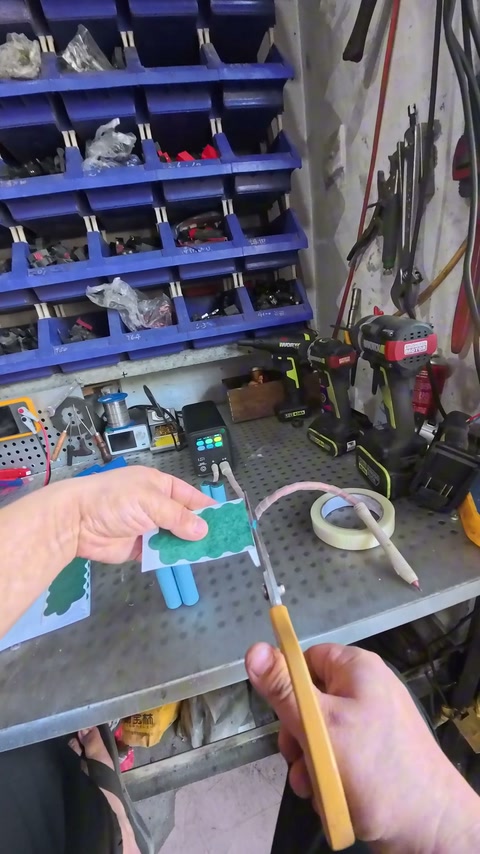
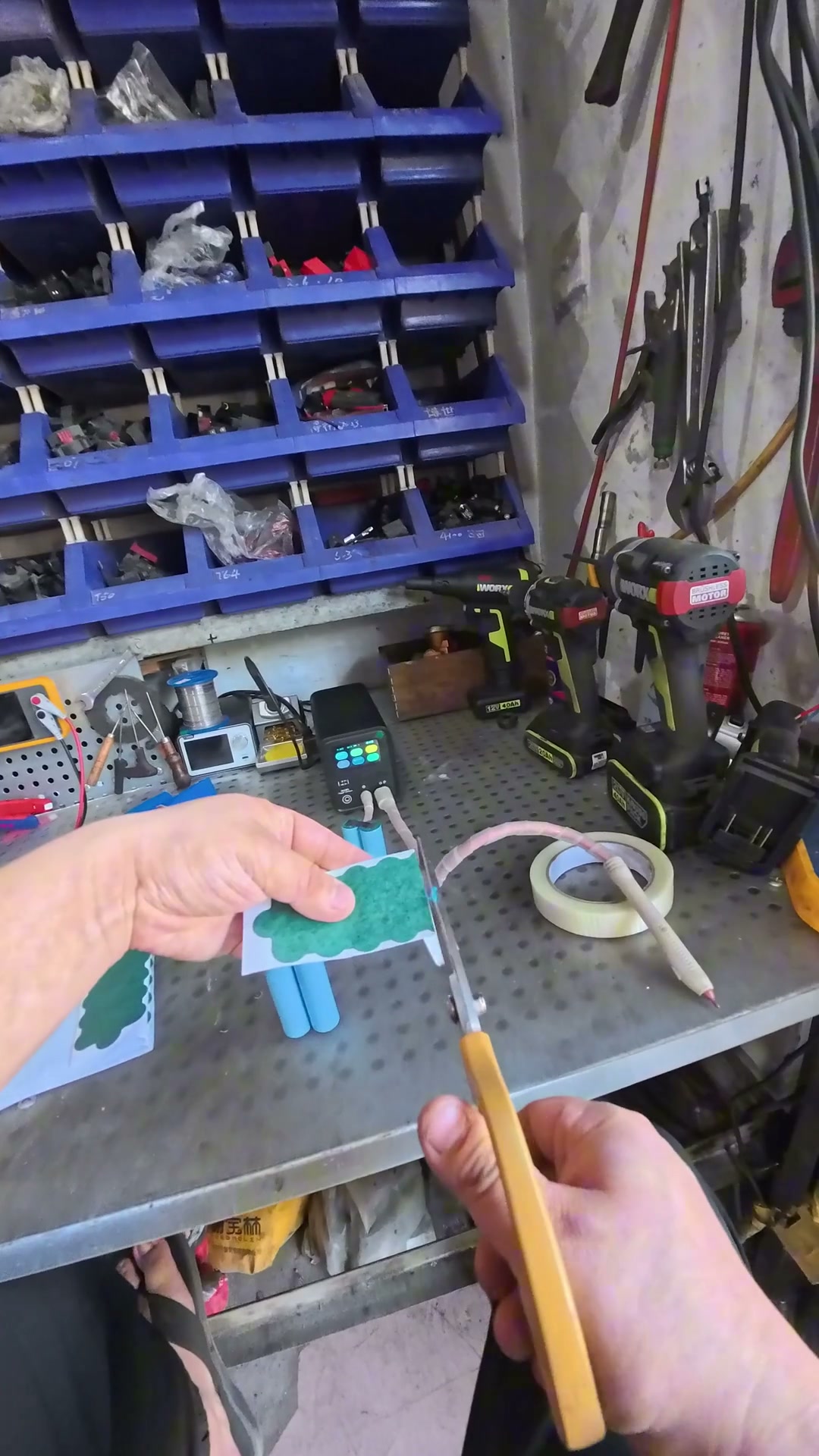
The customer's old case is only 130×370, so I measured three times before I dared to cut anything. 13S6P, 0.2 nickel-plated strip, UF20B at gear 38 — watching the welds light up one by one is seriously addictive.
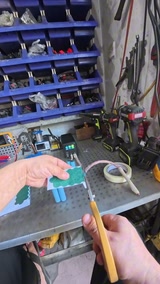
Halfway through, the welding pens touched and blew a hole right through one cell. Swapped it out and started over — newbies, remember this: position first, then press. Don't rush.
BMS goes in tomorrow, it goes back to the customer the day after. Will report back.
Master Zhang opens a follower’s ‘48V15Ah Panasonic’ e-bike Li-ion battery: feather-light, foam stuffed down both sides of the box, actually unbranded 18650 knock-off cells in 13S3P; rebuilt as 15Ah with 78 × EVE 2.5Ah 18650 (13S6P), 0.2 nickel-plated steel strip, capacitor spot welder with 4 welds per cell, checked for wrong / missed welds, BMS fitted and charge/discharge tested; warning: any pack labelled CATL / Panasonic cells is fake
A follower from out of town sent in a 48V Li-ion e-bike battery, label says 48V 15Ah Panasonic cells, made 2023-12; it feels feather-light in the hand, clearly not 15Ah, range is very short and nowhere near the kilometres the seller promised. Off with the top cover: the cells only take up a little space in the middle, the rest is foam padding, the block is very small; inside it’s 18650s, 13S3P, the wrappers carry no brand or capacity info — typical knock-off cells, you can imagine the range; this battery is worth nothing. Rebuild as 15Ah: brand-new EVE 18650s at 2.5Ah each, 6P13S; place them in the holder alternating + up / − up, lay one row first as the reference, mind the orientation and don’t get it wrong; snap the top holder on to make one block; the connecting material is 0.2-thick nickel-plated steel strip cut to the needed lengths; the welder is just an ordinary capacitor spot welder — 18650s don’t need much current; 4 welds per cell to guarantee current-carrying strength; weld the parallel and series links in order, then check the whole block for wrong or missed welds; fit the BMS, charge and discharge test, no problems and it’s done. Warning: when buying a battery, any pack whose cells are labelled CATL, Panasonic and the like is fake. Comments (343): how much for a 48V30A build (2); 12C 25P cell config is overkill, 5C is enough (2, doesn’t match this video); selling fakes is a crime, jail (1); which courier did you use (1); how much for 48V25A; how much to rebuild a Sunra; you can tell it’s only a few Ah just by looking.
A Xiluopu scooter’s 48V21Ah Li-ion pack is dead after two-plus years without charging (green light stays on, won’t charge; opened up it smells of electrolyte and the cells are corroded through), so it is rebuilt as 13S4P EVE 18650 2.5Ah = 48V10Ah: fish paper, alternating + / − rows in a jig, no holder with an epoxy board between each series group, 0.2 nickel-plated steel strip welded on both faces watching for missed or loose welds, strapping tape wrap, harness soldered to each group’s tab, BMS fitted and wired, awaiting the charge / discharge test
A Xiluopu scooter Li-ion pack sat for over two years without charging; on the charger the green light stays on and it won’t charge; after two years unused the chance of waking it is very small, most likely dead; label says 48V 21Ah; opening the epoxy board releases a strong sour electrolyte smell, many cells are corroded through by leaked electrolyte, 100% not worth repairing. The customer decides on a rebuild: the scooter is only for getting around and doesn’t need that much capacity, 10Ah is cheaper; new EVE 18650 cells at 2.5Ah each, 13 series × 4 parallel = 48V 10Ah. The cells, with fish paper on, are laid into the jig in 13S4P order, one row positive-up, the next negative-up; the scooter case has no room for holders, so it is a holder-less design with an epoxy board between each series group for insulation; 0.2 thick nickel-plated steel strip spot-welded, the welder set to a suitable current, every cell welded, watch for missed or loose welds, weld both faces, leave the main + and − out. After welding, wrap several turns of strapping tape so it becomes a solid block that won’t come apart under vibration. Fish paper where the harness runs and where the BMS sits; the BMS harness is soldered in order to each group’s tab; the BMS is fitted and the + / − power leads connected; assembly done, only a charge / discharge test to pass and it’s finished. Comments: with alternating rows do the + and − have to be on the two sides; the positive lead is too long, should be thicker (2); how much for a pack (many); how much for 48V20A; do you sell batteries; address.
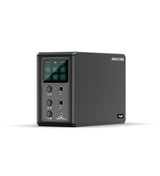
Li-ion tech Zhang re-cells: a customer’s 48V “15Ah” battery (made 24-09) goes green as soon as it’s plugged in and won’t charge or discharge; inside are salvaged old 18650s in 13S4P, really 10Ah, many leaking, crude workmanship; cells scrapped, BMS kept, rebuilt as 48V10Ah with 52 brand-new EVE 2.5Ah 18650s (13S4P), 0.2 nickel-plated steel strip on a capacitor welder (preheat 0.05ms / interval 20ms / gear 29), pre-cut insulating paper where the sense leads run, tabs welded in order and checked before connecting the board, 49.5V/4.92A charge/discharge test
Opens with the customer: the battery hasn’t lasted well since 2024, used to charge for three hours, now goes green the moment it’s plugged in. Label says 48V 15Ah, made 2024-09; the problem is it won’t charge or discharge. Opened up: cylindrical 18650s; the case says 15Ah, but the cells are 2.5 each in 4P, really 10Ah; clearly salvaged old cells used a second time, many already leaking; very crude workmanship; he decides to scrap the cells and rebuild with brand-new ones; the only usable part of the old pack is the BMS, removed for reuse. Rebuild: 18650 at 2.5Ah each, 48V10Ah needs 13S4P, 52 cells, brand-new EVE; laid into the holder one group positive-up, next negative-up; series raises voltage, then 4P adds capacity. Welding uses 0.2 nickel-plated steel strip on a capacitor spot welder, settings on the screen (preheat auto 0.05ms, interval 20ms, gear 29, trigger 0.6s, continuous); the process is simple as long as nothing is missed; check for missed or wrong welds afterwards. Fit the BMS, usually on the negative side; pre-cut insulating paper where the sense leads run; tidy the ribbon and weld it to each group’s tab in order — the order must not be wrong; the sense leads monitor each group’s voltage and cut the BMS circuit if it goes too high or too low; to avoid mistakes, after each weld the lead order is checked on a test board before connecting the BMS. Finally the + and − power leads go on, a proper charge/discharge test (49.53V 4.92A), then insulation, back into the case, done. 16 comments: are the EVE 25Ps genuine (print and barcode misaligned); how much for a pack (1); how much for a 48V50Ah for a ride-share bike; how much per cell; are you in Shenyang; the original didn’t even have a holder; what BMS is that small.
Sized to the customer’s old case: 78 × EVE 2.5Ah 18650 cells in 13S6P for a 48V 15Ah e-bike pack
A customer sent in a 48V e-bike battery case whose cells were dead. The creator measured the inside (130 × 370), worked out that 13S6P would fit, and chose EVE 2.5Ah 18650s — 78 cells for 48V 15Ah. Cells go into the holder alternating positive-up / negative-up (parallel across, series down), get spot-welded into one block with 0.2mm nickel-plated steel strip on both faces, with the main positive and negative brought out separately. The pack is wrapped in strapping tape, the BMS is fitted with its balance leads soldered to each series group in order, the input/output leads are connected, and a charge/discharge test (49.14V / 6.50A on screen) is run before delivery.
Master Zhang (Li-ion) builds a 24V30Ah pack for a follower’s electric wheelchair: Jiashikai IFR32140 15Ah LiFePO4 ×16 (8S2P), alternating + / − rows in holders, fish paper on the positive ends, 0.2 nickel-plated steel strip, capacitor spot welder at gear 30, 3 welds per cell = 6 spots, welds checked; 8S LiFePO4 BMS (Bozhi BZ808 30A) with the harness soldered to the tabs in order; shaped flat to fit the battery bay; charge / discharge test; comments: many asking for the welder link / price
Building a 24V Li-ion pack for a follower’s electric wheelchair; single 15Ah LiFePO4 cells, Jiashikai 32140 (label IFR32140-15Ah 3.2V 48Wh; capacity 15.60–15.75Ah, internal resistance <2.5mΩ, voltage 3.293–3.298V). LiFePO4 is 3.65V per cell, so 24V needs 8 in series; 30Ah needs 2 in parallel, 8S2P, 16 cells in total. Laid into the holder alternating + / −; fish paper on the positive ends for insulation; laid out and locked in with the top holder; with the holders on it is very rigid, there is a gap between each cell, good for insulation and safety. Welded with 0.2 thick nickel-plated steel strip; a capacitor spot welder with the current set to 30 welds 0.2 nickel-plated steel strip easily; each cell is welded 3 times, 6 weld spots, so current capacity is assured; after welding every spot is checked for loose welds. Fitting the BMS: a LiFePO4-specific 8S board (Shenzhen Bozhi BZ808-5080-030C30-B-F-8S, 8S 30A LiFePO4, common port, balancing, temperature control); the harness is tidied and soldered in order to the matching tabs; with the BMS on, the 16-cell pack is shaped very flat to suit the battery bay; finally a charge / discharge test. 191 comments: how much for Jiashikai 32140 in 72V45Ah (4); how to build 96V30A for a two-wheeler split into two locations (2); where to buy the welder, want one (1); how much for 12V20Ah (1); how much for 48-30 (1); 3.65 × 8 = 24V (1); OK for a trike (1); is the AWithZ welder any good; welder link please; don’t use this pack on a big delivery e-bike.
Stair-climber 54.6V Li-ion pack (label says 72A model, <25A) has lost capacity: inside are 18650 2000mAh cells in 5P for only 10Ah, several years old, worthless; rebuilt to the largest size the outer case allows as 13S8P EVE 18650 2500mAh = 20Ah: fish paper on the positives, alternating + / − layout, epoxy board between series groups, 0.2 nickel strip welded, strapping tape, JBD 13S 30A common-port BMS (check the balance-lead order after soldering so you don’t burn the board), charge/discharge test
A stair-climber-specific Li-ion pack; the label reads model 72A, working voltage 39–54.6V, working current <25A, charge 54.6V, no indoor charging; whether 72A is a capacity or a model number is unclear — it doesn’t look that big; the owner says the capacity has faded and it runs out quickly. Cells removed: 18650 at 2000mAh each, 5P for only 10Ah total — not enough, and after several years the fade is severe, completely worthless. Rebuild to the largest size the outer case can take: brand-new EVE 18650 2500mAh, fish paper on every positive for insulation; lay them out to the case’s maximum usable size, 13 series × 8 parallel, 20Ah in total; alternate + / −, with an epoxy board between each series group for insulation; weld with 0.2-thick nickel strip, joining the single cells into one block in parallel and series; once welded, wrap in strapping tape so nothing works loose; fit the BMS (JBD 13S 30A common-port), chosen by cell type, series count and current; after soldering the balance leads, measure the lead order so a mistake doesn’t burn out the BMS; solder the + and − leads; charge/discharge test, and if all is well it’s done. Comments: do you need an electrician’s licence for this? Is this discharge through the BMS but not charge?; requests for a build, phone number, price.
Master Zhang (Li-ion) explains and builds with 32140 cells (3903 likes): Jiashikai 32140, 32mm diameter, 140mm long, 15Ah per cell, about ¥15 new; it’s popular because it’s one of the few brand-new cells you can buy, 15Ah combines flexibly (2 cells 30 / 3 cells 45 / 4 cells 60Ah), and all it takes is a spot welder; builds 60V45Ah = 20S3P, 60 cells, in the seat bucket in two layers, 0.2 nickel-plated steel strip (nickel / copper composite chosen by motor current), +/− on the same side for easy BMS hookup; harness in order, wire-order tester before connecting the board, B- main negative, P- output negative; full charge then 274-minute discharge, 45.8Ah, capacity accurate; measures the finished size for reference; comments: nickel welding fumes are toxic, ventilate (4)
The 32140 LiFePO4 cell is popular right now, 15Ah per cell, and lots of folks buy them to hand-build packs; today’s lesson is a pack from 32140s. 32140 is the size: 32mm diameter, 140mm long; the brand is Jiashikai, about ¥15 per brand-new cell, and a few other brands cost about the same. Why so much interest: it’s one of the few brand-new cells you can actually buy; 15Ah per cell allows many combinations (2 cells 30Ah, 3 cells 45, 4 cells 60), flexible; the form factor lets you lay out all sorts of shapes for different battery compartments, e.g. 60V45Ah is 20 series 3 parallel; and building is very simple, all you need is a spot welder — with a bit of hands-on ability and some thought you can make a decent pack. This build is 60 cells; the finished pack goes in the seat bucket, in two layers, upper and lower; always design the layout to the finished shape before welding. Welded with 0.2 thick nickel-plated steel strip; for material some use nickel strip, copper, or copper + nickel composite, nothing fixed, chosen by the motor current. With this layout, after the two layers are in series the positive and negative end up together, convenient for the BMS. When fitting the BMS the key thing is the harness must not be miswired, connect each series group in order; habit is to test the harness with a wire-order tester after connecting, and only then connect the BMS; B- on the board goes to the main negative, P- to the output negative, positive straight to the main positive. Full charge then a discharge capacity test: 274 minutes of discharge, 45.8Ah delivered, capacity is quite accurate. Measured the finished size for reference. Comments (445): welding nickel-plated steel strip needs ventilation and a fan, nickel is toxic and carcinogenic, harms the lungs (4); which spot welder brand / model do you recommend (3); everything online is fake, price up to ¥21 each, trouble within six months (1); big safety risk and nobody takes responsibility (1); one bad cell in a multi-cell pack ruins the whole pack; one fails and you tear the whole thing down; the wiring looks reassuring; built the same 30Ah version.
A no-name e-bike's 48V Li-ion pack only goes one or two km: case not small but hollow inside, 18650 3P13S low-capacity cells, tester says 'battery condition extremely poor', not worth repairing; all replaced with EVE 2.5Ah in 4P13S = 48V 10Ah, honest capacity with no inflation, 30-odd km on an ordinary small bike; nickel-strip spot welding, BMS fitted, charge/discharge test
A 48V Li-ion battery; the customer says it only goes one or two km. No need to check the capacity: pick it up and you can tell the case isn't small but the cell capacity certainly is; no-name e-bikes off the internet all come with this kind; open it up and one section inside is empty; 18650 cells in 3P13S, ordinary low-capacity cells that won't last long even with light home use; test cell by cell with the resistance tester: readings 3.5–3.6V, resistance 16–24, screen says 'battery condition extremely poor, please service', no repair value at all. Replace everything: EVE 2.5 cells in 4P13S = 48V 10Ah, honest capacity with no inflation, an ordinary small bike will do 30-odd km no problem; spot-weld the cells in parallel and series with nickel strip; fit the BMS, charge/discharge test, battery done. 25 comments: many asking price (48V 10A / 30A / 5P13S, how much); 21700 5000mAh in 4P makes 48V 20Ah; lots of fake EVE cells, ¥2-odd each, zero volts after three months in storage; BAK 2900 without holders in 6P rides 60 km; a designated-driver bike's 48V 8Ah drops out as soon as the throttle turns, fixable?; Wuyang buyers got scammed with fake capacity.
Ran into a problem? Have an idea for improvement? Tell us. We read every piece of feedback carefully. Valid feedback earns points, redeemable for accessories / coupons.
Thanks for your feedback!
We'll review it within 1–5 business days. If you left an email, valid feedback earns points redeemable for accessories / coupons. If we need to follow up, we'll contact you at the email you left.
WeldWorld is an open platform for user sharing; content does not represent official advice.
Improper battery handling can cause fire, explosion, chemical burns and serious injury. Read the full AWithZ Safety & Usage Guidelines before any lithium battery assembly, spot welding or testing, and before using the community.
Community content is personal experience, not verified by AWithZ; where it conflicts with official documents, the official documents prevail.
Never apply someone else's settings directly; always start at a low level and test on scrap.
Before copying any procedure, go through the self-check list in Part 3 of the guidelines.
 LV3
LV3

 Ep. 37 | Batteries? I can’t repair them, but I can build themProjectsBlindFix


 LV5
LV5


