Building a 32140 LiFePO4 battery


Creator’s own settings as stated in the video (timestamps link to the moment). Not official values — test on scrap first.
Bill of materials
Welder, accessories, consumables and parts used in this build; quantities and specs are editable Download BOMDescription
Master Zhang (Li-ion) explains and builds with 32140 cells (3903 likes): Jiashikai 32140, 32mm diameter, 140mm long, 15Ah per cell, about ¥15 new; it’s popular because it’s one of the few brand-new cells you can buy, 15Ah combines flexibly (2 cells 30 / 3 cells 45 / 4 cells 60Ah), and all it takes is a spot welder; builds 60V45Ah = 20S3P, 60 cells, in the seat bucket in two layers, 0.2 nickel-plated steel strip (nickel / copper composite chosen by motor current), +/− on the same side for easy BMS hookup; harness in order, wire-order tester before connecting the board, B- main negative, P- output negative; full charge then 274-minute discharge, 45.8Ah, capacity accurate; measures the finished size for reference; comments: nickel welding fumes are toxic, ventilate (4)
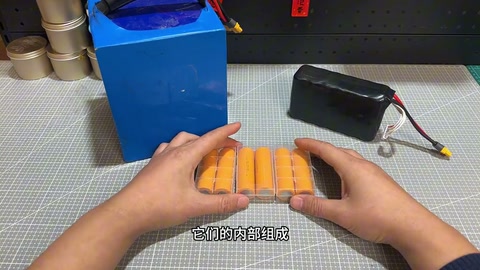
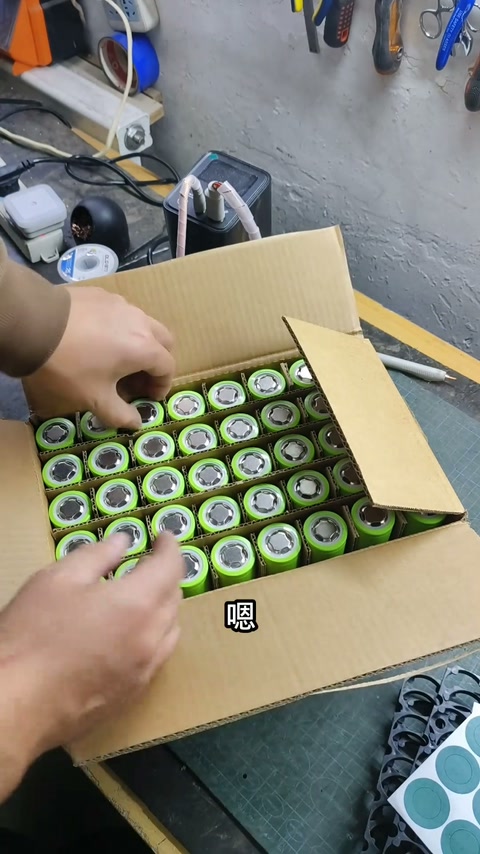
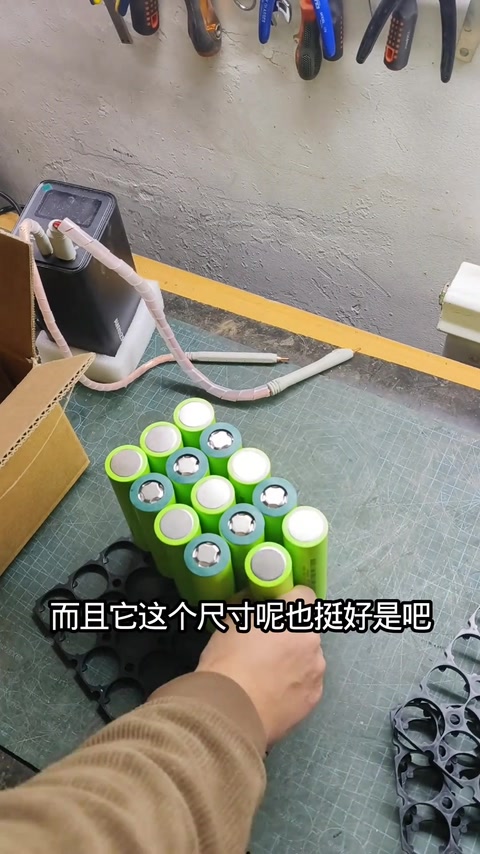
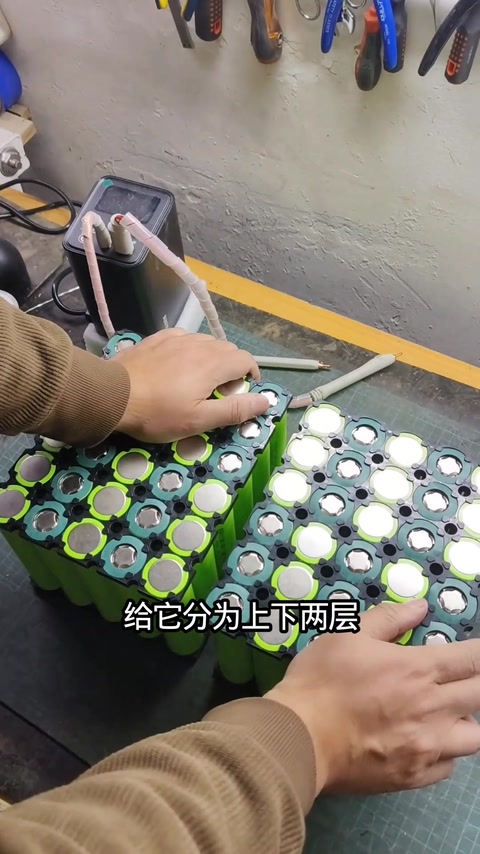
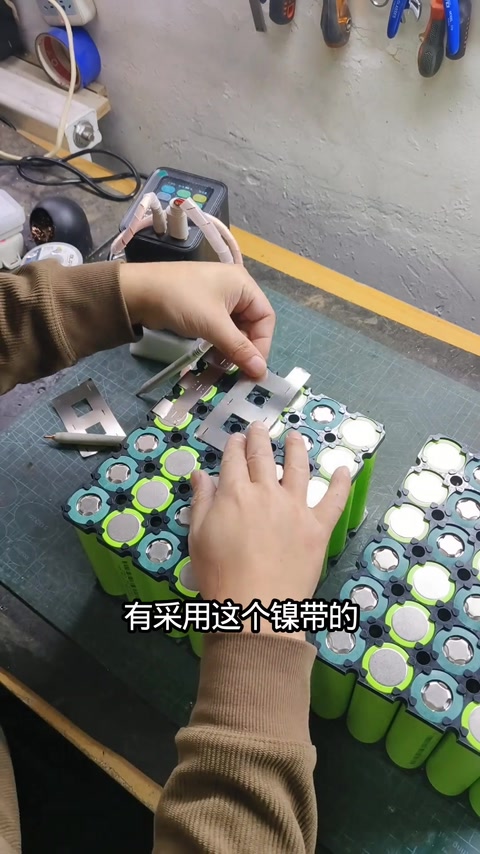
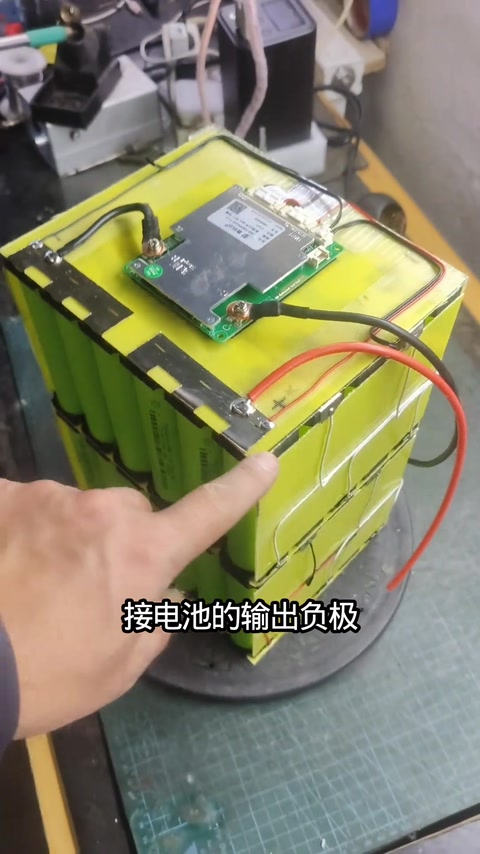
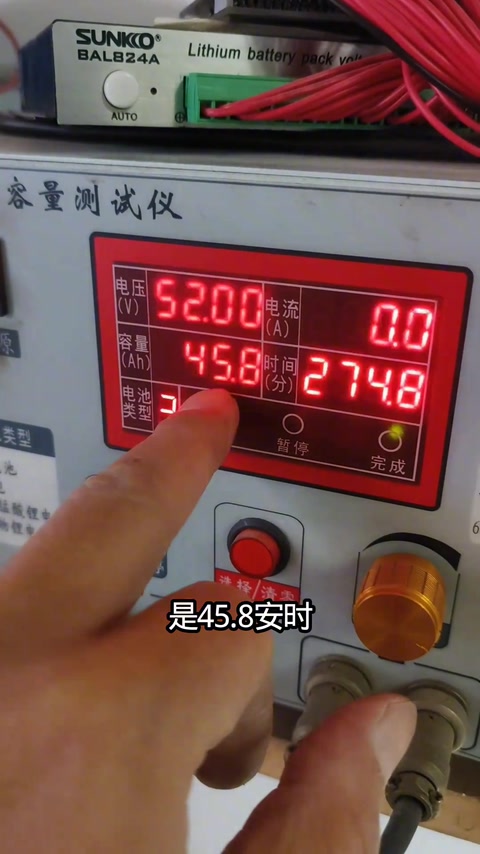
The 32140 LiFePO4 cell is popular right now, 15Ah per cell, and lots of folks buy them to hand-build packs; today’s lesson is a pack from 32140s. 32140 is the size: 32mm diameter, 140mm long; the brand is Jiashikai, about ¥15 per brand-new cell, and a few other brands cost about the same. Why so much interest: it’s one of the few brand-new cells you can actually buy; 15Ah per cell allows many combinations (2 cells 30Ah, 3 cells 45, 4 cells 60), flexible; the form factor lets you lay out all sorts of shapes for different battery compartments, e.g. 60V45Ah is 20 series 3 parallel; and building is very simple, all you need is a spot welder — with a bit of hands-on ability and some thought you can make a decent pack. This build is 60 cells; the finished pack goes in the seat bucket, in two layers, upper and lower; always design the layout to the finished shape before welding. Welded with 0.2 thick nickel-plated steel strip; for material some use nickel strip, copper, or copper + nickel composite, nothing fixed, chosen by the motor current. With this layout, after the two layers are in series the positive and negative end up together, convenient for the BMS. When fitting the BMS the key thing is the harness must not be miswired, connect each series group in order; habit is to test the harness with a wire-order tester after connecting, and only then connect the BMS; B- on the board goes to the main negative, P- to the output negative, positive straight to the main positive. Full charge then a discharge capacity test: 274 minutes of discharge, 45.8Ah delivered, capacity is quite accurate. Measured the finished size for reference. Comments (445): welding nickel-plated steel strip needs ventilation and a fan, nickel is toxic and carcinogenic, harms the lungs (4); which spot welder brand / model do you recommend (3); everything online is fake, price up to ¥21 each, trouble within six months (1); big safety risk and nobody takes responsibility (1); one bad cell in a multi-cell pack ruins the whole pack; one fails and you tear the whole thing down; the wiring looks reassuring; built the same 30Ah version.
Outcome
| Goal | 32140 explainer + 60V45Ah 20S3P pack build |
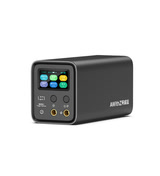
| Build | Jiashikai 32140 ×60 + 0.2 nickel-plated strip + 20S BMS + UF20B |
| Result | 274-minute discharge, 45.8Ah, capacity accurate · verified on camera: Discharge tester at 197–210s, 274 minutes 45.8Ah (screen 45.8/274.8) |
Steps7 steps · click a frame to jump
 1. 32140 explainer: 32 diameter, 140 long; Jiashikai about ¥15 new per cell, 15Ah
The popular 32140 LiFePO4, 15Ah per cell, lots of people buy them to hand-build; 32140 is the size: 32mm diameter, 140mm long; brand Jiashikai, about ¥15 per new cell; other brands cost about the same.
00:01 – 00:45 2. Why it’s popular: one of the few new cells; 15Ah combines flexibly (30/45/60Ah); adaptable shapes; just a spot welder
One of the few brand-new cells you can buy; 15Ah per cell allows many combinations: 2 cells 30Ah, 3 cells 45, 4 cells 60, very flexible; the form factor lays out into all sorts of shapes for different compartments, e.g. 60V45Ah = 20 series 3 parallel; building is very simple, just a spot welder, think it through and you get a good pack.
00:46 – 01:40 3. 60 cells this time, in the seat bucket in two layers; design to the finished shape before welding
60 cells in total; the finished pack goes in the seat bucket, upper and lower layers; always design the layout to the finished shape, then weld.
01:40 – 02:01 4. 0.2 nickel-plated steel strip spot-welded (UF20B); nickel / copper / composite chosen by motor current
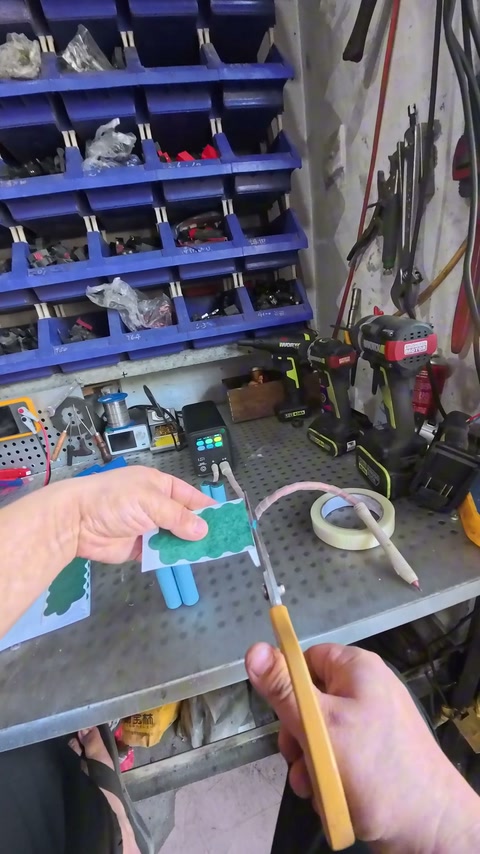
Welded with 0.2 thick nickel-plated steel strip; materials in use include nickel strip, copper, copper + nickel composite, nothing fixed, chosen by the motor current.
02:01 – 02:25 5. Two layers in series, +/− on the same side for easy BMS hookup; harness in order, wire-order tester before the board
With this layout, once the two layers are in series the positive and negative sit together, convenient for the BMS; when fitting the board the key is not miswiring the harness, connect each group in order; habit is to test with a wire-order tester after wiring, then connect the BMS.
02:25 – 02:52 6. B- to main negative, P- to output negative, positive to main positive; full charge then discharge
The pack has basically taken shape; BMS B- to the main negative, P- to the output negative, positive straight to the main positive; charge full, then discharge to test capacity.
02:52 – 03:17 7. 274-minute discharge, 45.8Ah, capacity accurate; measure the finished size
Discharge finished: 274 minutes in total, 45.8Ah delivered, capacity is quite accurate; measured the finished size for reference.
03:17 – 03:38
Bill of materials
| Jiashikai 32140 15Ah ×60 | About ¥15 per cell · 20S3P |
| 32140 holders | Two layers, upper and lower · Layout |
| 0.2 nickel-plated steel strip | Connections |
| UF20B spot welder ×1 | Spot welding |
| 20S BMS + harness ×1 | Protection |
| Wire-order tester / discharge tester | Harness check / capacity test |
Measured on camera
| Discharge capacity | 45.8 Ah 03:23 |
| Discharge time | 274 min 03:20 |
| Price per cell | ¥15 00:42 |
Creator’s tips
- Design the layout to the compartment shape first, then weld; put +/− on the same side for easy BMS hookup 01:56
- Choose the strip material (nickel / copper / composite) by motor current, there is no fixed answer 02:10
- After wiring the harness, test it with a wire-order tester before connecting the BMS; B- main negative, P- output negative 02:42
- When done, charge full and discharge to verify capacity 03:08
Pitfalls
- Comments: welding nickel-plated steel strip gives off toxic fumes, ventilate with a fan (4 likes)
- Comments: lots of fakes online, price up to ¥21, trouble within six months; one bad cell drags the whole multi-cell pack down
Li-ion safety
- Welding fumes are harmful, work with ventilation (comments)
- A miswired harness burns the board 02:34
Quotes
Cost & time
| Jiashikai 32140 ×60 | ¥900 · Estimated at ¥15 × 60 |
| Total | ¥900 |