My 220V portable power station finally works — hot pot in the backyard tonight
54 × 18650, 3S18P, 12.6V 36Ah. The inverter does 600W continuous, 1200W peak. The moment I plugged in the rice cooker my heart was racing — rock solid!
Welded with the P60F, double-layer nickel strip in one pass, not a single cold weld. It took two evenings; the hardest part wasn't the welding, it was cramming this pile of modules into the storage box and still leaving room for airflow.
The video shows the whole process. If you want to build one, follow along, and ask questions in the comments.
12V portable power station pack, my first build, lit up on the first try
18650 in 3S8P, U3 Pro at gear 55, 0.15 nickel-plated strip. I'd watched a dozen-plus tutorials and still didn't dare start. Once I actually did it, it wasn't that scary, and the welds are stronger than I expected.
The moment the light came on at the campsite — totally worth it. Thanks to everyone in the comments who taught me.
Bluetooth-speaker shell turned car jump starter (part 1): 12 × 2500mAh cells in 3P4S, AWithZ welder in auto mode firing 0.5s after contact, insulating paper on the negative-can side to stop shorts, 16.01V when done; lead-acid tester reads 12.6mΩ / CCA 264; even three layers of nickel strip weld through, 'buying one for a hundred-odd yuan beats making your own'
A car jump-start pack built from a solar Bluetooth-speaker shell grabbed cheap on Douyin. The cells were also grabbed from the Douyin store, all around 2500mAh; paired with a Type-C 5V input charging board. He had built a spot welder from a microwave transformer before — hard work and poor results; then grabbed an AWithZ spot welder that runs a long time per charge, a hundred-odd yuan (an even better deal when it was ¥168), and it comes with small nickel strips. Before welding, stick insulating paper on the negative-can side so overheating can't short positive to negative. 3P4S; welder in auto mode, fires 0.5s after contact, tack one end first and press firmly; welds are clean and very solid; don't weld the middle too tight, leave a little slack — 'leave a line when welding and swelling stays friendly'; a foolproof device, very convenient. After all the positives were welded the charge was still full; the built-in battery beats his big homemade rig by far. Series: connect pairs in series, flip and connect again, main positive and main negative; measured DC voltage 16.01V, just right for a jump starter. Measured with a lead-acid battery tester as a makeshift: internal resistance 12.6mΩ, voltage 13.9V, discharge CCA 264 — should start a 2.0T car normally. Main positive and negative still need a few extra wires to boost discharge current. Test: two and three layers of nickel strip stacked both weld through solidly; conclusion, buying beats building, it's in the shop window. Comments: someone pointed out that a jump starter without copper strip makes no sense and the cells can barely do 2C (creator agrees, 'it'll do'); someone says this kind of welder uses a pouch cell that swells after heavy use and loses performance until it won't fire; a lead-acid tester can't measure Li-ion accurately (creator replies the accuracy is poor).
Bluetooth speaker shell to car jump starter (part 1): 12 × 2500mAh cells in 3P4S, AWithZ welder on auto fires 0.5 s after contact, insulating paper on the negative-can side against shorts, 16.01V after welding; lead-acid tester reads 12.6mΩ / CCA 264; three layers of nickel strip still weld through — ‘a hundred-odd yuan to buy one beats building it’
A car jump starter built into a solar Bluetooth speaker shell scored on Douyin. The cells were also cheap finds from the Douyin store, all around 2500; plus a Type-C 5V input charging board. He’d made a spot welder from a microwave transformer before — hard work and poor results; then he picked up an AWithZ spot welder, one charge lasts a long time, a hundred-odd yuan (bigger discount when it was 168), and it comes with small nickel strips. Before welding, stick insulating paper on the negative-can side so overheating can’t short + to −. 3P4S; the welder is on auto — it fires 0.5 s after contact; weld one end first and press down; welds are clean and very solid; the middle is not welded too tight, a little slack is left — ‘leave a line in the weld and a swollen cell will thank you’; a foolproof device, very handy. After all the positives were welded the charge was still full — the built-in power is way better than his big home-made unit. Series: join in pairs, then flip and join again, main + and main −; DC voltage reads 16.01V, just right for jump starting. A lead-acid battery tester made do: internal resistance 12.6mΩ, voltage 13.9V, discharge CCA 264 — should start a normal 2.0T car. The main + and − still need a few extra wires to raise discharge current. Tested stacking two and three layers of nickel strip — both weld through solid; conclusion: buying beats building, it’s in his shop window. Comments: someone points out that not using copper strip for a jump starter makes no sense and the cells can barely do 2C (creator agrees, ‘it’ll do’); someone says this kind of welder has a pouch cell that swells after lots of welds and loses performance over time until it can’t weld; a lead-acid tester can’t measure Li-ion accurately (creator: poor precision).
The pesticide sprayer’s battery was drained dead, so a 12V 3S3P Li-ion pack is built from 9 HIGHSTAR 18650 2500mAh cells (4.2V, internal resistance 15.7–16): AWithZ U3 (nameplate 4.2V/650A, 11000mAh, 80 gears, manual trigger, doubles as a power bank) — the nickel strip tears before the weld lets go; BMS soldered in order, 4.2/8.4/12.6V check out, leads soldered to the terminals, sealed with glue, the sprayer pumps water again
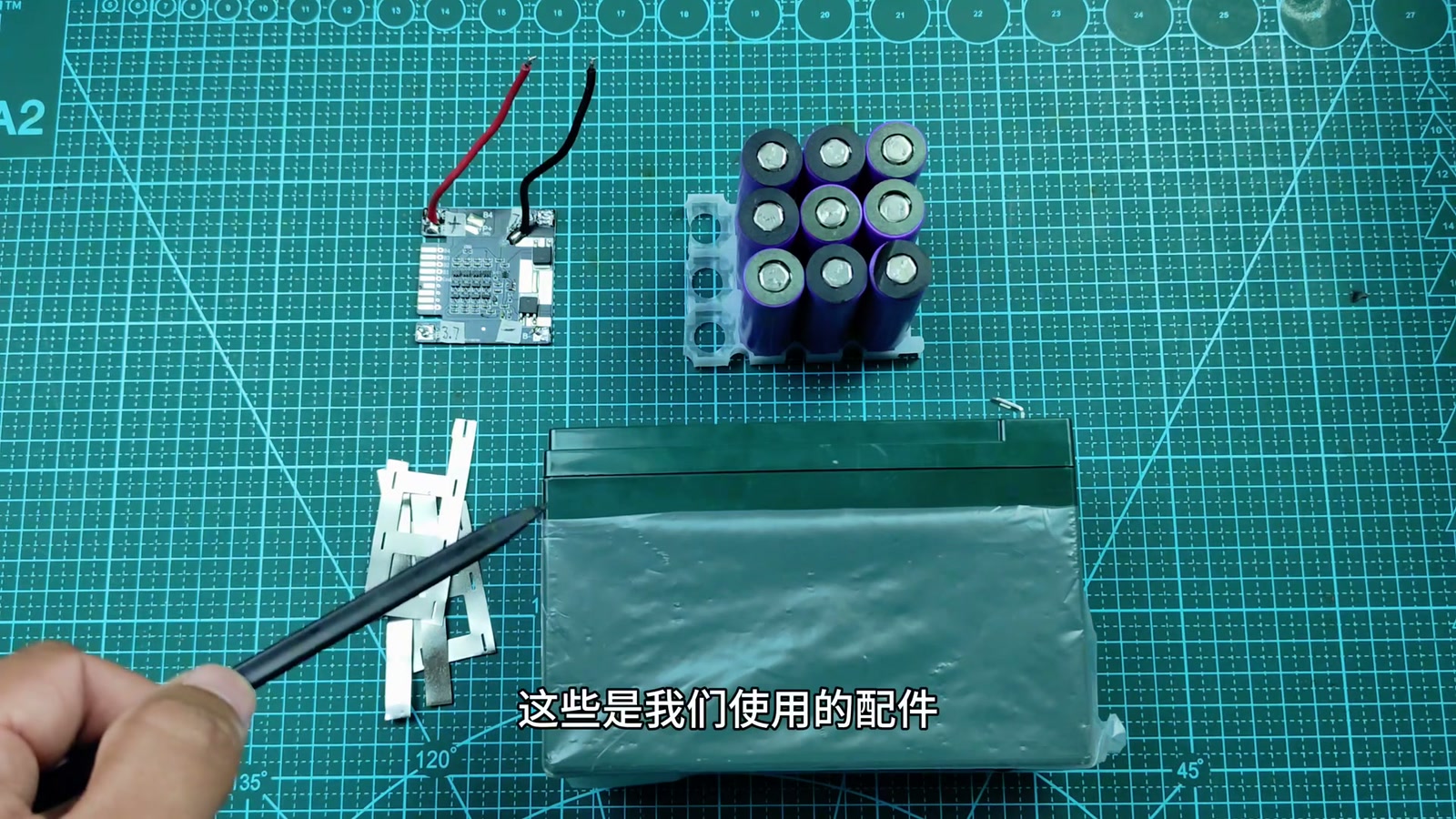
A friend brought over a faulty pesticide sprayer; a check showed the battery had been drained dead, so a new Li-ion pack is made. Parts: battery box, connecting nickel strip, BMS, 18650 cells — HIGHSTAR ISR18650-2500 cells, 2500mAh; measured 4.2V, internal resistance 15.7/16, consistency is decent. The welder is an AWithZ U3 (nameplate: spot-weld output voltage 4.2V MAX, output current 650A MAX, Type-C input 5V/2.1A, USB output 5V/2.4A, battery 11000mAh 3.7V 40.7Wh, manufacturer Shenzhen Juequi Technology), only palm-sized, 11000mAh battery, 2-inch HD screen, 80 adjustable gears, manual trigger button; not just a spot welder but also a power bank. Weld strength test: the nickel strip tore and the weld still didn’t let go. The pack is 12V, three in series, three in parallel; the BMS is soldered to the cells in order; 4.2V, 8.4V and 12.6V all check out, so the welds are fine; the pack’s positive and negative leads are soldered to the terminals on the housing; the housing is sealed with glue; fitted, switch on, water comes out — perfect repair. Comments: it’s a sprayer, not a spray (liked by the creator); a 3S2P with a BMS gave no output even after swapping several boards; 9 cells isn’t enough; swap the original lead-acid for Li-ion and one charge on the lead-acid charger and “uh-oh”.
FPV pilot TOP unboxes the UF20B: 6V / 1750A / 10.5kW, manual / auto trigger; 0.15 nickel-plated steel strip tested from gear 1 to 7 to settle on a gear, welds up to 0.4; plus a pitch that ‘building batteries yourself can make money’
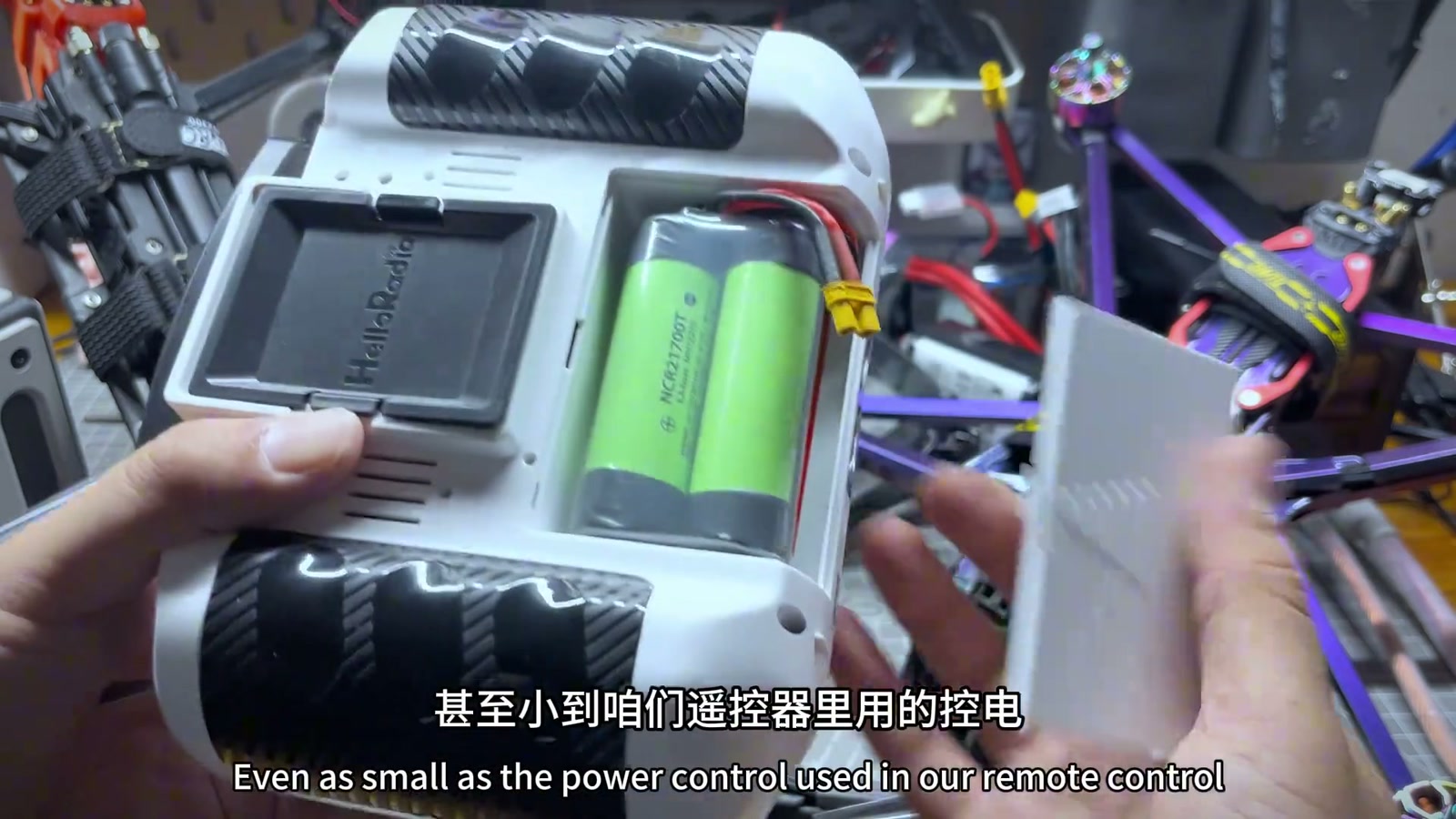
Creator TOP speaks to FPV pilots: field battery boxes, long-range packs and radio batteries are all built from cells, and he has already posted a welding tutorial, an internal-resistance test method, wiring diagrams and an open-source battery-box shell. The key piece of kit is a spot welder; this time he upgrades to the AWithZ UF20B and unboxes it while explaining how to use it. First he shows that a soldering iron struggles to tin a cell terminal, gives cold joints, and long heating is a safety risk, while the spot welder fixes it solid with a few small sparks. Nameplate: max output voltage 6V, max current 1750A, power 10.5kW. Feature-wise he likes the switchable trigger mode: in auto the weld fires as soon as the pen tips press down, in manual you can position first and then press the button to fire, which feels more assured; there are plenty of parameters (trigger time, multi-pulse) but he basically only uses the gear. Too high a gear burns through the strip, too low won’t hold; with 0.15mm nickel-plated steel strip folded double as the example: gear 1 is too shallow and pulls apart with one tug, gear 4 won’t pull apart but is shallow, gear 6 welds through to the back, gear 7 is thoroughly perfect — for 0.15, remember gear 7; gear 99 is for thicker material, up to 0.4mm. The settings menu has a page-by-page ‘experience sharing’ tutorial that is beginner-friendly. Closing: battery-shop bosses drive Ferraris, play with quads and never run short of pocket money, link in the showcase.
Ran into a problem? Have an idea for improvement? Tell us. We read every piece of feedback carefully. Valid feedback earns points, redeemable for accessories / coupons.
Thanks for your feedback!
We'll review it within 1–5 business days. If you left an email, valid feedback earns points redeemable for accessories / coupons. If we need to follow up, we'll contact you at the email you left.
WeldWorld is an open platform for user sharing; content does not represent official advice.
Improper battery handling can cause fire, explosion, chemical burns and serious injury. Read the full AWithZ Safety & Usage Guidelines before any lithium battery assembly, spot welding or testing, and before using the community.
Community content is personal experience, not verified by AWithZ; where it conflicts with official documents, the official documents prevail.
Never apply someone else's settings directly; always start at a low level and test on scrap.
Before copying any procedure, go through the self-check list in Part 3 of the guidelines.
 LV5
LV5
 Ep. 35 | How handy is carrying 220V mains power outdoors? A homemade multi-function portable power station that can cook rice and run a hot pot on its own batteryProjectsRural Abiao
 LV3
LV3


 LV4
LV4


 LV1
LV1