Homemade jump starter: a DIY car emergency power supply, turning a bought Bluetooth-speaker shell into a car jump-start pack



Creator’s own settings as stated in the video (timestamps link to the moment). Not official values — test on scrap first.
Bill of materials
Welder, accessories, consumables and parts used in this build; quantities and specs are editable Download BOMDescription
Bluetooth-speaker shell turned car jump starter (part 1): 12 × 2500mAh cells in 3P4S, AWithZ welder in auto mode firing 0.5s after contact, insulating paper on the negative-can side to stop shorts, 16.01V when done; lead-acid tester reads 12.6mΩ / CCA 264; even three layers of nickel strip weld through, 'buying one for a hundred-odd yuan beats making your own'
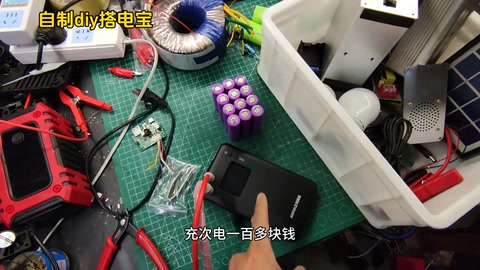
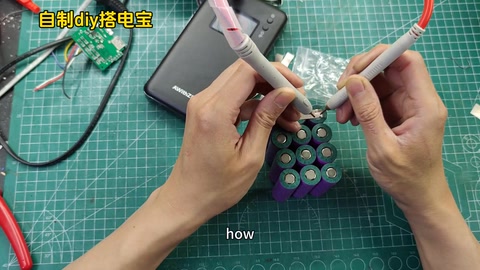
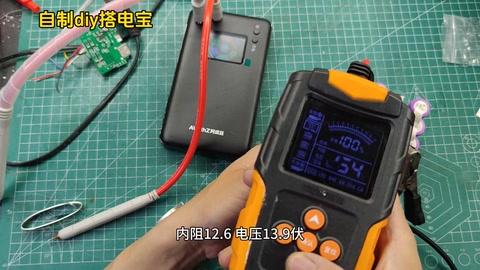
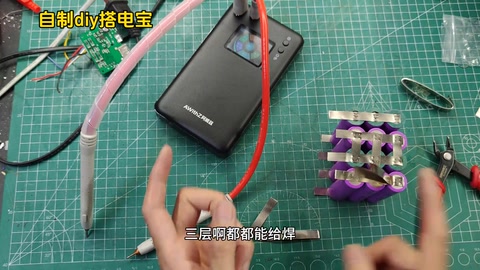
A car jump-start pack built from a solar Bluetooth-speaker shell grabbed cheap on Douyin. The cells were also grabbed from the Douyin store, all around 2500mAh; paired with a Type-C 5V input charging board. He had built a spot welder from a microwave transformer before — hard work and poor results; then grabbed an AWithZ spot welder that runs a long time per charge, a hundred-odd yuan (an even better deal when it was ¥168), and it comes with small nickel strips. Before welding, stick insulating paper on the negative-can side so overheating can't short positive to negative. 3P4S; welder in auto mode, fires 0.5s after contact, tack one end first and press firmly; welds are clean and very solid; don't weld the middle too tight, leave a little slack — 'leave a line when welding and swelling stays friendly'; a foolproof device, very convenient. After all the positives were welded the charge was still full; the built-in battery beats his big homemade rig by far. Series: connect pairs in series, flip and connect again, main positive and main negative; measured DC voltage 16.01V, just right for a jump starter. Measured with a lead-acid battery tester as a makeshift: internal resistance 12.6mΩ, voltage 13.9V, discharge CCA 264 — should start a 2.0T car normally. Main positive and negative still need a few extra wires to boost discharge current. Test: two and three layers of nickel strip stacked both weld through solidly; conclusion, buying beats building, it's in the shop window. Comments: someone pointed out that a jump starter without copper strip makes no sense and the cells can barely do 2C (creator agrees, 'it'll do'); someone says this kind of welder uses a pouch cell that swells after heavy use and loses performance until it won't fire; a lead-acid tester can't measure Li-ion accurately (creator replies the accuracy is poor).
Outcome
| Goal | Bluetooth-speaker shell turned car jump starter (part 1: the pack) |
| Build | 12 × 2500mAh cells 3P4S + Type-C charging board |
| Result | 16.01V when done, 12.6mΩ internal resistance, CCA 264 · verified on camera: Voltage / tester readings at 203–242s |
Steps8 steps · click a frame to jump
 1. Shell, cells, charging board; homemade welder no good
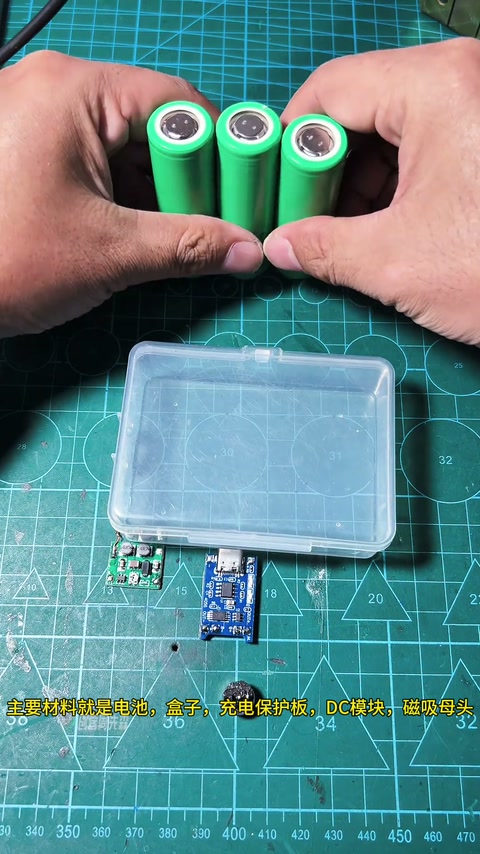
Solar Bluetooth-speaker shell; cells around 2500; Type-C 5V charging board, positive to negative; had built a spot welder from a microwave transformer before, hard work and poor results.
00:00 – 00:40 2. AWithZ welder: a hundred-odd yuan, nickel strip included
Grabbed an AWithZ spot welder, runs a long time per charge, a hundred-odd yuan, even better deal at ¥168; comes with small nickel strips.
00:40 – 00:54 3. Insulating paper on the negative-can side to stop shorts
Stick small insulating paper on before welding: one side is the negative can, the other the positive; overheating causes a short, the paper prevents it.
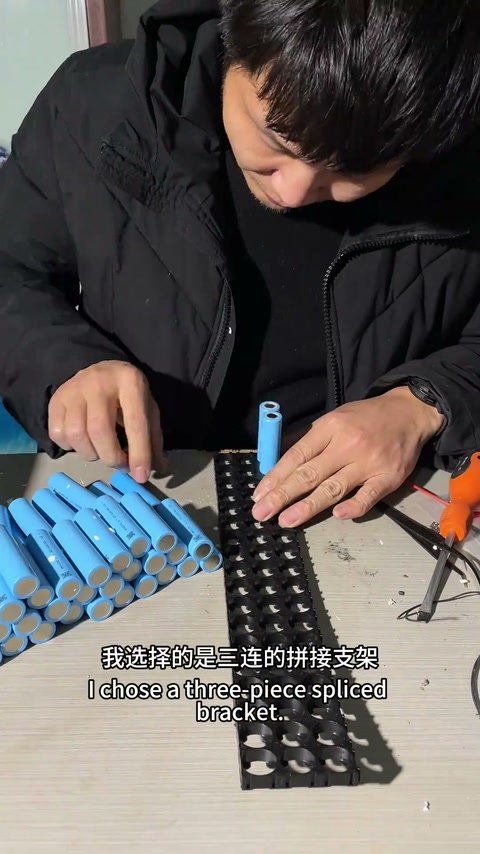
00:54 – 01:08 4. 3P4S; auto mode fires in 0.5s; leave some slack
Group into 3P4S; press the welder on and it fires itself, auto mode fires 0.5s after contact; tack one end first and press firmly; welds clean and solid; don't weld the middle too tight, leave a safety margin; foolproof and convenient.
01:08 – 02:08 5. Positives done, still full charge; weld the negatives
After all positives are welded the charge is still full; small but welds plenty, better than the big homemade rig; carry on with the negatives, rock solid with a little slack.
02:12 – 02:39 6. Series in pairs, main positive and negative
With the 3P groups done, connect them in series in pairs, flip and connect again; cut short pieces of nickel strip and line them up; once in series mark main negative and main positive.
02:42 – 03:22 7. 16.01V; lead-acid tester 12.6mΩ / 13.9V / CCA 264
16.01V DC, just right for a jump starter; a lead-acid tester as a makeshift: resistance 12.6, voltage 13.9, discharge 264, should start a 2.0T car; main positive and negative still need a few extra wires for more discharge current.
03:23 – 04:07 8. Two- and three-layer weld-through test; buying beats building
Two and three layers stacked both weld on solidly; buying one for a hundred-odd yuan beats making your own, it's in the shop window.
04:12 – 04:37
Bill of materials
| Solar Bluetooth-speaker shell ×1 | Enclosure |
| Li-ion cells ×12 | About 2500mAh · 3P4S |
| Type-C 5V charging board ×1 | Charging |
| AWithZ spot welder (U3) ×1 | A hundred-odd yuan, auto mode · Spot welding |
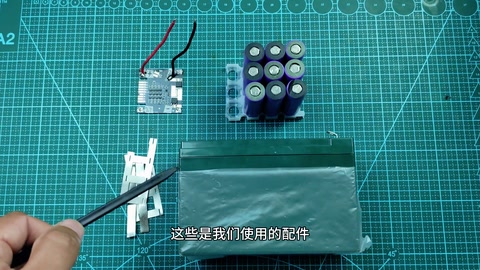
| Insulating paper / nickel strip | Insulation and connections |
| Multimeter / lead-acid battery tester | Measurement |
Measured on camera
| Pack voltage | 16.01 V 03:23 |
| Internal resistance (lead-acid tester) | 12.6 mΩ 03:37 |
| Voltage (lead-acid tester) | 13.9 V 03:37 |
| CCA discharge | 264 A 03:49 |
Creator’s tips
- Stick insulating paper on the negative-can side before welding to stop overheating shorts 00:54
- In auto mode it fires 0.5s after contact; tack one end first and press firmly 01:24
- 'Leave a line when welding and swelling stays friendly': leave slack in the middle 01:54
- Series in pairs, flip and connect again; line the nickel strips up neatly 02:42
Pitfalls
- A microwave-transformer homemade welder is hard work with poor results 00:26
- Lead-acid tester clips won't grip and it's inaccurate on Li-ion 03:37
- Comment: no copper strip for a jump starter, and the cells can barely do 2C (creator agrees it'll do)
Li-ion safety
- Positive and negative cans short easily when overheated; insulating paper is a must 00:54
- Comment: jump-start currents are high; nickel strip / cell C-rate may be insufficient, which is a risk
Quotes
Cost & time
| AWithZ spot welder | ¥168 · 'a bit over ¥100'; cheapest ¥160 |