Me
#Douyin Jingxuan app Share your welding progress, a question or a finished build…
Public Post
 LV5
LV5
Abiao from the village (an embedded programmer) goes home and fixes appliances for free, vlog (2644 likes): a rice cooker with a loose connection, a hair dryer with burnt switch contacts repaired plus a varistor suggested, a cordless drill’s 5S battery bay re-celled (1500 → 2000mAh with 3C certification, internal resistance 17mΩ and matched, fish paper on, series nickel strips / main + and − / balance leads spot-welded, BMS refitted, red charge light, drill pulls hard), two membrane keyboards merged into one, a hair dryer plug replaced; comments: five cells out of his own pocket, he lost his shirt
An embedded automation programmer goes home and fixes appliances for the village elderly for free. 1) Rice cooker: the light flashing on the repair socket means a loose connection, just push it in firmly; boil water to test the response, water temperature rising from 35°C, heating ring at 100-plus, one done. 2) Hair dryer: no response from the switch, so the switch is suspect; two screws out, it has been opened before and the switch tied with string; multimeter on continuity, the switch pressed shows no continuity; the switch clip is broken, inside is a copper leaf + latch + spring, the two contacts on the copper leaf are burnt, and a diode is wired in for the speed change; no such switch on hand, so the burnt parts of the contacts are cleaned and it goes back, fixed with strong glue instead of string; gear one and two latch fine; the original soldering was sloppy — joints must be solid or they arc, and an arc at the grip is dangerous; suggest a varistor in series across the switch input / output; powered up, back to full health. 3) Cordless drill battery bay won’t charge: odd screws, swap the bit; barely charges and the gauge drops on one press, most likely the cells need replacing; 5S, 21V at full charge; when removing the BMS mind the 4 balance leads; clean off the old nickel, keep the holder; originally 1500mAh each, replaced with 5 new 2000mAh cells with 3C certification; measure every cell’s internal resistance before fitting, this batch all around 17mΩ, fine for a Li-ion drill’s power needs; the original had no fish paper but a ring is best, the 18650 shorts most easily right at that ring; in series order, spot-weld the series nickel strips first, then the main + and − strips, last the balance leads; refit the BMS, tin with the iron and solder the balance-lead nickel strips to the board, connect the main + and − last; check for cold joints; fish paper back on, into the battery bay, screws in; the red charge light is normal, the drill pulls hard. 4) Two membrane keyboards merged into one: swap the cable, note the wire order and numbers, the membrane contacts must line up with the board and be pressed with the clamp bar, cable into its slot, add heat-shrink. 5) Hair dryer plug with one long and one short pin: fit a rice-cooker cord, high power so tin the joints to avoid heating, wrap in tape and heat-shrink. Sign-off: night view of the mountain hollow, ‘maybe I can’t make my hometown rich, but I can contribute a little with what I’ve learned’. 260 comments: five cells out of your own pocket, don’t do this kind of job again (3) → creator: lost my shirt; suggest more close-ups (screws, soldering, multimeter readings) → noted; hold the iron by the grip (proper practice); serving the people, down to earth; that workbench is my dream → I’ll make one.
 A programmer goes home and fixes appliances for the old folks? I’m an embedded automation full-stack developer, and I repair appliances for the elderly in my hometownProjectsRural Abiao
LV5
A programmer goes home and fixes appliances for the old folks? I’m an embedded automation full-stack developer, and I repair appliances for the elderly in my hometownProjectsRural Abiao
LV5
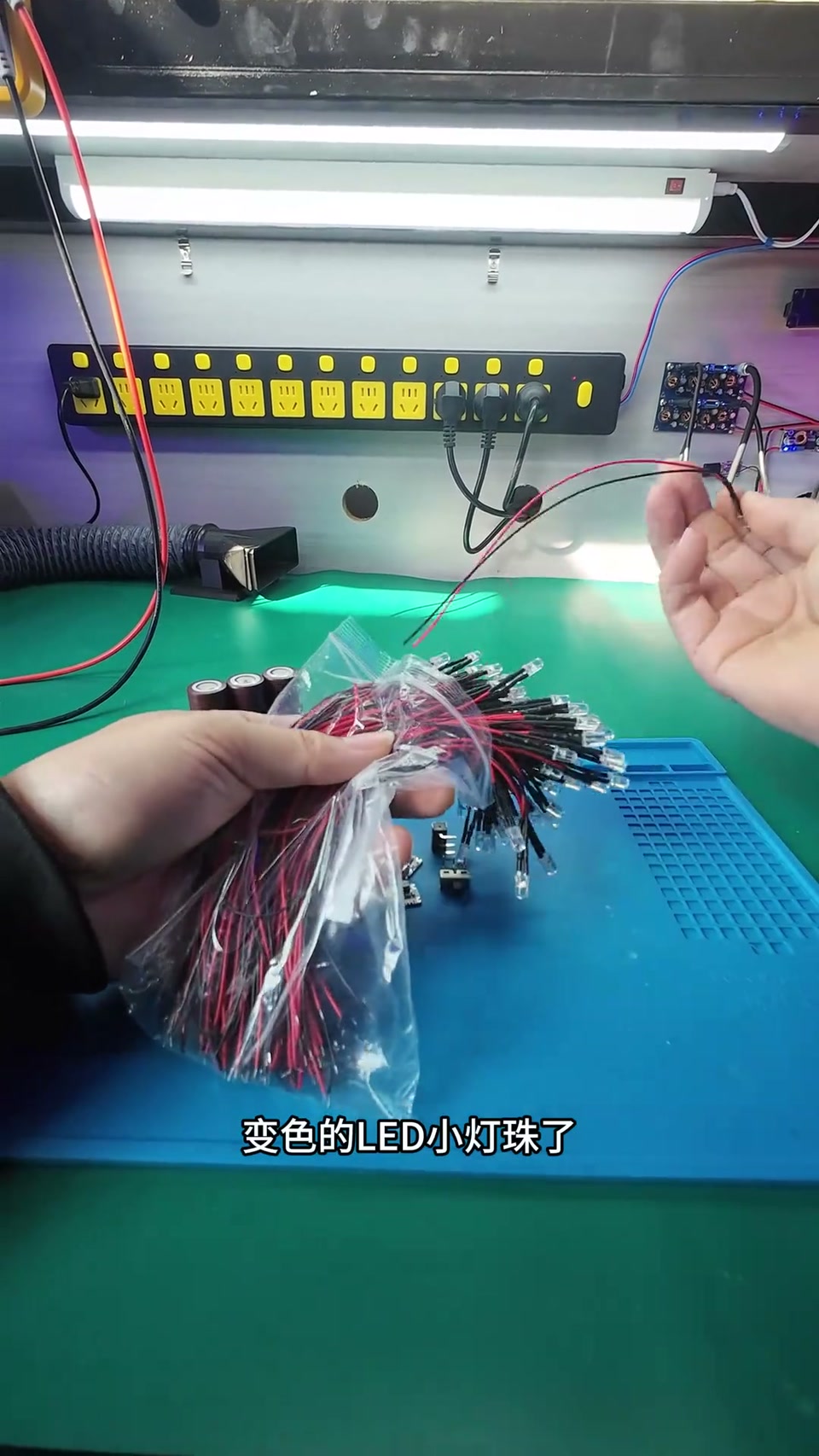
Abiao builds color-changing night lights for his students (2222 likes): one 2000mAh 18650 + charge-management module (Type-C, 4.2V charge, 5V output) + switch + 0.01A color-changing LED, runs a month; nickel strip welded to +/− and folded flat, tape to secure; modeled and 3D-printed shells, three sets in 4 hours; given to the best students in the last maker class of the term; comments: no BMS, aren’t you afraid the kids blow it up? link for the LED?
Somehow ended up making a few fun color-changing night lights / mood lights as a gift for the students who took a term of the science maker extension class — a little present for the last lesson, tied to what we covered. Simple parts: a cell, a charge-management module, a switch and a color-changing LED bead; the LED draws only 0.01A, so one 2000mAh 18650 keeps it lit for a month; the goals were long runtime, fun color changing, durable, rechargeable, simple and cheap to make. Build: nickel strip is already welded to the cell’s +/−; fold the strip over so it doesn’t stick out, and a wrap of tape around the outside makes it more secure; the cell’s +/− go to the charge-management module, charged over a Type-C cable, the module charges the cell at 4.2V; the module’s 5V output goes to the +/− leads; the LED negative goes straight to the output lead, the switch sits on the positive side; test lit fine, decent brightness; loose parts look untidy, so model a shell, one print run of three sets takes over 4 hours; the two halves fit together seamlessly; three done (short on time). Over hills and around eighteen bends to the school; in class every student gets hands-on, small hands not yet skilled but earnest, helping each other, completing the circuit together and lighting their first light-controlled lamp; maybe one day this light will shine among the stars; the lights he made go to the best students; applause closes the last lesson. Comments (143): where to buy such a low-power LED, link? (5); Biao, when’s the next spot-welder sponsorship (why?); a cell must have a BMS, safety first / no BMS, aren’t you afraid the kids get blown up (creator replied); the charging port sits too low to plug in easily; a white shell would diffuse the light better; what brand of multimeter (ALIENTEK); how’s the welder / how much.

 DIY an ultra-long-runtime seven-color night light? For the last science maker class of the term, I hand-built an ultra-long-runtime seven-color night light as a gift for my studentsProjectsRural Abiao


