Me
#18650 lithium battery Share your welding progress, a question or a finished build…
Public Post
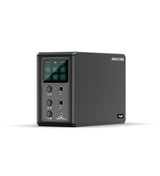
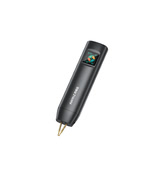
Diangongbang’s 13-second sales pitch (same script as w113): a handheld rechargeable spot welder that welds nickel strip onto batteries / stainless steel very solidly, welding power and time adjustable, charges from a phone charger; comment: an H1 owner says the H2 upgrades the screen and features, more professional
No need to ask for help or use a soldering iron for battery welding; a handheld rechargeable spot welder that welds nickel strip onto batteries and stainless steel, very solid; welding power and welding time both adjustable; charges from a phone charger, really convenient to use. Screen shows 4ms, T 21℃. Comment: thumbs up for the AWithZ handheld welder, bought the H1 before, this H2 upgrades the screen and features, looks more premium and professional.

 Handheld portable spot welder, adjustable heat, swappable tipsProjectsElectrician Gang
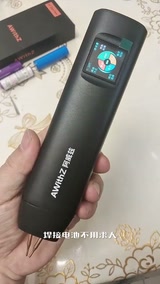
Diangong Bang's 13-second H2 pitch: weld cells without asking anyone for help or using a soldering iron, handheld and rechargeable, nickel strip welds solidly onto cells / stainless steel, no welding guide needed, weld time adjustable, charges from a phone charger; the only comment: great for 18650/21700, keep one at home and save on repair bills
Weld cells without asking anyone for help or using a soldering iron; handheld rechargeable spot welder; welds nickel strip onto cells and stainless steel, extra solid; no welding guide needed, weld time is adjustable; charges from a phone charger; very convenient to use. Title: colour screen with adjustable weld mode and strength, handy for repairing and DIY-building packs. 1 comment: the AWithZ handheld spot welder is good, great for 18650 or 21700, keep one at home, fix your own batteries and save on repair bills.
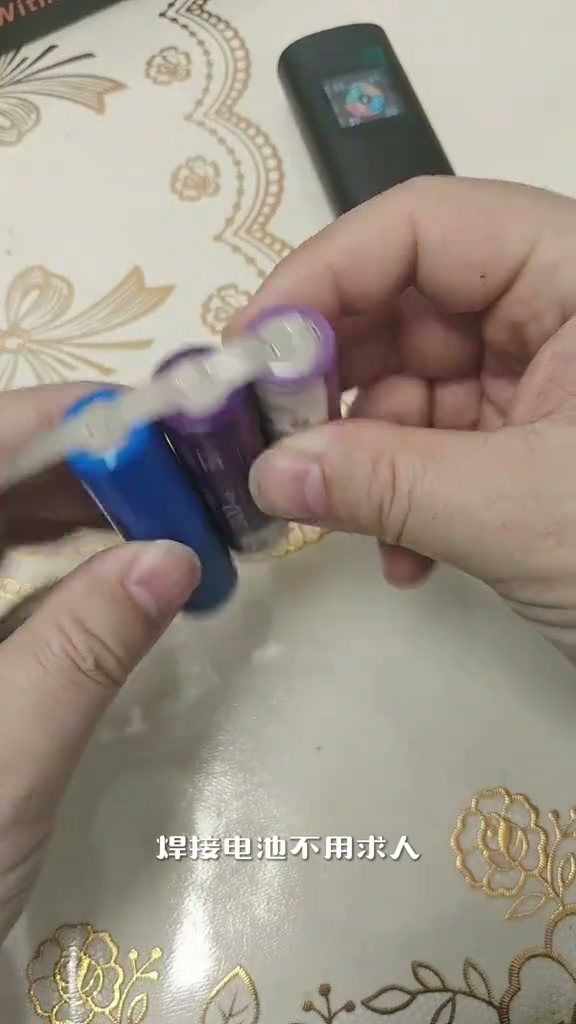
 Compact smart spot welder with a colour screen for adjusting weld mode and strength — makes repairing and DIY-building battery packs really easyProjectsElectrician Gang
Who to followRefresh


Does a weak drill have anything to do with the battery
 No flashlight repair today — replacing the 18650s inside a Milwaukee 12V batteryProjectsWu's Teardown
 LV2
LV2
A viewer’s Milwaukee 12V battery is weak: non-OEM build, pack voltage 12V is normal but the three cells read 55/56/57mΩ; swapped for domestic 2500mAh (IR 12.4x), fish paper on the positives, AWithZ handheld welds 0.1 nickel strip with no effort, 0.15 needs max gear (0.2 won’t hold), pack 10.7V IR 46.9, noticeably better speed once fitted
A viewer sent in a Milwaukee 12V battery that went weak after a few uses, slow speed and wrong sound in the tool; opened up, it’s not Milwaukee OEM but a cheap pack someone else built. Multimeter reads a bit over 12V total, normal; swap for domestic 2500mAh cells (the ones he uses himself); the Zoyi multimeter reads the new cells at 12.42/12.48/12.46mΩ, the old cells that came out at 55/56/57mΩ — IR that high is never going to work well in a power tool. Fish paper on the new cells’ positives for insulation. The AWithZ handheld spot welder is handier for the welding; 0.1 nickel strip, no effort at all; he had thought of building a big welder but doesn’t use one much so gave up, a small one is enough for occasional use; 0.1 welded on, you can’t pull it off by hand. The main negative reuses the 0.15 strip taken off earlier, and it needs max gear to hold; this machine welds at most 0.15, 0.2 won’t hold. Pack reads 10.7V, IR 46.9mΩ. Reassembled and charged a while, then tested: better sound, high speed fine too, not fully charged so not at its best yet but much better than before. Comments: just pick three JP30s and drop them in (that works); is a drill’s weakness related to the battery; multimeter recommendation / are you using it as an IR meter.

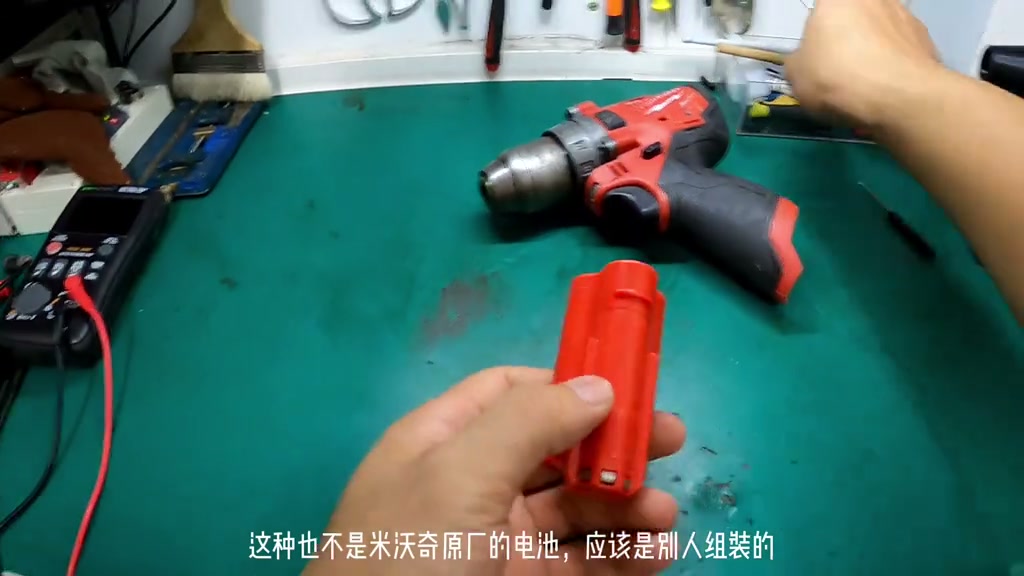 No flashlight repair today — replacing the 18650s inside a Milwaukee 12V batteryProjectsWu's Teardown
 LV4
LV4
Jump starter, part 2: three layers of nickel tabs welded with almost no charge used; 4S BMS + balance board wired (main +, +1, +2, +4, main −), charges at 14.5V, panel shows full, USB is a slow charge, Type-C charging works; main + / − leads swapped for thicker wire, bundled and insulated with electrical tape, back into the shell
The whole pack is welded up, with three layers of tabs on top — very solid; the charge level has barely dropped, so it should weld a lot of packs — very handy. Wiring the BMS: main + goes to +1, +2, +4 and main −; the leads are short, so extend them; red sleeve on the main +, yellow on the rest, foam pads for a first fix; trim any sharp protrusions; fix the pack first, then wire it, or it’s hard to secure afterwards. With the BMS and balance board connected it charges at 14.5V from a low-voltage supply; press the switch and it shows full, the lamp is quite bright; USB charges a phone at 29% — works, but a very slow trickle; Type-C charging shows normal, the last lamp blinking means not quite full. The main + and − ‘thick’ leads aren’t actually thick, so they’re swapped for wire a good size up from stock. With all the main leads connected and tidied, no heat-shrink to hand, so it’s bundled with electrical tape, two turns over each contact point; it fits back into the original shell exactly, with extra insulation on the main + to prevent shorts. Comments: a car draws 200–600A to start, 3P 18650 gives 60–90A at most, and with enough current the nickel-plated steel strip burns through in seconds (creator: cells picked up from a live stream, 2C is as good as it gets); does drawing power straight off the pack without going through the BMS matter (creator: discharge doesn’t go through the board); copper strip thickness and cell C-rate are both too low, too dangerous; where to buy the welder (shop window); leave a watermark to stop reposts; part 3 tests capacity.


 A home-made jump starter from 18650 cells — only 2C cells, picked up for ¥20-odd on the Douyin store; DIY car emergency power, built into a bought Bluetooth-speaker shellProjectsDoomsday Lab
 LV3
LV3
The pesticide sprayer’s battery was drained dead, so a 12V 3S3P Li-ion pack is built from 9 HIGHSTAR 18650 2500mAh cells (4.2V, internal resistance 15.7–16): AWithZ U3 (nameplate 4.2V/650A, 11000mAh, 80 gears, manual trigger, doubles as a power bank) — the nickel strip tears before the weld lets go; BMS soldered in order, 4.2/8.4/12.6V check out, leads soldered to the terminals, sealed with glue, the sprayer pumps water again
A friend brought over a faulty pesticide sprayer; a check showed the battery had been drained dead, so a new Li-ion pack is made. Parts: battery box, connecting nickel strip, BMS, 18650 cells — HIGHSTAR ISR18650-2500 cells, 2500mAh; measured 4.2V, internal resistance 15.7/16, consistency is decent. The welder is an AWithZ U3 (nameplate: spot-weld output voltage 4.2V MAX, output current 650A MAX, Type-C input 5V/2.1A, USB output 5V/2.4A, battery 11000mAh 3.7V 40.7Wh, manufacturer Shenzhen Juequi Technology), only palm-sized, 11000mAh battery, 2-inch HD screen, 80 adjustable gears, manual trigger button; not just a spot welder but also a power bank. Weld strength test: the nickel strip tore and the weld still didn’t let go. The pack is 12V, three in series, three in parallel; the BMS is soldered to the cells in order; 4.2V, 8.4V and 12.6V all check out, so the welds are fine; the pack’s positive and negative leads are soldered to the terminals on the housing; the housing is sealed with glue; fitted, switch on, water comes out — perfect repair. Comments: it’s a sprayer, not a spray (liked by the creator); a 3S2P with a BMS gave no output even after swapping several boards; 9 cells isn’t enough; swap the original lead-acid for Li-ion and one charge on the lead-acid charger and “uh-oh”.

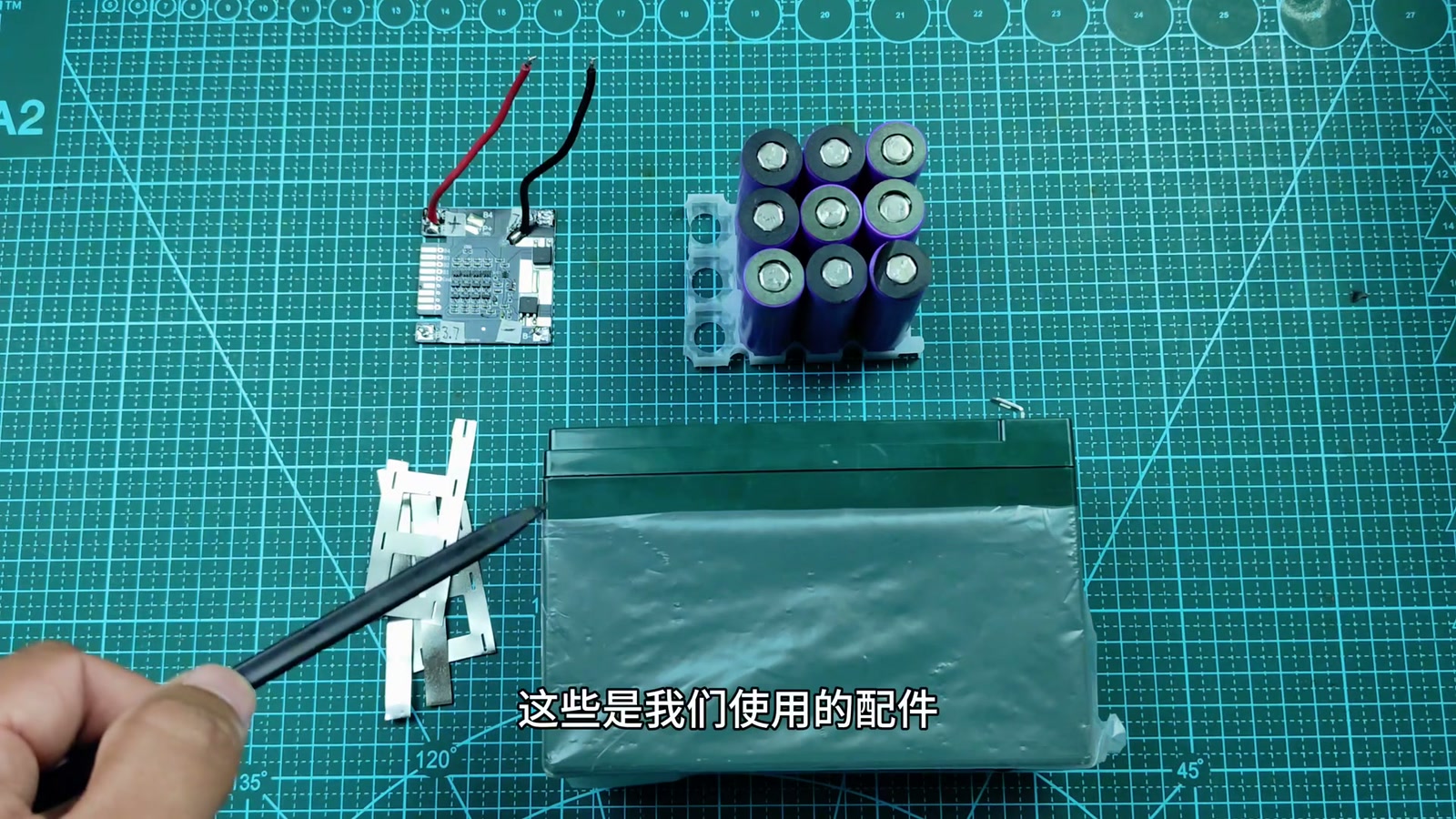
 How to build a 12V outdoor-power Li-ion pack from 18650 cellsProjectsLookAgain