 LV1
LV1
Turbojet gen 14: a car-turbocharger jet gets an afterburner, metal intake pipe + spot-welded thick steel tube; thrust 0.0009 → 0.0023 t, then the shaft seizes and it never self-sustains again
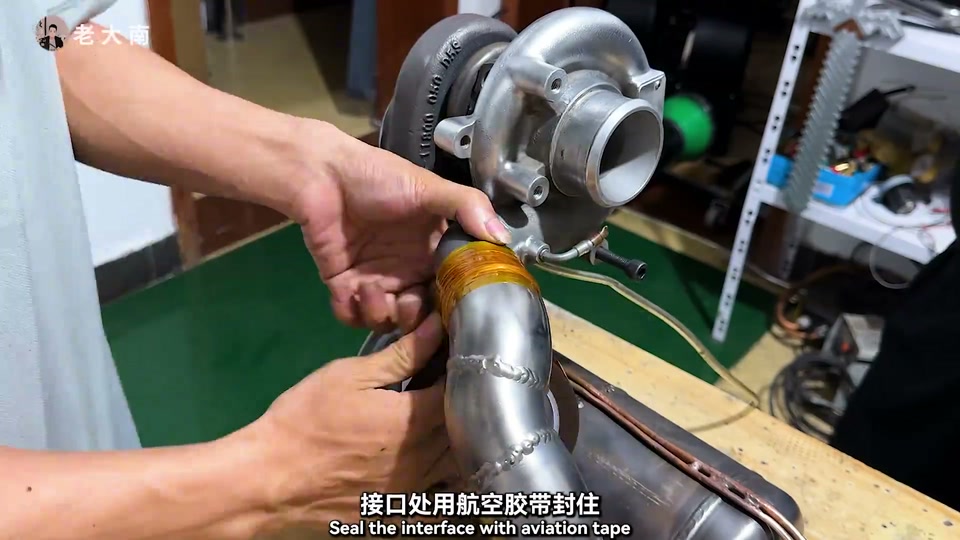
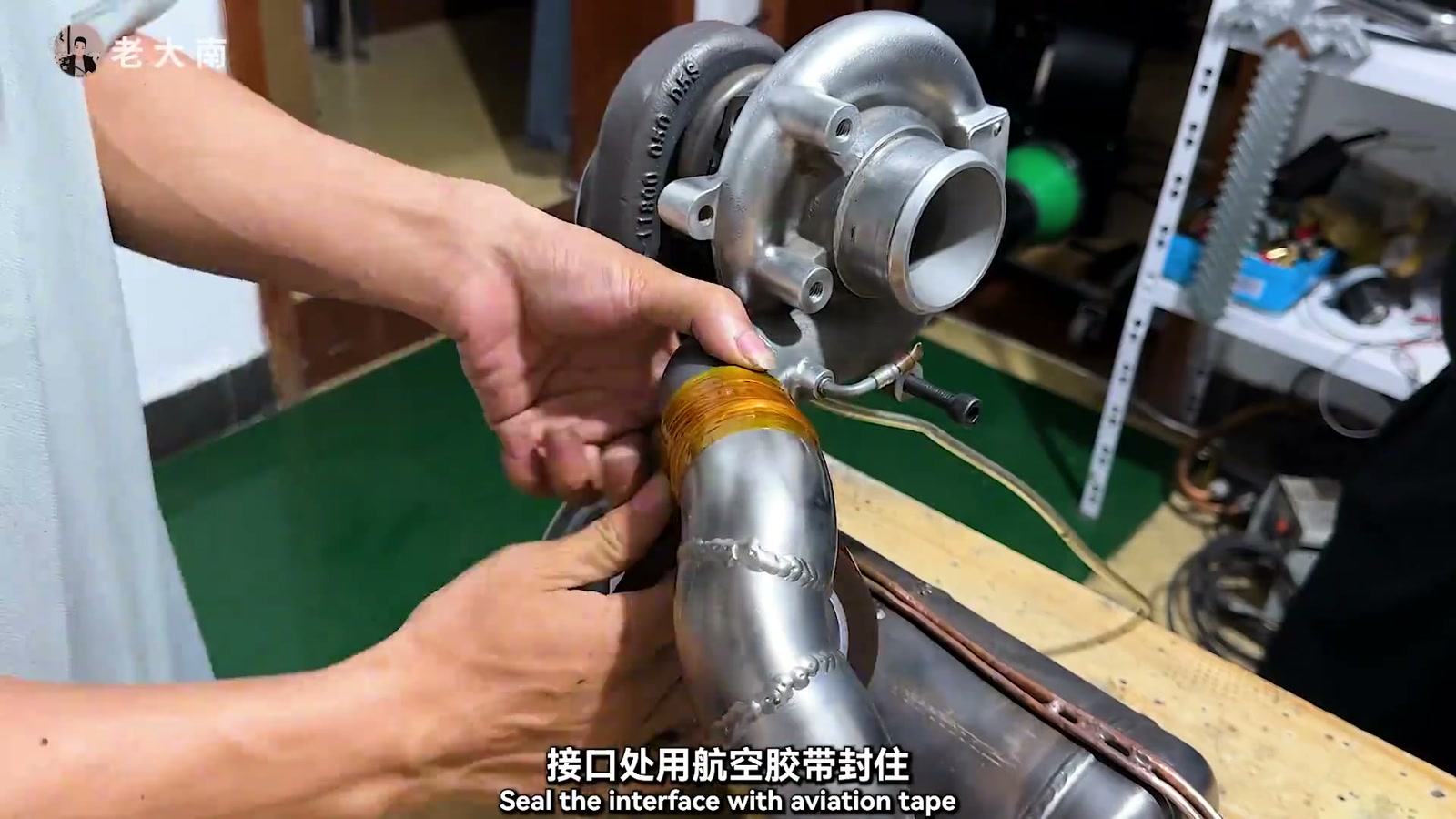
The previous generation, a turbojet built from a car turbocharger, reached self-sustain (0.0009 t of thrust, on LPG alone) and then blew its intake-side pressure hose after a dozen seconds. This time the intake is metal elbows joined and polished, sealed with aluminum tape; the bearing oil loop gets 120°C / 3.2MPa high-strength pressure hose with a pump circulating the oil. Because rich-oxygen combustion was wasting oxygen, an afterburner goes on the tail: a can cut up and steel tube sleeved over it — the tube was so thick he spent ¥3000+ on a higher-power welder before it would take a weld; a necked-down outlet adds thrust; a branch fuel line with several injection holes is tied into the main line so preheated fuel partly enters the afterburner for a second burn; a relief valve on the intake side guards against runaway rpm. A Guazi used-car ad is cut in midway. Test run: after self-sustain the shaft suddenly seizes, thrust hits 0.0023 t (more than double the last gen); opened up, the shaft spins freely again — suspected dust or over-speed, so a bigger steel-tube relief valve is added (screw sets the tension). The retry lacks pressure; he plugs it and patches leaks, but in the end it never self-sustains again — “give me my money back, I quit” — and looks ahead to gen 15.
 Ep. 28 | What if you bolt an afterburner onto a car turbocharger? Turbojet gen 14 doubles its thrustProjectsLaodanan