Ep. 28 | What if you bolt an afterburner onto a car turbocharger? Turbojet gen 14 doubles its thrust
Creator’s own settings as stated in the video (timestamps link to the moment). Not official values — test on scrap first.
Bill of materials
Welder, accessories, consumables and parts used in this build; quantities and specs are editable Download BOMDescription
Turbojet gen 14: a car-turbocharger jet gets an afterburner, metal intake pipe + spot-welded thick steel tube; thrust 0.0009 → 0.0023 t, then the shaft seizes and it never self-sustains again
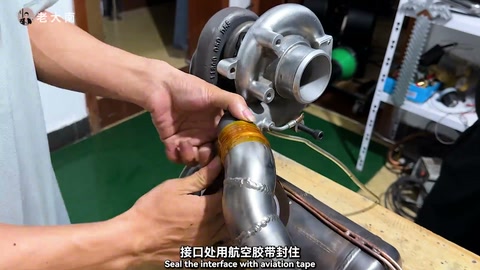
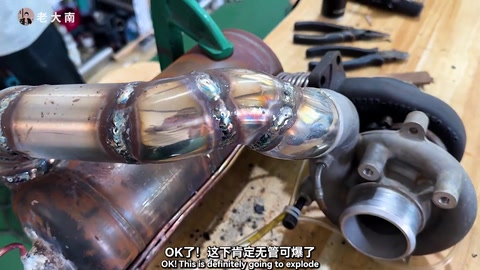
The previous generation, a turbojet built from a car turbocharger, reached self-sustain (0.0009 t of thrust, on LPG alone) and then blew its intake-side pressure hose after a dozen seconds. This time the intake is metal elbows joined and polished, sealed with aluminum tape; the bearing oil loop gets 120°C / 3.2MPa high-strength pressure hose with a pump circulating the oil. Because rich-oxygen combustion was wasting oxygen, an afterburner goes on the tail: a can cut up and steel tube sleeved over it — the tube was so thick he spent ¥3000+ on a higher-power welder before it would take a weld; a necked-down outlet adds thrust; a branch fuel line with several injection holes is tied into the main line so preheated fuel partly enters the afterburner for a second burn; a relief valve on the intake side guards against runaway rpm. A Guazi used-car ad is cut in midway. Test run: after self-sustain the shaft suddenly seizes, thrust hits 0.0023 t (more than double the last gen); opened up, the shaft spins freely again — suspected dust or over-speed, so a bigger steel-tube relief valve is added (screw sets the tension). The retry lacks pressure; he plugs it and patches leaks, but in the end it never self-sustains again — “give me my money back, I quit” — and looks ahead to gen 15.
Outcome
| Goal | Add an afterburner to a home-built turbojet and double the thrust |
| Build | Car-turbocharger turbojet + afterburner + relief valve |
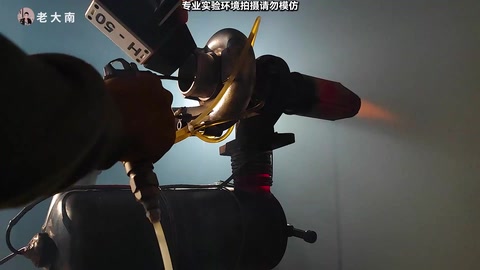
| Result | Thrust 0.0023 t (more than doubled), but the shaft seized and it would not self-sustain afterwards · verified on camera: 169–183s thrust reads 0.0023 t; 279–288s finally fails to self-sustain |
Steps7 steps · click a frame to jump
 1. Recap of the blown hose; intake swapped to metal elbows
Last gen self-sustained at 0.0009 t of thrust on LPG alone, then the intake-side hose blew after a dozen seconds; the pressure hose couldn’t take it, so switch to metal — elbows joined and polished, joints sealed with aluminum tape; the turbo’s water-loop fittings are reused.
00:00 – 00:44 2. Oil line swapped to 120°C / 3.2MPa hose; afterburner steel tube spot-welded
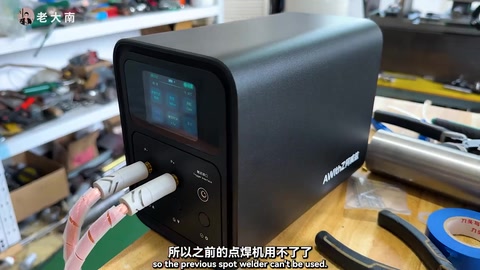
The oil line had burst too, so it gets high-strength pressure hose with a pump circulating the oil; after self-sustain the flame pulling back into the combustor means rich-oxygen burning with oxygen wasted, so an afterburner goes on the tail; a can cut up, steel tube sleeved on; the tube was too thick, so ¥3000+ went on a higher-power welder to get it to weld; then neck the outlet to add thrust.
00:44 – 01:12 3. Branch fuel line with injection holes (ad in the middle)
The branch fuel line gets several injection holes and slides into the steel tube; the gap against the outer shell creates turbulence; welding rods run out so he goes to town to buy more — cue the Guazi used-car ad; rods bought, welded up.
01:12 – 01:40 4. Tie into the main fuel line, add a relief valve
The branch line joins the main line; preheated fuel partly enters the afterburner to reignite with the excess oxygen and add thrust; once on diesel the rpm could jump from 20–30k to 100k and intake pressure would spike, so a relief valve is added for safety.
01:44 – 02:03 5. Test run: shaft seizes, thrust 0.0023 t
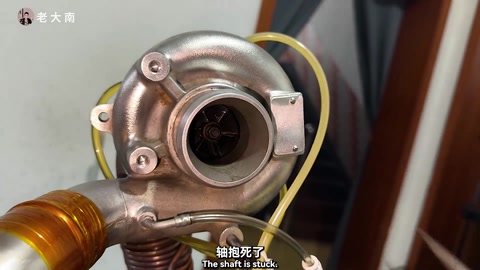
After self-sustain it suddenly jams, the shaft seizes; thrust reaches 0.0023 t, more than double the last gen; the wall takes a beating; opened up, the shaft spins freely again — suspected internal dust or over-speed.
02:03 – 03:26 6. Add a bigger steel-tube relief valve
The relief valve isn’t strong enough, so a bigger one is made from steel tube and fitted on the combustor side so thrust isn’t wasted; the screw sets how much it relieves.
03:26 – 03:46 7. Retry fails: not enough pressure, leaks, no self-sustain
The retry fails, suspected lack of pressure; plug the relief valve, patch the leaks and try again; in the end it never self-sustains again and the workshop turns into fairyland; looking forward to turbojet gen 15.
03:46 – 04:48
Bill of materials
| Car turbocharger ×1 | Turbojet core |
| Metal elbows | Intake pipe |
| Aluminum tape | Sealing joints |
| High-strength pressure hose | 120℃ 3.2MPa · Oil line |
| Oil pump ×1 | Oil circulation |
| Steel tube | Thick · Afterburner / relief valve |
| High-power spot welder ×1 | ¥3000+ · Spot-welding thick steel tube |
| Welding rods (arc) | Welding fuel lines |
| Relief valve ×2 | Over-pressure protection |
Measured on camera
| Last-gen thrust | 0.0009 t 00:12 |
| This-gen thrust | 0.0023 t 03:00 |
Creator’s tips
- The flame pulling back into the combustor after self-sustain means rich-oxygen combustion — there is oxygen left for a second burn in the afterburner 00:48
- A branch fuel line with several injection holes sits in the gap between steel tube and shell to create turbulence 01:12
Pitfalls
- Non-metal pressure hose can’t take the intake pressure and bursts 00:16
- Over-speed seized the shaft; the relief valve wasn’t strong enough 03:03
- With more relief the pressure fell short and it leaked; it never self-sustained again 04:07
Li-ion safety
- A sharp rise in intake pressure needs a relief valve for safety 01:58
- Comment: test runs should be done outdoors
Quotes
Cost & time
| High-power spot welder | ¥¥3,000-odd |