User content is not official advice; where it conflicts with official documents, the official documents prevail.Safety & Use Guidelines ›

© 2026 AWithZ
Post
LV5
AWithZ Official@u_awithz_douyin ·
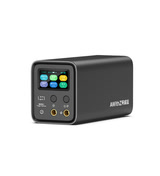
Copper hard to weld? The UF20B just nails it! All-new supercapacitor + high-current burst — welds copper rock-steady, solid welds that don't come loose. Li-ion repair, battery PACK, industrial spot welding, batch processing — handles them all with ease; hardcore gear for professional work!
|
UF20B Supercapacitor WelderProductsAWithZ

Comments (13)

设
设计师 · 4 mo ago

Does the UF20B supercapacitor have automatic balancing?

LikeReply
A
AWithZ阿威兹点焊机视频号Author · 4 mo ago

It does — it carries our in-house smart capacitor-balancing technology, safe, durable and stable

LikeReply
箭
箭术 · 4 mo ago

Same materials on 21700 cells — how many gears higher?

LikeReply
A
AWithZ阿威兹点焊机视频号Author · 4 mo ago

Not much different — fine-tune by about 5 gears

LikeReply
听
听风吟 · 3 mo ago

Mine: 0.15 copper on 0.1 nickel, gear 90, and I still need flux or it won't hold.

LikeReply
A
AWithZ阿威兹点焊机视频号Author · 3 mo ago

Is the pen the WP110-6 / 120-6 pair? If so, welding is stable and no flux is needed

LikeReply
蚂
蚂蚁抖音 · 1 mo ago

How to set it for 0.15 copper plus 0.25 nickel-plated?

LikeReply
A
AWithZ阿威兹点焊机视频号Author · 1 mo ago

Gear 85–99, preheat at max, interval at minimum. Auto trigger 1 second. Pulses 1 or 2. Fine-tune to the actual situation

LikeReply
M
Milky1011 · 4 mo ago

Really not bad

LikeReply
正
正在输入中 · 1 mo ago

32140 with 0.15 nickel-plated strip stacked on 0.15 copper — the weld doesn't hold

LikeReply
A
AWithZ阿威兹点焊机视频号Author · 1 mo ago

32140 is harder to weld — we suggest a three-layer method. First (low gear) lay down 0.1 nickel-plated as a base and weld the first layer. Then (high gear) weld copper plus nickel-plated as the second pass

LikeReply
抚
抚摸党的选择 · 4 wk ago

One more question: are the pins blowing because I'm not pressing hard enough? Should the pen be tilted or upright……

LikeReply
A
AWithZ阿威兹点焊机视频号Author · 4 wk ago

For blown pins, check: 1. moderate welding pressure, press lightly; 2. before welding, or after a pin has blown, always grind the pins to remove the oxide; 3. we suggest a tilted technique — a tilted pin has more contact area with the material, and sparking will be better

LikeReply
No more