Nickel Strip Peels Right Off After Spot Welding? 3 Steps to Tell Cold, False and Good Welds Apart
Many DIYers building 18650/21700/32140 or large-format cell battery packs run into the same common problem: the spot weld looks fine, yet a light tug peels the whole nickel strip off. In the vast majority of cases, that is a cold (false) weld.
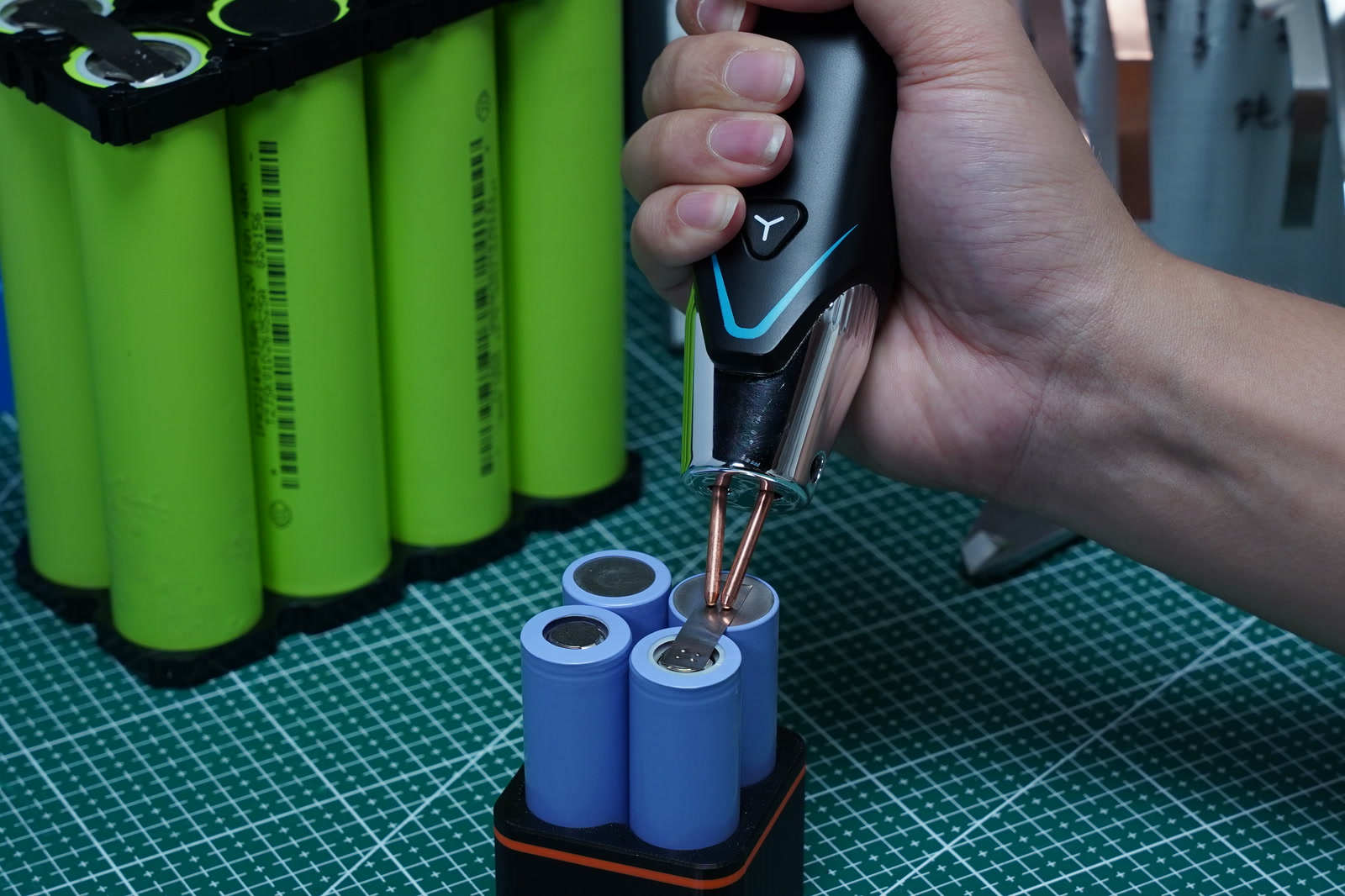
Cold welds are the root cause of later battery-pack failures such as detached welds, open circuits and overheating. They are hard to identify accurately by eye and can easily leave a hidden safety hazard.
Drawing on hands-on experience with AWithZ spot welders, this guide shows you how to quickly tell a false weld from a normal one and pinpoint welding problems precisely.
1. The key question: if the nickel strip peels right off, is it always a cold weld?
It can almost certainly be judged a false weld. A properly qualified spot weld forms a metallurgical bond in which the nickel strip and the cell terminal fuse together, making it extremely strong. A cold weld is only a temporary surface contact with no fusion layer, held in place by slight contact force, so it comes loose the instant force is applied. It is a textbook defective weld and must never be used in a battery pack.
Two terms need to be clarified here:
- Cold weld: the joint looks connected on the surface, but no effective weld nugget has formed inside. Contact resistance is high, the connection is intermittent, and it detaches easily under force.
- False weld: the joint has barely fused at all; the nickel strip and terminal are only physically pressed together with no metallurgical bond. It falls off at a touch, and the break surface is smooth with no metallic sheen.
Both are essentially the same thing: the weld did not penetrate.
2. Telling good welds from bad ones precisely (visual check plus hands-on test)
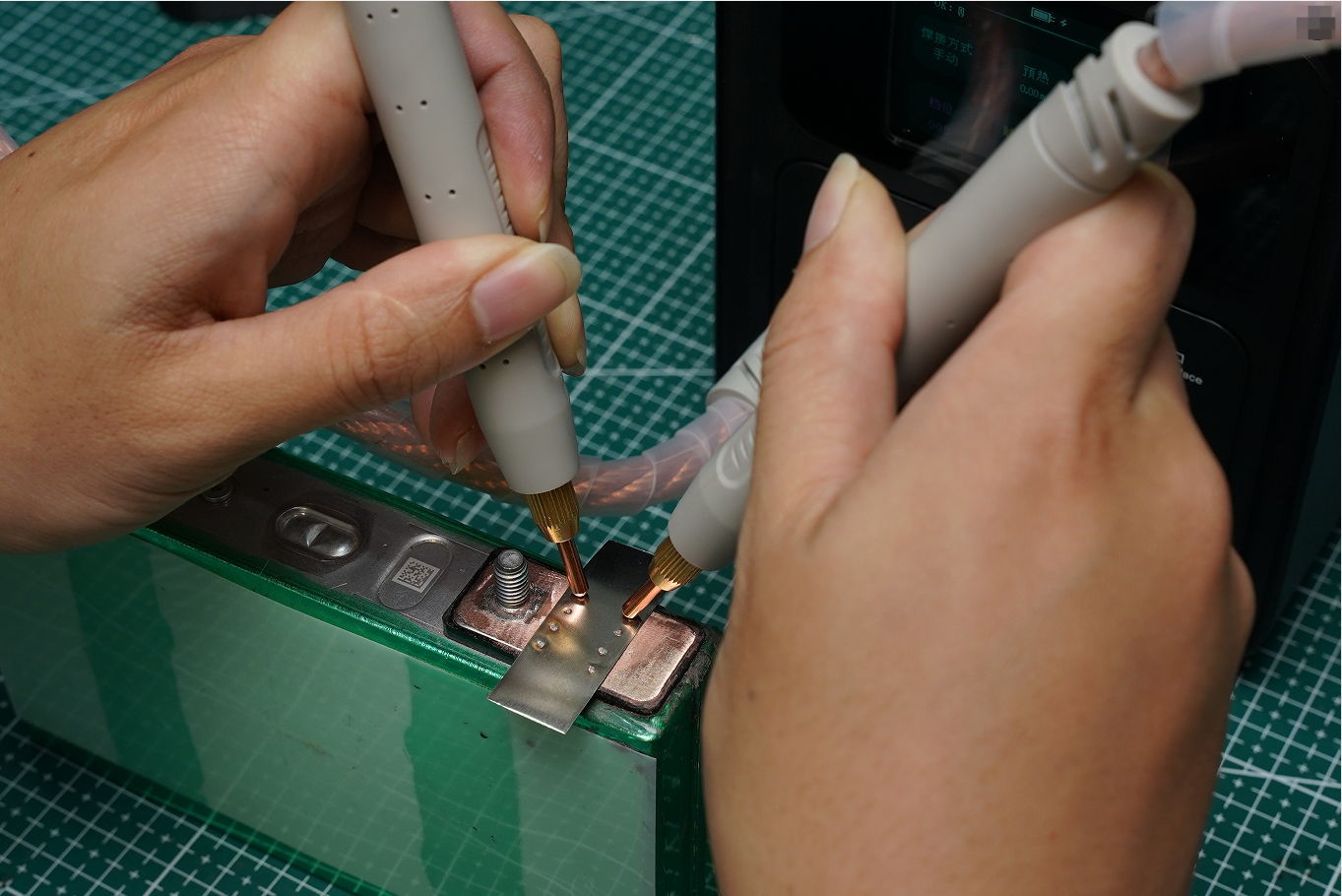
1) Signs of a false (cold) weld
Visually, the weld spot is shiny and flat with no indentation, or only a faint mark, and shows no fused-metal texture; some spots are slightly blackened or have lifted edges. In a hands-on test, a light tug or a slight wiggle of the nickel strip is enough to pull it off. The spot is clean with nothing stuck to it, and neither the terminal nor the nickel strip shows any sign of tearing.
2) Signs of a normal, qualified weld
A qualified weld has even, rounded indentations of consistent depth, with no burn-through, scorching or cracks. In a pull test, the nickel strip itself tears apart while the weld spot stays firmly attached. This is the gold standard for a good spot weld and shows that the metals have fully fused.
3. A quick 3-step check
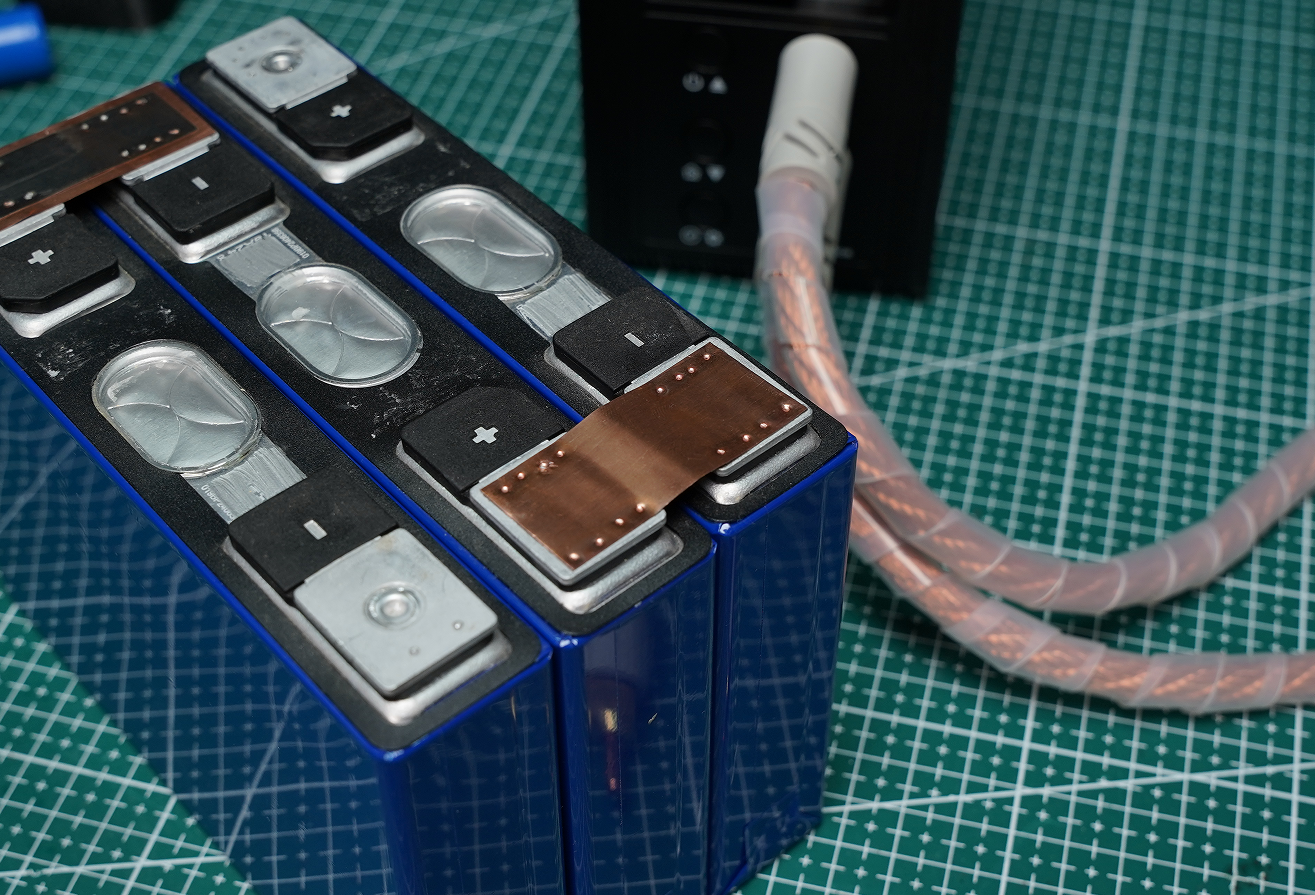
Step 1: Inspect the appearance. A qualified weld is an even circle with a full surface, a metallic sheen and a slight electrode indentation; a cold or false weld looks grey or whitish with no sheen, and its edges are blurred or cracked.
Step 2: Peel test (the most practical). Use pointed tweezers to gently pry up one corner, perpendicular to the nickel strip. A qualified weld won't budge, and if you force it, the nickel strip itself tears; a defective weld comes off cleanly and completely, leaving a whitish or greyish spot with no trace of fusion.
Step 3: Pull-force check (advanced). A qualified weld should withstand a pull force of ≥5N per weld spot. If it breaks under a light pull and the break surface is smooth with no fusion, it is a cold weld.
4. Common causes of cold welds and how to fix them
First, the welding energy is too low. Without enough output energy, the weld cannot break through the oxide layer on the nickel strip to form a fused joint. Fine-tune the pulse parameters on your AWithZ spot welder and calibrate with test welds on scrap cells.
Second, the contact surfaces are dirty. Fingerprints, grease and oxide layers block fusion. Always wipe the surfaces clean with anhydrous alcohol and let them dry before welding.
Third, the welding pins are in poor condition. Oxidized, worn or slag-coated welding pins make contact unstable. Sand and clean them regularly, replace badly worn ones promptly, and always press down vertically with even pressure.
Fourth, the nickel strip doesn't match the job. For 18650 battery packs, 0.12–0.15mm pure nickel strip is the preferred choice, with parameters precisely matched to the material.
5. How AWithZ spot welders prevent cold welds

Ordinary spot welders discharge inconsistently and are prone to partial under-fusion and false welds. AWithZ spot welders tackle this pain point systematically on three levels: algorithm, control and discharge.
Intelligent constant-melt steady-state algorithm: calibrates pulse energy at the microsecond level for consistently uniform weld strength. This is an original AWithZ core technology. Ordinary spot welders output "open-loop energy" with overstated specs, so results drift with voltage, contact resistance and electrode wear, which is why "it held fine yesterday, but today it peels right off." This algorithm builds closed-loop control that calibrates pulse energy in real time at the microsecond level and dynamically compensates for deviations, so every discharge lands in the window of "fully fused, but not overdone." From the 1st cell to the 100th, weld strength stays the same, with no gradual slide into cold welds.
Ten-thousand-setting CNC fine-tuning welding technology: precisely matches parameters to nickel strip thickness and cell type. No sparking on thin strip, no cold welds on thick strip: 0.12mm pure nickel strip, 0.15mm nickel-plated steel strip and 0.2mm thick nickel strip each find their own stable welding window. When you switch nickel strip batches or cell types, the work of readjusting parameters is significantly reduced.
Microsecond dual-pulse technology: preheats first, then welds, effectively breaking through the oxide layer so the weld nugget forms more fully and the weld is deeper and stronger.
Working together, these three technologies greatly reduce the chance of cold and false welds at the equipment level, so even beginners can easily produce standard, solid welds.
Conclusion
Judge spot weld quality not by how it looks, but only by a peel or pull test: if the nickel strip peels off, it is a false weld; if the nickel strip tears while the weld stays put, the workmanship is up to standard. With the right equipment, proper technique and accurate parameter settings, you can eliminate cold welds entirely and build safe, durable, high-quality battery packs.
About AWithZ
AWithZ spot welders come from the inventor brand (holder of the invention patent for small portable spot welders), the pioneer and leader of the small portable spot welder industry. Founded in 2014, AWithZ is a high-tech brand that integrates the research and development, design, production, sales and service of small portable spot welders. We make only spot welders, which is why we are more professional.
With 10+ years of focus and independent innovation, AWithZ has launched multiple patented products, including the "Professional P-Series," "Universal U-Series" and "Handheld H-Series," and created an entirely new industry of small portable spot welders. Its products are widely used for cylindrical battery pack assembly, phone cell repair, nickel tab conversion for polymer batteries, DIY, home and professional repair, R&D, laboratories, industrial production, education, training and community services, offering end-to-end spot welding solutions from entry level to professional across many scenarios.
Its products have long ranked No. 1 in their category on Amazon, AliExpress, Temu, Tmall and JD.com. AWithZ holds 100+ patents, has passed international certifications such as CE and UL, complies with European Union (EU) safety standards, sells in 200+ countries and regions, and has earned the trust of millions of users worldwide.
Core components are validated by rigorous testing that goes beyond standard requirements: 90-day deep charge-discharge cycle testing of brand-new automotive industrial-grade supercapacitors, 90-day deep cycling of brand-new purpose-developed cells, 90-day full-load operation of brand-new core industrial-grade MOSFETs, and 3 months of rigorous aging of key components, ensuring professional high performance, safety, stability and reliability.
Guided by the philosophy of "creating new value," AWithZ stays user-first, upholds quality, and backs every obsession and passion with technology and innovation.
AWithZ: enjoy your creation. Enjoy the moment, create freely!
Keep reading

A DIY 18650 pack is more than cells in series and parallel. Cell matching, insulation and weld quality decide its lifespan and safety. Most DIYers trip over three things: mismatched cells, cold welds and burned-through nickel strip. A standardized process gives a well-matched pack with solid welds.
AWithZ official — 2026-09-28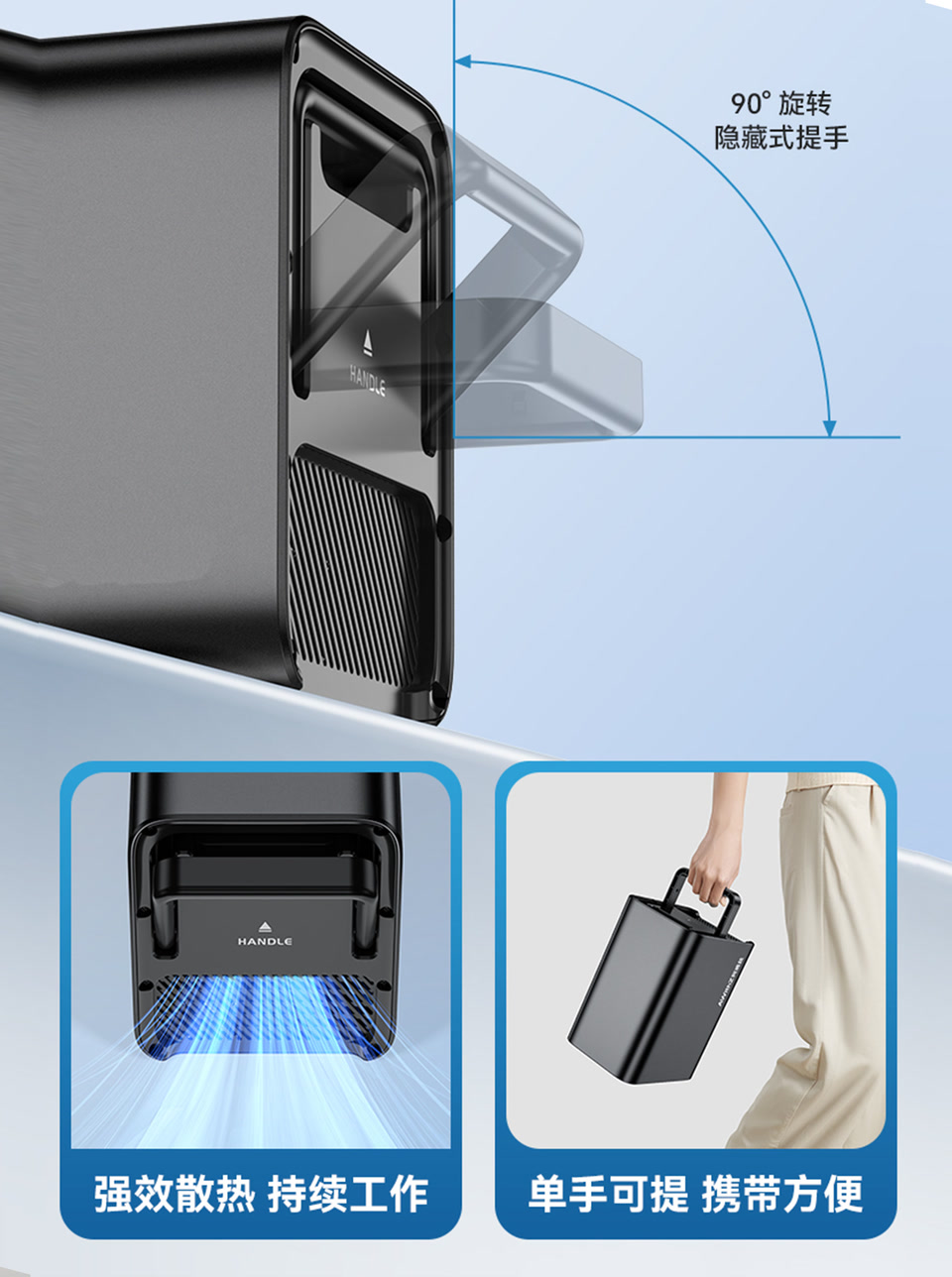
Preface: why I paid out of my own pocket to test the AWithZ P-Series.
AWithZ official — 2026-09-29
As a DIY hobbyist who has worked with battery welding for years and loves tinkering with small projects, I've fallen into just about every trap handheld spot welders have to offer. Welding looks simple, but there's a lot more to it than meets the eye.
AWithZ official — 2026-09-29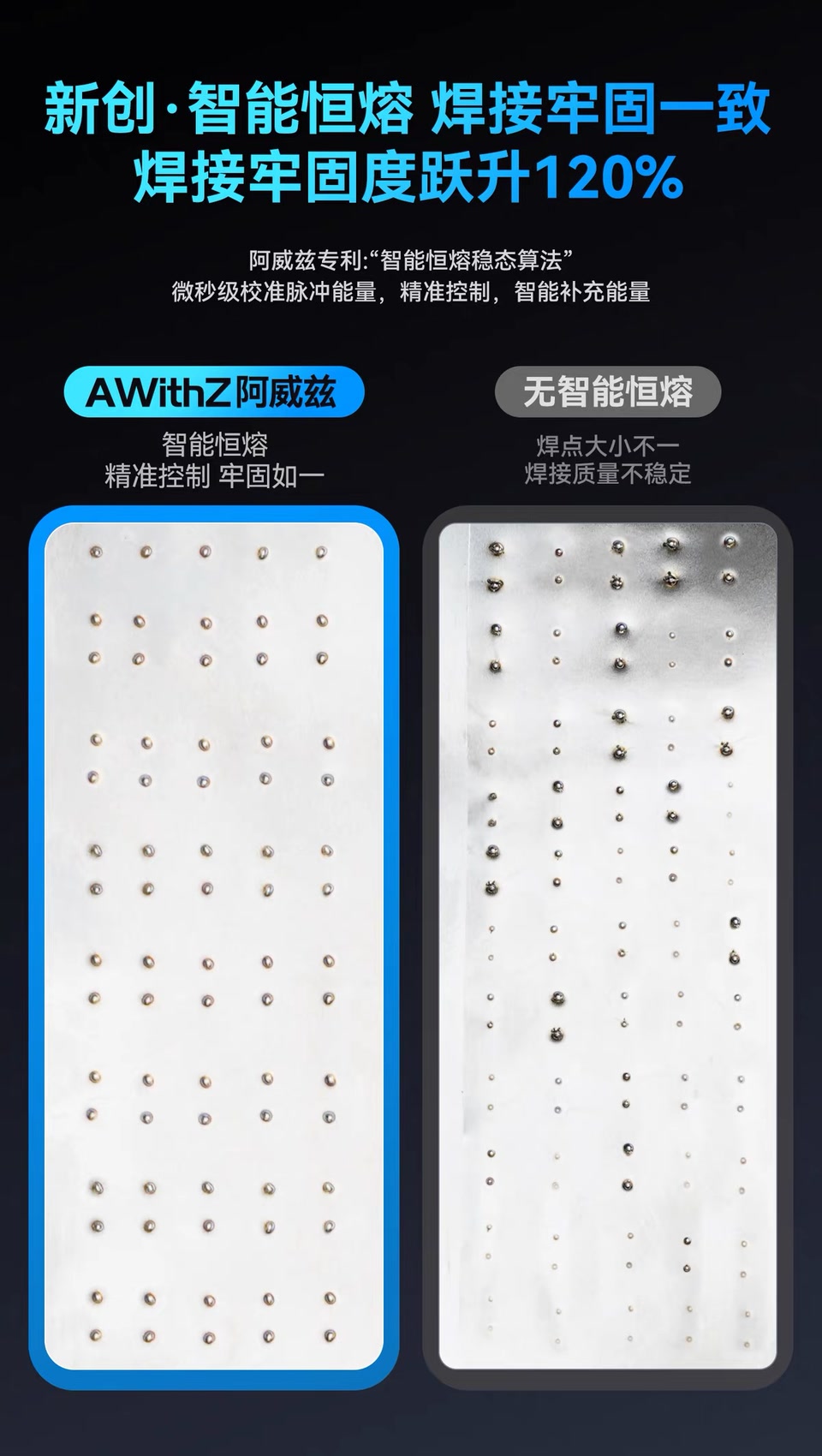
Typical handheld spot welders suffer from limited welding thickness, overheating during continuous welding, inconsistent welds, weak battery life and fast-degrading cells. They are fine for light DIY, but not up to professional batch work.
AWithZ official — 2026-09-29