
Class is in session, everyone — the ‘Whampoa Academy’ of the tool world

Creator’s own settings as stated in the video (timestamps link to the moment). Not official values — test on scrap first.
Bill of materials
Welder, accessories, consumables and parts used in this build; quantities and specs are editable Download BOMDescription
Fix Tools Blindfolded ‘Li-ion battery class’, 8 minutes: 18650 basics, choosing storage 3C vs power 5–15C cells, internal-resistance spread ≤10–15%, voltage spread ≤20mV, why fish paper goes on the positive end, assembling a Dayi A3 kit into 5S3P 21V 6000mAh, spot welding at gear 25 with two welds per cell, soldering the BMS with an iron, reading 18.6V and fitting the case
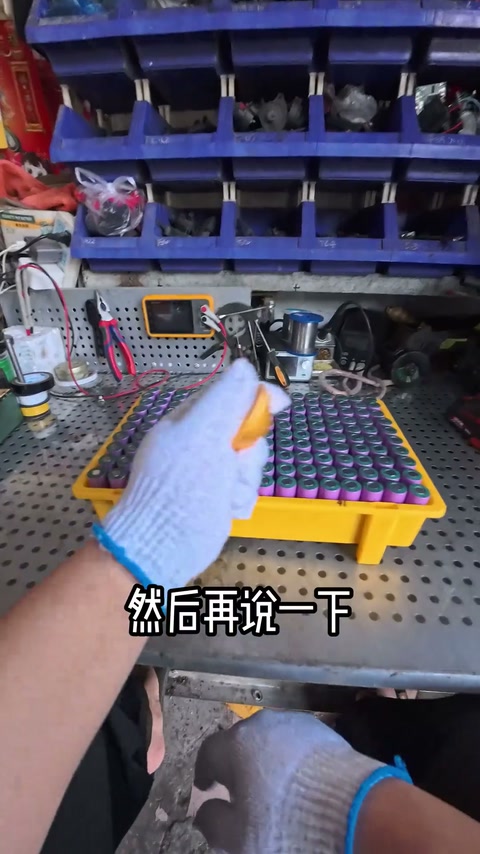
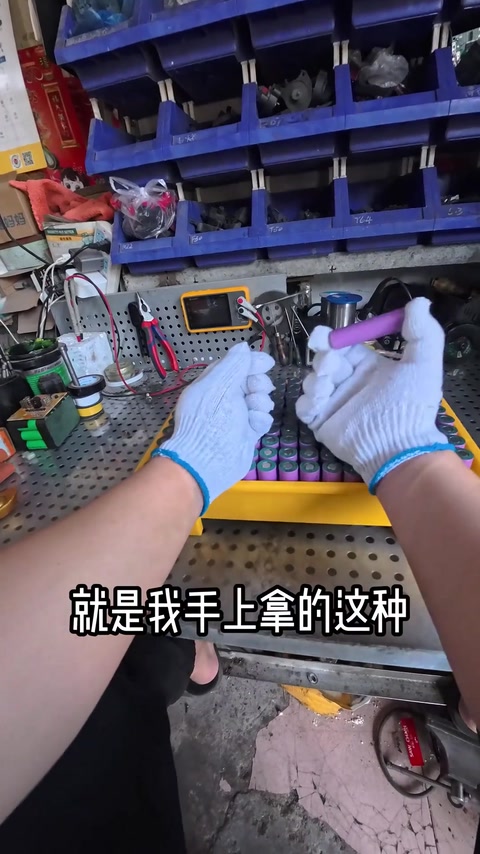
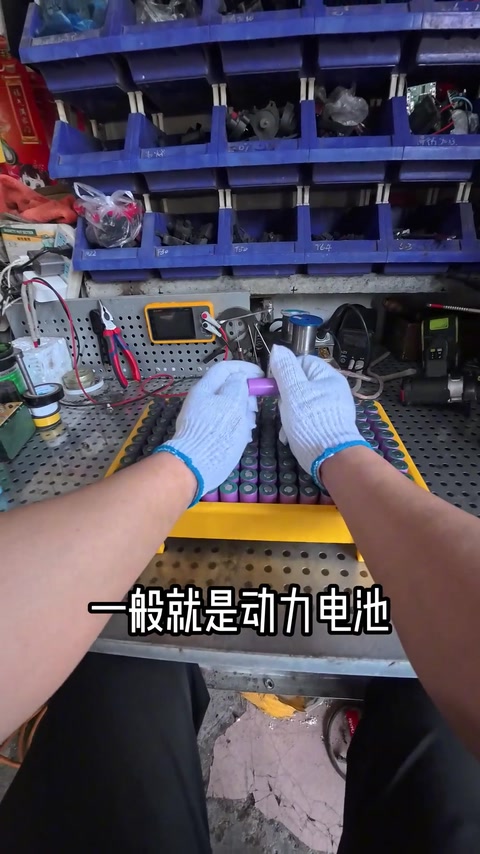
A systematic lesson in hand-building a lithium battery pack. Terms: it’s ‘lithium battery’, not ‘aluminum battery’; 18650 is by far the most common, 21700/26650 you basically never need. Buying advice: not recommended — the only real channel is the ‘seafood market’ (Xianyu second-hand app), couriers won’t ship cells to individuals, and quality is a minefield; channel recommendations welcome in the comments. Choosing: storage cells discharge at about 3C (levels, power banks, flashlights, toys), big capacity and cheap; power cells are for cordless tools, 5C/8C/10C/15C; on a budget, 5C is enough for a drill or impact wrench, angle grinders / rotary hammers / saws want 10C or more or they cut out the moment you load them. Bigger capacity is better, lower internal resistance is better: a 2000mAh cell at 10mΩ can charge full and deliver the full 2000, at 50mΩ it may stop taking charge at 10% and get seriously hot (a loose example); barrel effect — the shortest stave is the high-resistance cell; measure IR as soon as cells arrive and keep the spread within 10–15% (if the max is 15mΩ the whole group sits at 12.75–15); an IR meter costs two or three hundred yuan. Voltage 3.6V, 4.2V full; within a group keep the spread ≤20mV, otherwise the high cell charges the low one and some overcharge while others starve; the first thing on receiving cells is to measure voltage and IR and group them. Assembly needs a spot welder, a soldering iron and a kit (power bank or power tool); the Dayi A3 style holds 90% of the power-tool market — cheap brushless tools are basically Dayi A3, a small share Makita, twenty-to-thirty-yuan brushed tools are basically the Worx small-foot style, the rest by brand (Dongcheng, Devon, Worx, Dongke). Ring the positive end of each cell with fish paper first: in reality only the top bump is positive, everything else is negative, and if the wrap gets nicked while welding strip it easily shorts and catches fire. Kit contents: BMS, holders, fish paper, label, nickel strip, screws, shell. Line the holders up, the BMS notch against the holder bump; B-/B+ are main negative/positive, cell negatives face the B- side; three cells per row, the second row flipped, the third flipped again, snap the holder on. Voltage/capacity math: 15 cells of 2000mAh is not 30,000; series adds voltage, 3.6×5=18, 4.2×5=21, 18V is the EU rating and 21V the US rating, there is also 42V; anything labeled 48VF/188VF/99999VF ‘can get lost’, not one of them tops 1500mAh; parallel adds capacity: 5S3P = 21V 6000mAh (6Ah). Welding: pen, strip and cell must be in full contact at all three points to avoid a cold weld; set current by strip thickness and machine brand, usually gear 25, beginners practice on strip first; two welds per cell, four welds per face, weld then flip. More fish paper for insulation, feed the strips through the BMS holes, screw it down; six solder joints with the iron, don’t let the solder bridge two pads; clean the tip. Check the voltage: DC on a multimeter doesn’t care about polarity, 18.6V, 18–21 is reasonable. Casing: the spring clip onto the holder bump, label on, OK. Making your own is satisfying. Comments (8174): ‘I bought a cordless rotary hammer and it’s no good — wrong brand?’ 4273 likes; ‘the original is too expensive, can I hand-build one?’ 1739; ‘the main cost is the spot welder’ 229; asking for a spot welder under ¥100; fish paper absorbs moisture, suggest plastic insulation; can a self-built power bank go on high-speed rail / planes.
Outcome
| Goal | Tutorial: from choosing cells to assembling a power-tool battery pack |
| Build | Dayi A3 kit, 5S3P 18650 2000mAh → 21V 6000mAh |
| Result | Assembled, reads 18.6V, cased and labeled · verified on camera: Multimeter 18.6V at 451–458s |
Steps11 steps · click a frame to jump
 1. Intro; terms; 18650; buying advice ‘not recommended’
Hand-built lithium battery class; it’s ‘lithium battery’ not ‘aluminum battery’; 18650 is the most common, 21700/26650 basically never needed; the only channel is the ‘seafood market’ (Xianyu), couriers won’t ship cells to individuals, quality is a minefield and there are no returns, asks for channel recommendations in the comments.
00:00 – 00:57 2. Choosing storage 3C vs power 5–15C
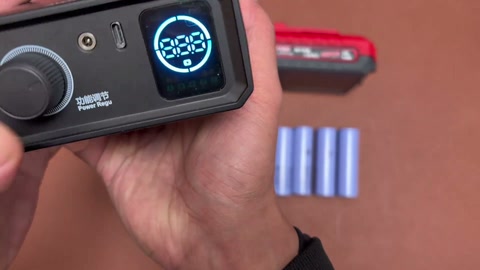
Storage cells 3C (levels / power banks / flashlights / toys), big capacity and cheap; power cells for cordless tools 5C/8C/10C/15C; 5C is enough for drills and impact wrenches, angle grinders / rotary hammers / saws want 10C or more or they cut out under load.
00:57 – 01:40 3. Capacity and internal resistance; barrel effect; IR spread 10–15%
Bigger capacity is better, lower IR is better; 2000mAh at 10mΩ discharges fully, at 50mΩ it may only charge to 10% and get seriously hot; the shortest stave of the barrel = the high-IR cell; measure IR on arrival, spread 10–15% (if the max is 15, the whole group sits 12.75–15); an IR meter costs two or three hundred.
01:40 – 02:42 4. Voltage 3.6/4.2V; spread ≤20mV; measure before grouping
An 18650 is typically 3.6V, 4.2V full; within a group keep the spread ≤20mV, otherwise the high cell charges the low one, overcharging some and starving others; comments keep saying nobody measures — the first thing on receiving cells is measure voltage, measure IR, then group.
02:42 – 03:15 5. Tools and kits: Dayi A3 holds 90%
Needs a spot welder, a soldering iron and a kit (power bank / power tool); the Dayi A3 style holds 90% of power tools, cheap brushless tools are basically Dayi A3, a small share Makita; twenty-to-thirty-yuan brushed tools are basically the Worx small-foot style; the rest by brand, Dongcheng / Devon / Worx / Dongke.
03:15 – 03:53 6. Why fish paper goes on the positive end; kit contents
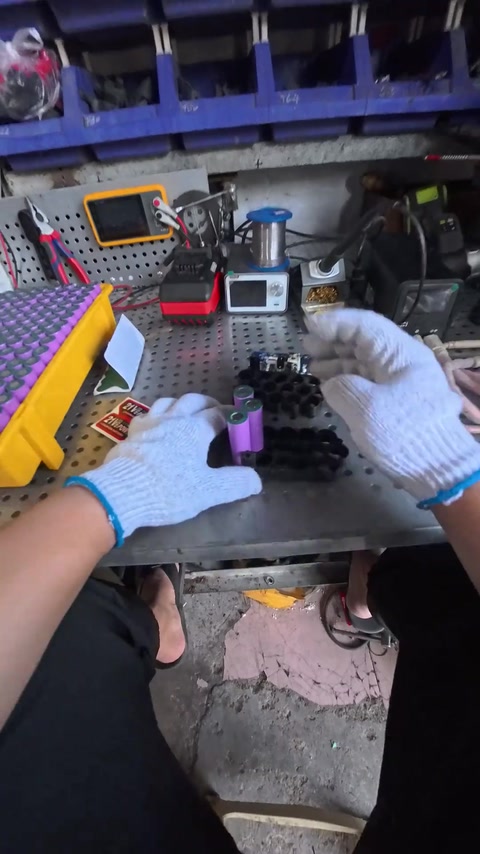
Before assembly ring the positive end with fish paper: on a real cell only the top bump is positive, everything else is negative, and a nick in the wrap while welding strip easily shorts and catches fire; Dayi A3 kit: BMS, holders, fish paper, label, nickel strip, screws, shell.
03:53 – 04:31 7. Aligning holders and BMS; three rows alternate direction
Line the holders up, BMS notch against the holder bump; B-/B+ are main negative/positive; cell negatives face the B- side; three per row, second row flipped positive-down, third row flipped again; snap the holder on; B- to negative, B+ to positive.
04:31 – 05:14 8. Voltage/capacity math: 5S3P = 21V 6000mAh; don’t trust xxVF
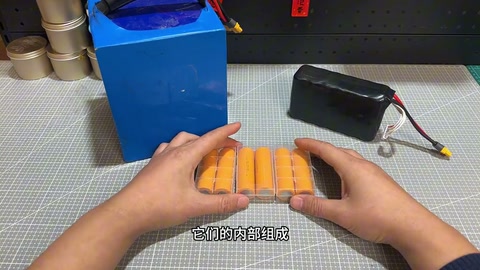
15 cells of 2000mAh is not 30,000; series adds voltage, 3.6×5=18, 4.2×5=21; 18V is the EU rating, 21V the US rating, there is also 42V; 48VF/188VF/99999VF can get lost, none of them tops 1500mAh; parallel adds capacity: 3P 6000mAh = 6Ah.
05:14 – 06:24 9. Spot welding: three-point contact against cold welds; gear 25; two welds per cell
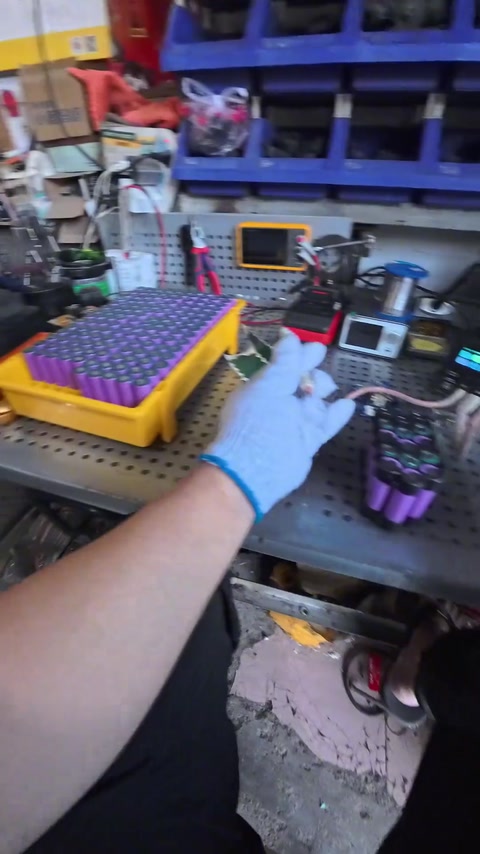
Power the spot welder on; pen, strip and cell in full contact at all three points to avoid a cold weld; set current by strip thickness and machine brand, usually gear 25, no fixed value, beginners practice first; two welds per cell, four welds per face; flip and weld the other side.
06:24 – 06:57 10. Fish paper, strips into the BMS, six solder joints with the iron
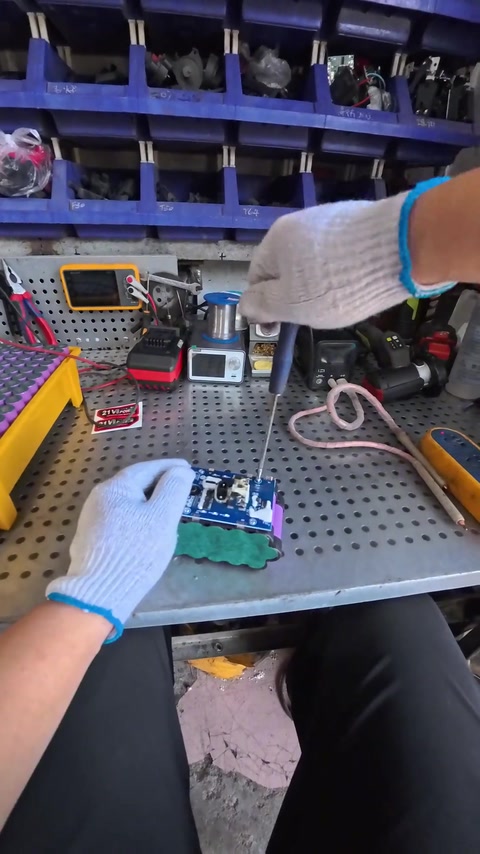
More fish paper for insulation; feed the strips through the BMS holes, fix the screws; six solder joints with the iron, don’t let the solder bridge two pads; clean the tip.
06:57 – 07:26 11. Read 18.6V; case and label; closing
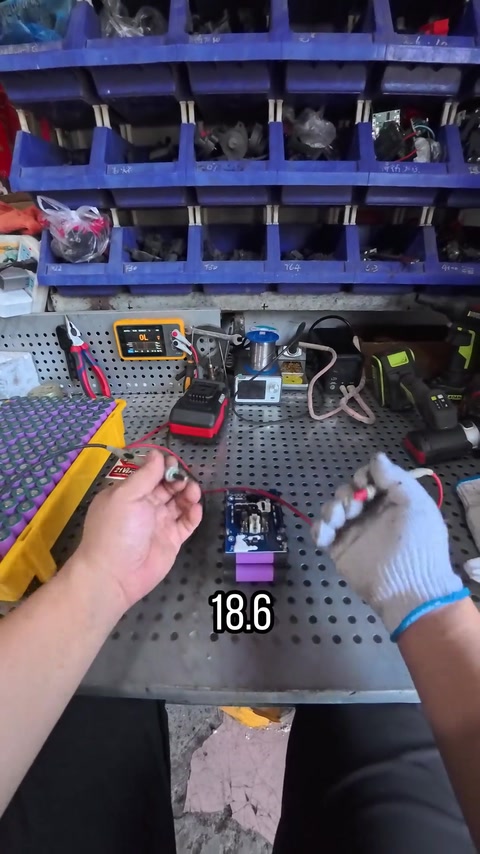
Check the voltage to be safe: DC on a multimeter doesn’t care about polarity, 18.6V, 18–21 is reasonable; casing: spring clip onto the holder bump; label on, OK; won’t mention what some brands charge for the same quality — making your own is satisfying.
07:26 – 08:09
Bill of materials
| 18650 power cells ×15 | 2000mAh · 5S3P |
| Dayi A3 kit ×1 | BMS / holders / fish paper / label / nickel strip / screws / shell · Battery pack |
| Spot welder (UF20B) ×1 | Usually gear 25 · Spot welding |
| Soldering iron ×1 | Soldering the BMS |
| IR meter / multimeter | IR meter ¥200–300 · Grouping / voltage check |
Measured on camera
| Pack voltage | 18.6 V 07:37 |
Creator’s tips
- Measure voltage and IR on arrival, then group: IR spread ≤10–15%, voltage spread ≤20mV 02:22
- 5C is enough for drills / impact wrenches, angle grinders / rotary hammers / saws ≥10C 01:28
- Ring the positive end with fish paper: everything on a cell except the top is negative, so a nicked wrap shorts 03:54
- Pen, strip and cell in full contact at all three points to avoid cold welds; two welds per cell 06:29
- BMS notch against the holder bump, B-/B+ set the cell direction, three rows alternate 04:37
- When soldering the BMS don’t let the solder bridge two pads; clean the tip afterwards 07:15
- Cells labeled 48VF/188VF can’t be trusted 05:51
Pitfalls
- The only channel for cells is the ‘seafood market’, couriers won’t ship to individuals, quality is a minefield and there are no returns 00:44
- One high-IR cell drags the whole group down (barrel effect) 02:16
- Comments: fish paper absorbs moisture and cells rust in damp conditions — plastic insulation paper suggested
Li-ion safety
- A nicked cell wrap lets the negative can short against the strip and catch fire — the positive end must be insulated 04:13
- A large voltage spread leads to overcharged cells 02:54
Quotes
Cost & time
| Internal-resistance meter | ¥250 · ¥200–300 |

Comment insightsanswered 0 · open 5 · corrections 2
Open questions
Corrections from viewers
Why I don't date: 1 I'm ugly 2 pretty broke 3 small circle 4 low EQ, can't chat, can't provide emotional value 5 insecure and socially anxious. Not afraid of being laughed at, comments are my only social life, seeing a red notification later will make my whole day
Reply @别玉玉#97711:
Why I don't date: 1 I'm ugly 2 pretty broke 3 small circle 4 low EQ, can't chat, can't provide emotional value 5 insecure and socially anxious. Not afraid of being laughed at, comments are my only social life, seeing a red notification later will make my whole day
Reply @别玉玉#97711:
Why I don't date: 1 I'm ugly 2 pretty broke 3 small circle 4 low EQ, can't chat, can't provide emotional value 5 insecure and socially anxious. Not afraid of being laughed at, comments are my only social life, seeing a red notification later will make my whole day
Reply @别玉玉#97711: