
Ep. 41 | Home speakers built from car speakers — surprisingly good? Turning car audio into a home stereo that sounds this good


Creator’s own settings as stated in the video (timestamps link to the moment). Not official values — test on scrap first.
Bill of materials
Welder, accessories, consumables and parts used in this build; quantities and specs are editable Download BOMDescription
Two 6.5-inch full-range car speakers + a Bluetooth amp board + a 15 × 18650 3S5P 12V power box: a home stereo for under ¥100
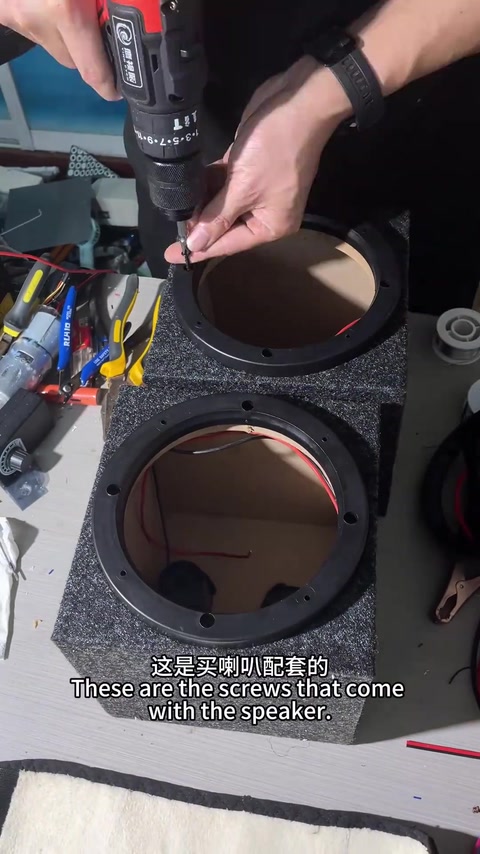
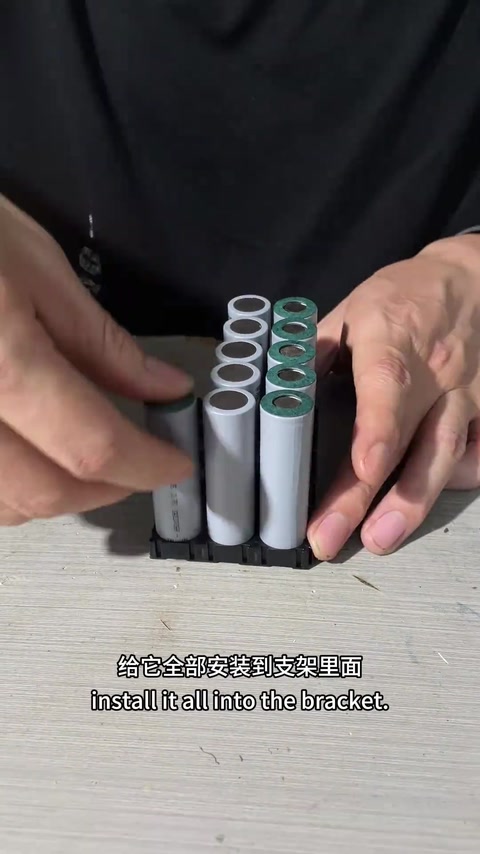
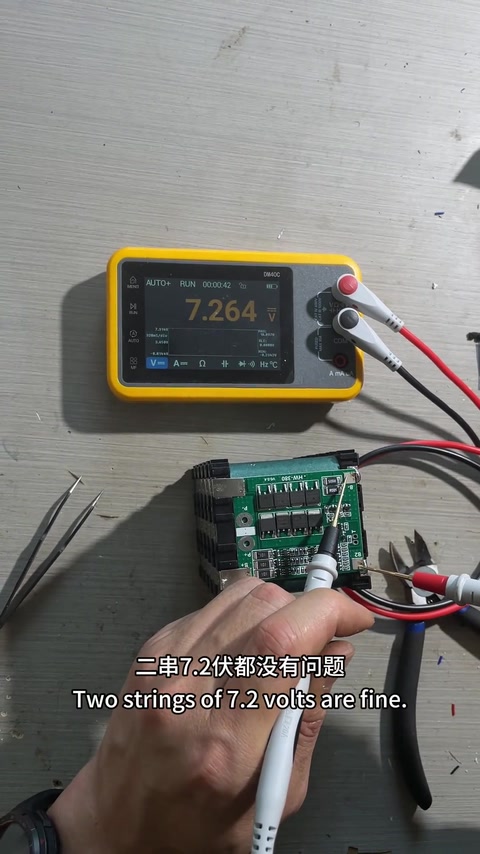
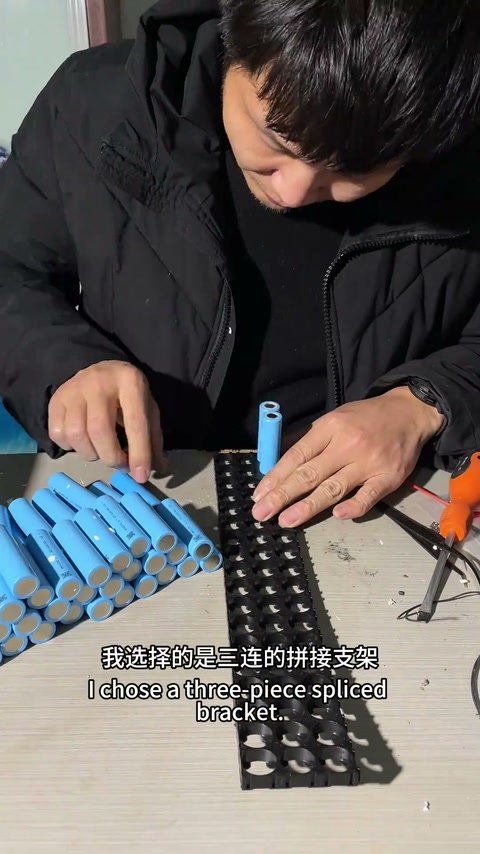
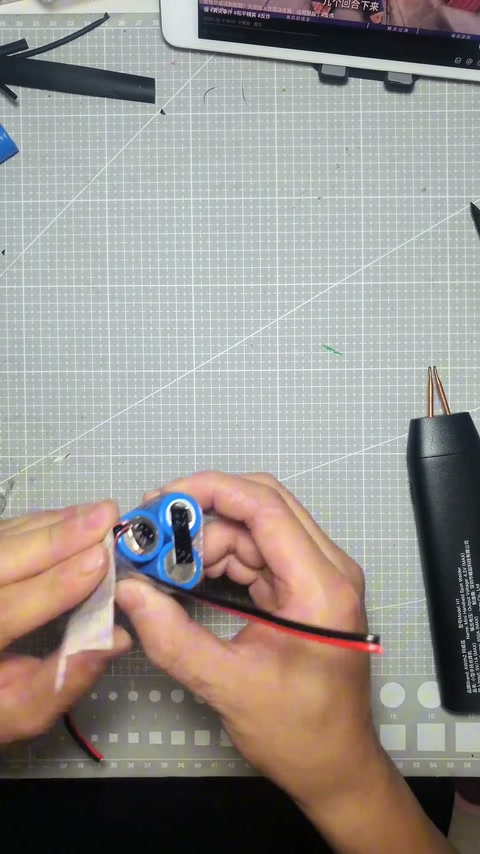
Two full-range (bass/treble) car speakers go into two 6.5-inch pre-cut speaker boxes: the positive and negative leads pass through the wiring hole, and the speakers are screwed in. The amp is an XY-T30L module with Bluetooth and bass/treble control; plug in the left and right channels, the speaker terminals are screwless, and it runs on 12 or 24V. To keep things simple for the older folks, he builds a dedicated power supply: 15 × 18650 cells with fish paper on the positive ends in a dedicated holder, 3S5P for 12V, fish paper around the outside against knocks, then spot-welded. A balancing BMS is a must; the multimeter reads 10.8V at input/output (not fully charged, normal), 3.6V for one group and 7.2V for two. The common-port input/output leads are connected and protected with fish paper + fibre tape. The box is drilled for a switch, battery gauge, charge input and power output; charging uses a 5–30V-input constant-voltage/constant-current buck-boost module set to about 12.6/12.7V, insulated with heat-shrink. Battery output and charge input both go to the switch input; all negative leads are twisted together, tinned and heat-shrunk. On power-up the gauge shows 2 bars; the lid goes on with screws, the phone connects over Bluetooth and plays, and the creator claims ¥1000-class sound quality. Commenters think the box size doesn’t match and a digital amp is just loud.
Outcome
| Goal | Build a portable Bluetooth home stereo from car speakers with a 12V battery power box |
| Build | 2 × 6.5-inch full-range car speakers + XY-T30L Bluetooth amp + 3S5P 18650 power box |
| Result | Finished and playing over Bluetooth · verified on camera: 228–244s phone plays over Bluetooth; the gauge showing 2 bars proves the wiring is right (220s) |
Steps9 steps · click a frame to jump
 1. Goal: a home stereo for under ¥100
Two car speakers turned into a home stereo, under ¥100, done in a few steps.
00:00 – 00:14 2. Box the speakers: run the wires, screw them in
Full-range car speakers + 6.5-inch pre-cut boxes; the positive and negative leads go through the wiring hole at the back and come back out; screws go around the speaker cut-out; pull the leads out, connect the speaker, fix it in place, same for both.
00:14 – 00:54 3. Fit the XY-T30L Bluetooth amp
Amp module with Bluetooth and bass/treble control; plug in the left and right audio leads, the speaker terminals need no screws; feed it a matching 12V or 24V supply and it’s done.
00:54 – 01:09 4. 15 × 18650 into a 3S5P 12V pack
A dedicated power supply for the older folks; fish paper on the positive ends, into the dedicated holder with the cap on; 3S5P for 12V; fish paper around the outside against knocks, then spot-weld.
01:09 – 01:48 5. Why 12V
The car speakers and the amp module both run on 12V (or 24V), so the pack matches.
01:48 – 02:02 6. Fit the balancing BMS, measure the voltages
After spot welding a balancing BMS is a must; the multimeter reads 10.8V at input/output (pack not full, normal), the same at the main + and −, 3.6V for one group and 7.2V for two; connect the common-port input/output leads, cover with fish paper, fibre tape around the outside, and wrap the exposed + and − in fish paper too.
02:02 – 02:44 7. Drill the box, fit the 5–30V buck-boost charging module
A round hole for the switch, a square one for the gauge, a charge input and a power output on top; the CV/CC buck-boost module goes on the charge input — feed it 5–30V from an adjustable supply, set its output to about 12.6/12.7V, wire + and −, screw it to the box floor, heat-shrink over the output leads.
02:44 – 03:21 8. Wire the switch, gather the negatives, power-on check
The battery output and charge input leads go to the switch input, the switch output to the gauge positive; all negative leads twisted together, tinned and heat-shrunk; power on, the gauge shows 2 bars, the wiring is fine, lid on and screwed tight.
03:21 – 03:48 9. Bluetooth playback and verdict
The 12V power box drives the home-built speakers; the phone connects over Bluetooth and plays; the creator says it sounds like a ¥1000 system, fine for karaoke at home or the older folks’ dancing.
03:48 – 04:21
Bill of materials
| Full-range car speakers ×2 | 6.5-inch bass/treble, TS-GE1641 · Sound |
| Speaker boxes ×2 | 6.5-inch cut-out, with wiring hole · Enclosure |
| Bluetooth amp module ×1 | XY-T30L, bass/treble control, 12/24V · Amplification + Bluetooth |
| 18650 cells ×15 cells | 3.7V · 12V pack |
| Dedicated holder / fish paper | Hold and insulate |
| Balancing BMS ×1 | Common port · A must |
| Fibre tape / heat-shrink | Reinforce and insulate |
| Box + switch + gauge + charge port + output port | Power box |
| CV/CC buck-boost module ×1 | 5–30V input · Charging |
| Multimeter ×1 | Measure voltage |
Measured on camera
| BMS input/output voltage | 10.8 V 02:10 |
| Single-group voltage | 3.6 V 02:16 |
| Two-group voltage | 7.2 V 02:18 |
| Gauge at power-on | 2 bars 03:40 |
Creator’s tips
- Match the pack voltage to what the speakers / amp need (car audio 12V, amp 12/24V) 01:48
- With the BMS connected, check with a multimeter: 10.8V when not full is normal, then measure one group / two groups to confirm balance 02:09
- Feed the buck-boost charging module from an adjustable supply first and set its output to 12.6/12.7V before connecting the battery 03:04
Li-ion safety
- A balancing BMS is essential when building a Li-ion pack 02:00
- Fish paper on the positive ends, fish paper around the outside so knocks don’t damage the cells, and wrap the exposed + and − too 01:21
- Tin the joints, then insulate with heat-shrink 03:18
Quotes
Cost & time
| Total | <100 |

Comment insightsanswered 0 · open 2 · corrections 3
Open questions
Corrections from viewers
It just makes noise. The box is too small and doesn’t match the driver size. The bass can’t reach down at all. This kind of digital amp is good for nothing except being loud. Get someone to build you a proper cabinet, then add a class-A amp. That’s another level up.
Reply @用户0359087692413:
It just makes noise. The box is too small and doesn’t match the driver size. The bass can’t reach down at all. This kind of digital amp is good for nothing except being loud. Get someone to build you a proper cabinet, then add a class-A amp. That’s another level up.
Reply @用户0359087692413:
It just makes noise. The box is too small and doesn’t match the driver size. The bass can’t reach down at all. This kind of digital amp is good for nothing except being loud. Get someone to build you a proper cabinet, then add a class-A amp. That’s another level up.
Reply @用户0359087692413: