Another AWithZ UK1 — unboxing & review



Creator’s own settings as stated in the video (timestamps link to the moment). Not official values — test on scrap first.
Bill of materials
Welder, accessories, consumables and parts used in this build; quantities and specs are editable Download BOMDescription
Maker Xu Ge’s in-depth UK1 unboxing and review (14 min): about ¥200, comes with a foot pedal + welding pens with a trigger switch (beginner-friendly, get the position right and then press), 0.1 nickel-plated strip, spare pins, sandpaper, Type-C cable; long-press the knob to power on, four functions: mode A auto / M manual, gear 1–100, trigger time 0.1–5, pulse count (1/2); gear 20 through-welds 0.1 nickel, gear 100 double pulse on a new uncharged unit welds 0.1 nickel-plated + 0.05 copper well enough to use but not recommended long-term; recommends 0.1 nickel-plated stacked two or three layers over a single 0.2/0.3 (better heat dissipation and current capacity), gear 50 with double 0.1 is very solid; pros: trigger / pedal rare at this price, stable horizontal layout, thick EC8 connector with low resistance; con: middling power; comments: the P60F is too powerful and punches holes easily, 0.1 copper stacked on 0.05 steel strip welds at gear 100, can’t weld large single cells
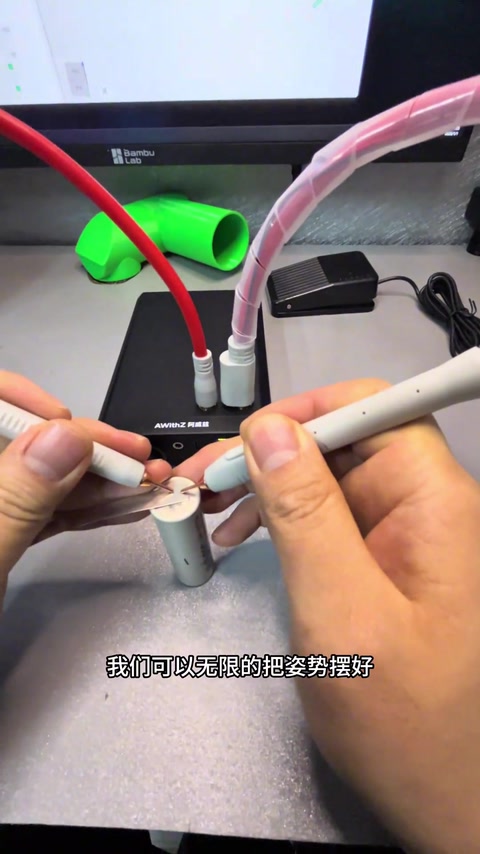
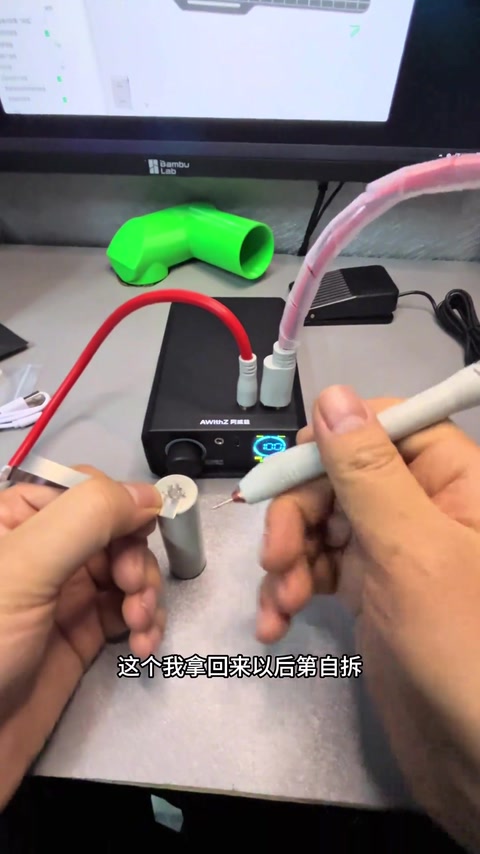
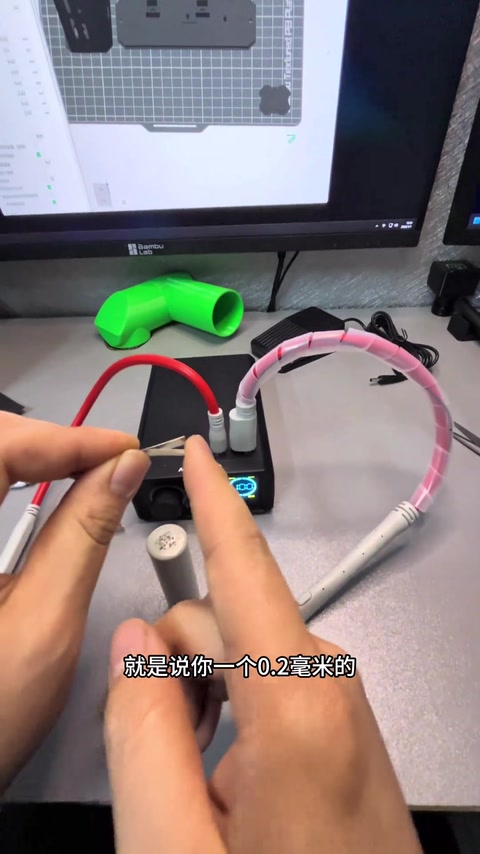
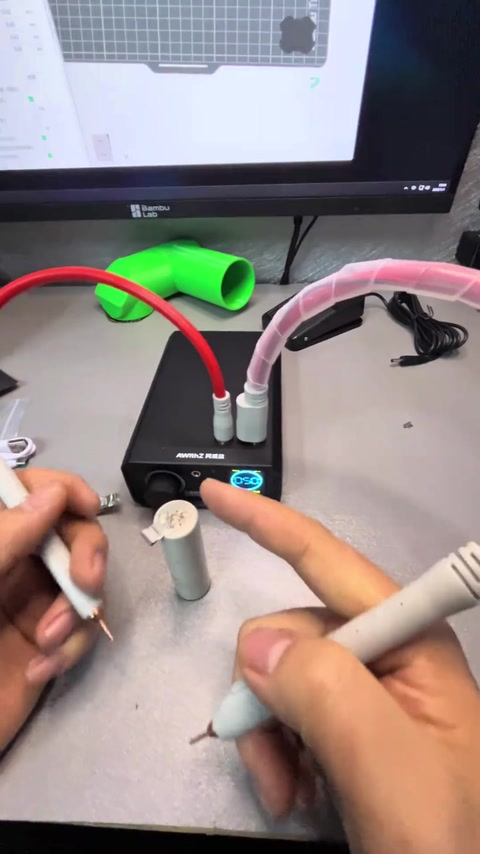
Got another one, the AWithZ WP120 (UK1), a battery-powered spot welder. Thick, large box; the main unit has a matte plastic shell, not heavy, color screen; accessories: foot pedal (rare on a small unit, quite professional), a length of nickel-plated steel strip, two spare welding pins, a data cable, sandpaper (to sand blackened pins), a pair of welding pens with a trigger switch (thoughtful design, durability to be seen); the price, around ¥200, is fair. No power button, long-press the knob to power on; four functions: mode (A auto triggers automatically like a regular spot welder; M manual triggers from the pen button or the foot pedal), gear (60/90/100, top is 100), pulse i.e. pulse count 1 or 2, trigger time max 5 min 0.1, beginners can use 1–2; the functions are intuitive and simple. First try gear 20 in auto mode; a foot pedal and trigger switch on a unit this small is rare; the pen plug goes all the way in, looks like EC8. Manual mode with 0.05/0.1/0.2 nickel strip on a 21700: gear 20 already through-welds 0.1; the double-pulse setting is quite special, but a cell-powered unit certainly has less power than a supercapacitor; gear 100 double pulse on nickel-plated steel strip stacked with copper (new unit, never charged): 0.1 nickel-plated + 0.05 copper welds well enough to use, if it isn’t solid weld the same spot again, and it tears apart; but personally he doesn’t recommend a small unit welding copper long-term, it’s outside its working range, just weld nickel-plated steel strip. Recommends 0.1 nickel-plated steel strip: if one layer can’t carry the current, fold it double; two layers dissipate heat better and carry more current than a single 0.2; if power is short, weld one layer then another, same result or better; gear 50 with double 0.1 demonstrated very solid, 0.2 solid too; double 0.1 carries a dozen-plus amps no problem; if unsure add a third layer with more welds, three layers of 0.1 carry more current than a single 0.3 (better heat dissipation, more welds, more solid); when building a power bank take the time to add more welds rather than chasing a high-power unit, a 2000A-class supercapacitor unit runs about ¥300. Pros and cons: pros are the trigger / pedal, rare at this price, the stable horizontal layout (upright units tip over when you pull the pen), the thick EC8 connector instead of 5.5, much lower resistance; con is middling power. Finally a full ring of double-layer welds with the included thin nickel strip to check consistency: once you’re used to the pens they are very convenient, no false triggers, unhurried, get the position right, index finger on the side switch, thumb to hold; small units are all used by beginners, for phone repair / precision work / power banks this setup fits best; every weld tears apart, very good. Comments: the P60F is too powerful, a slightly high gear punches through the steel can, two layers of 0.15 nickel-plated around 0.05 copper still leaves dark rings (4); the opening put me right off (4, the smash-the-machine opening); welded 7 packs while making it, then it gathers dust (2); can it weld large single cells → no, aluminum-nickel composite strip needs at least 5000A; can’t it weld 0.1 copper strip → yes, stack 0.05 steel strip at gear 100; can it weld Jiashikai 32140 → yes; glasses frames / 1mm stainless → not really; isn’t it 99 gears; can I swap the battery myself → sure; delisted, can’t find it on JD.com; how much / where to buy.
Outcome
| Goal | UK1 unboxing and review, plus a method for stacking nickel strip |
| Build | UK1 + 0.05/0.1/0.2 nickel strip + 0.05 copper + 21700 |
| Result | Gear 20 through-welds 0.1; gear 100 nickel-plated + copper usable; gear 50 double 0.1 very solid; every weld tears apart · verified on camera: 355–414s, 471–489s, 842–849s tear tests |
Steps11 steps · click a frame to jump
 1. Unboxing: WP120 (UK1) battery-powered spot welder; matte plastic unit, light, color screen; manual
Got another one, the AWithZ WP120 (UK1), a rather special battery-powered spot welder; thick, large box with a lot inside; the main unit has a plastic shell, not heavy, matte feel; color screen; inside there is just a manual and accessories.
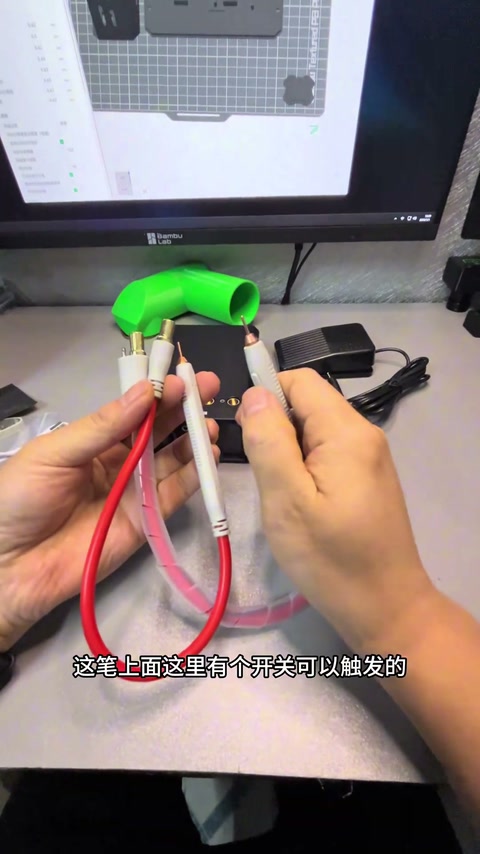
00:01 – 00:54 2. Accessories: foot pedal, nickel-plated steel strip, 2 spare pins, data cable, sandpaper, welding pens with trigger switch; about ¥200
Foot pedal (rare on a small spot welder, quite professional); a length of nickel-plated steel strip; two spare welding pins; an ordinary data cable; sandpaper for sanding blackened pins; a pair of welding pens with a trigger switch, thoughtful design, durability unknown; the price of about ¥200 is fair.
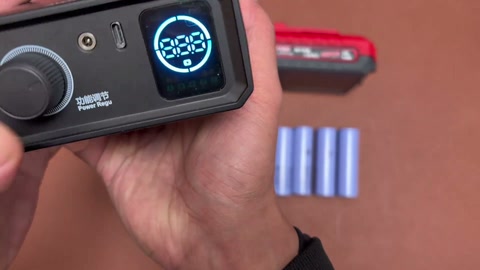
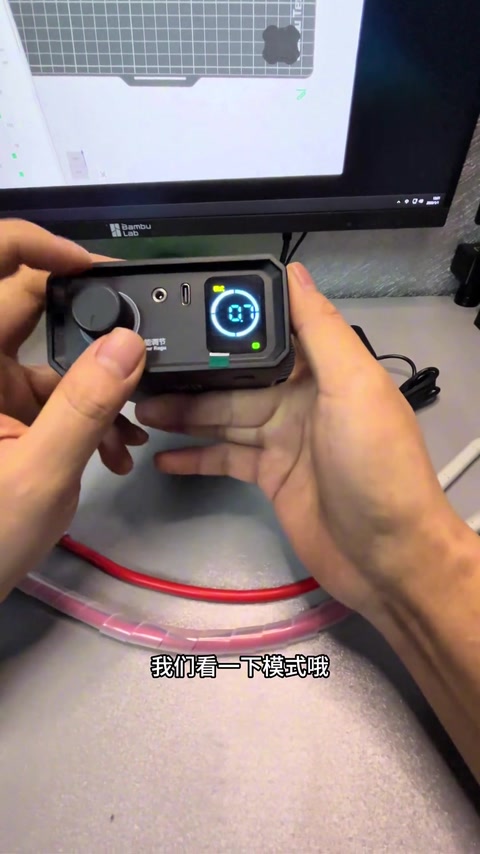
00:54 – 01:57 3. Long-press the knob to power on; four functions: mode A/M, gear (top 100), trigger time 0.1–5, pulse count 1/2
No power button, long-press the knob to power on; four functions, mode, gear, trigger, pulse count; mode A auto (auto trigger like a regular unit), M manual (pen button or foot pedal); gear 60/90/100… top 100; pulse means pulse count, 1 or 2; trigger time max 5 min 0.1, beginners can use 1–2; the functions are intuitive and simple.
01:57 – 03:50 4. Try gear 20 in auto; pen plug goes all the way in (EC8-style plug); beginner-friendly
Set gear 20 first, try auto mode; a foot pedal and trigger switch on a unit this small is rare; easy to plug in, goes all the way in; looks like an EC8 plug; the pens are distinctive, especially beginner-friendly.
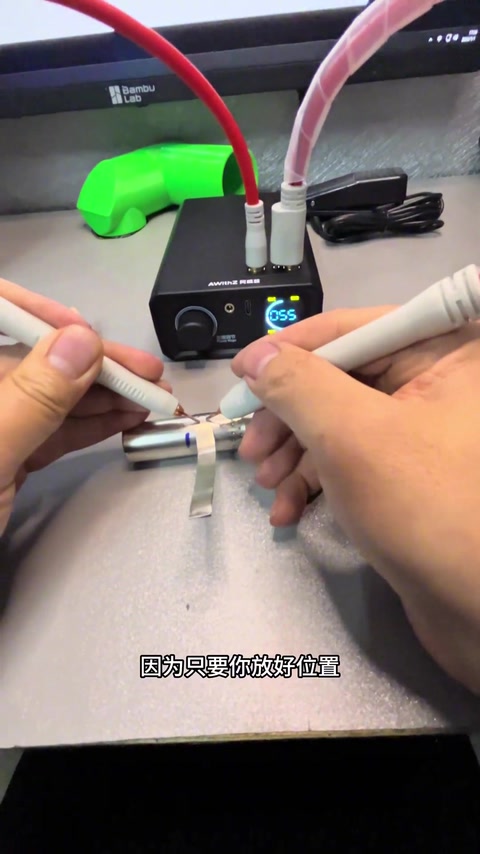
03:50 – 05:02 5. Manual mode, 0.05/0.1/0.2 nickel strip on a 21700: gear 20 already through-welds 0.1; in manual you can get the position right, then press
Nickel strip in 0.05, 0.1, 0.2; 21700 cell; start with 0.1, gear 20 manual mode, press the pen button or step on the pedal; manual is beginner-friendly, take all the time you need to get the position right, no waiting; gear 20 on 0.1 is decent, already through-welded; two more welds.
05:02 – 06:13 6. Pulse count = pulses, try 2: quite special; a cell-powered unit has less power than a supercapacitor; tears apart
Pulse count is the pulses, try two pulses; quite special, the UI and functions are really nice; but a cell-powered unit certainly has less power than a supercapacitor; this will do, tears apart when pulled.
06:13 – 06:54 7. Gear 100 double pulse (new, uncharged): 0.1 nickel-plated + 0.05 copper welds solidly and tears apart; but not recommended long-term on a small unit
Gear up to 100, double pulse on nickel-plated steel strip stacked with copper; first time out of the box, never charged; at full gear on a new uncharged unit, 0.1 nickel-plated plus 0.05 copper welds well enough to use; if not solid weld the same spot again; tears apart when pulled; personally he doesn’t recommend a small unit welding copper, it’s outside its working range, not for long-term use; a small unit should stick to nickel-plated steel strip.
06:54 – 08:39 8. Method: 0.1 nickel-plated stacked double beats a single 0.2 (better heat dissipation / current capacity); if power is short, weld one layer at a time
Recommends 0.1 thick nickel-plated steel strip; if one layer can’t carry the current, fold it double; two layers weld nicely too, dissipate heat better and carry more current than a single 0.2; buy 0.1 and you can weld two or three layers; if power is short, weld one layer, then another; if power is enough, weld both layers at once or weld twice.
08:39 – 09:31 9. Gear 50 double 0.1 demonstrated very solid; three layers of 0.1 beat 0.3; for a power bank just add more welds, better value than buying a high-power unit
Gear 50 demonstration of two layers stacked; if two layers won’t go, weld one layer then the second, same result or better; gear 50 with double 0.1 is very solid, 0.2 is solid too; double 0.1 carries a dozen-plus amps no problem; if unsure add a third layer and more welds, current capacity doubles; three layers of 0.1 carry more current than a single 0.3 (better heat dissipation, more welds, more solid); when building a power bank take the time to add welds; better than chasing a high-power unit, a 2000A-class supercapacitor unit is about ¥300.
09:31 – 11:11 10. Pros and cons: trigger / pedal rare at this price, stable horizontal layout, thick EC8 connector with low resistance; middling power
Pros: at this price it is hard to get a trigger or a pedal, especially beginner-friendly; horizontal layout sits stable, whereas small upright units get dragged or knocked over when you pull the pen; thick pen connector, EC8 rather than 5.5, much lower resistance, an advantage at the same battery capacity and C-rate; con: middling power, not especially high; a good choice if you want a small unit.
11:11 – 12:23 11. Full ring of double-layer welds with the included thin nickel strip: pens don’t false-trigger once you’re used to them, unhurried, index finger on the side, thumb holds; best setup for beginners on a small unit; every weld tears apart
A full ring of double-layer welds with the included thin nickel strip to check consistency; once used to the pens they are very convenient, no false triggers, no rush, get the position right, index finger on the side switch, thumb to hold; small units are operated by beginners, for phone repair / precision work / power banks this setup is super convenient and stable; very sturdy; every weld tears apart; very good.
12:23 – 14:17
Bill of materials
| AWithZ UK1 (WP120) ×1 | About ¥200, battery-powered, color screen · Review |
| Foot pedal switch ×1 | Included · Manual trigger |
| Welding pens with trigger switch ×1 | EC8 connector · Manual trigger |
| Nickel-plated steel strip 0.1 / nickel strip 0.05, 0.2 | Tests and stacking |
| Copper strip 0.05 | Stacked-copper test |
| 21700 cell ×1 | Test cell |
| Sandpaper / spare pins | Included · Pin maintenance |
Measured on camera
| Price (creator’s estimate) | ¥200 01:52 |
| Top gear | 100 02:57 |
| Trigger-time range | 0.1–5 03:32 |
Creator’s tips
- 0.1 nickel-plated stacked two or three layers carries more current and dissipates heat better than a single 0.2/0.3; if power is short, weld one layer at a time 08:57
- Manual mode: get the position right, then press the pen’s side switch (index finger presses, thumb holds), no false triggers; first choice for beginners 05:43
- Beginners use trigger time 1–2; gear 20 already through-welds 0.1 nickel, start from a low gear 03:37
- Small units aren’t recommended for welding copper long-term; if you must stack copper, use 0.05 copper + 0.1 nickel-plated at gear 100 08:16
- Sand blackened welding pins with the included sandpaper 01:26
Pitfalls
- Middling power, less than a supercapacitor unit; can’t weld large single cells (comment: needs 5000A) 11:27
- Comments: the smash-the-machine opening puts viewers off (4); once the build is done it gathers dust (2)
- Comment: the P60F at a slightly high gear punches through the steel can
Li-ion safety
Quotes
Cost & time
| UK1 | ¥200 · Creator's estimate: 'around 200' |
| Total | ¥200 |